




Call us
301-363-4651 (Available 9 a.m. to 5 p.m. CST from Monday to Friday)

Hepatocellular carcinoma is a malignant tumor that occurs in the liver, mainly including Hepatocellular carcinoma (HCC), Intrahepatic cholangiocarcinoma (ICC) and Combined hepatocellular-cholangiocarcinoma (cHCC-CCA).
The causes of liver cancer are diverse, and common risk factors include hepatitis B virus (HBV) and hepatitis C virus (HCV) infection, excessive alcohol consumption, non-alcoholic steatohepatitis, cirrhosis, and other causes of chronic liver disease. Early symptoms of liver cancer are relatively hidden, but as the disease progresses, abdominal pain, abdominal swelling, jaundice, weight loss and other symptoms may appear.
Commonly used treatments for liver cancer include surgical resection, liver transplantation, local ablation therapy, transarterial chemoembolization (TACE), radiation therapy, systemic antitumor therapy, and so on. In recent years, with the deeper understanding of the biology of hepatocellular carcinoma and the advancement of therapeutic technology, significant progress has been made in drug development for hepatocellular carcinoma, such as:
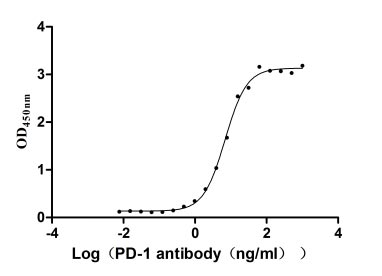
Measured by its binding ability in a functional ELISA. Immobilized PD-1 at 2 μg/ml can bind Anti-PD-1 recombinant antibody, the EC50 of human PD-1 protein is 6.087-7.854 ng/ml.
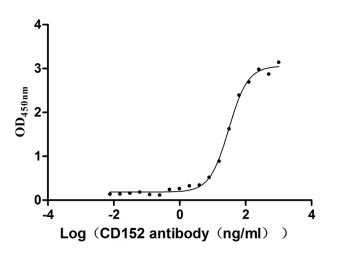
Measured by its binding ability in a functional ELISA. Immobilized CD152 at 2 μg/ml can bind Anti-CD152 rabbit monoclonal antibody (CSB-RA213310A0HU), the EC50 of human CD152 protein is 27.14-34.82 ng/ml.
-AC1.jpg)
Measured by its binding ability in a functional ELISA. Immobilized human GPC3 (G537R) at 5 μg/ml can bind Anti-GPC3 recombinant antibody, the EC50 is 4.739-7.092 ng/ml.
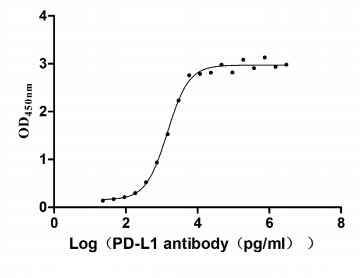
Measured by its binding ability in a functional ELISA. Immobilized PD-L1 at 2 μg/ml can bind Anti- PD-L1 mouse monoclonal antibody (CSB-MA878942A1m, antigen from E.coli), the EC50 of human PD-L1 protein is 1.252-1.653 ng/mL
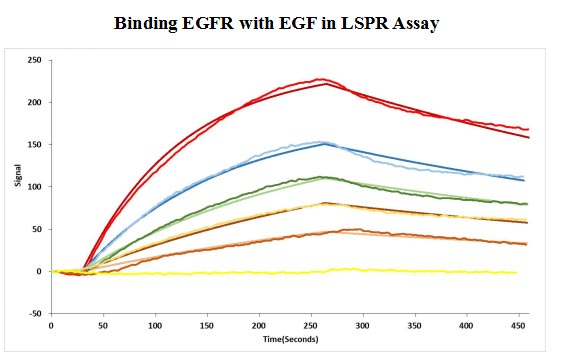
Human EGF protein captured on COOH chip can bind Human EGFR protein, his and Myc tag (CSB-MP007479HU) with an affinity constant of 11.9nM as detected by LSPR Assay.
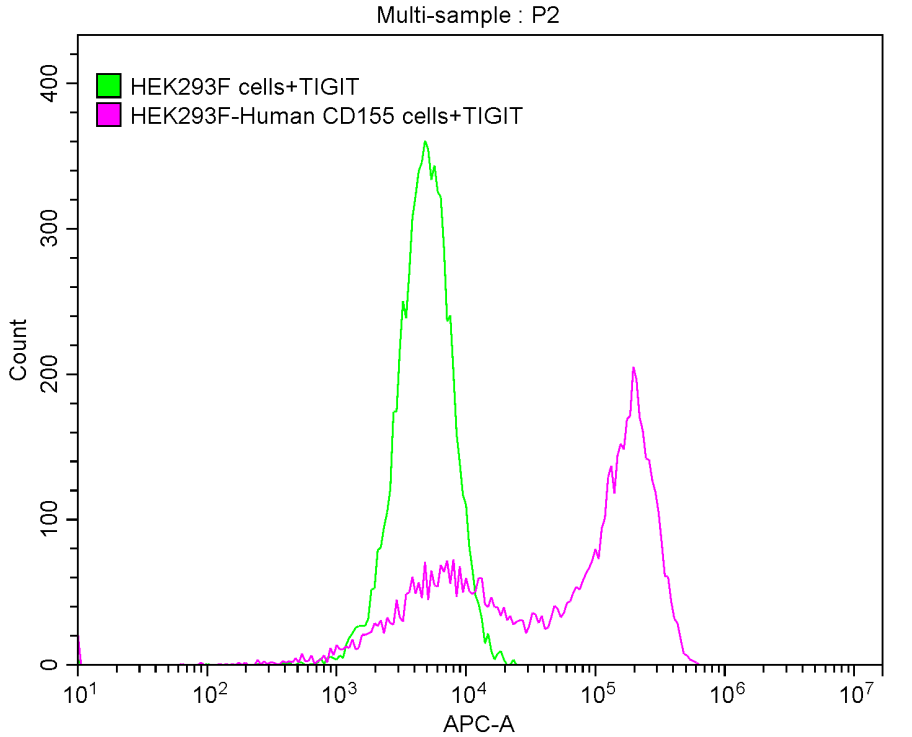
HFACS assay shows that Human TIGIT can bind to 293F cell overexpressing human CD155.
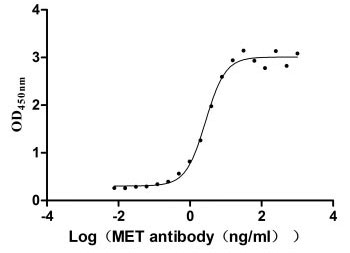
Measured by its binding ability in a functional ELISA. Immobilized MET at 2 μg/ml can bind Anti-MET recombinant antibody, the EC50 is 2.379-3.094 ng/ml.
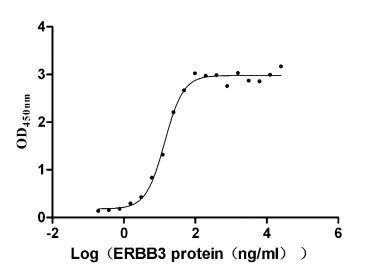
Measured by its binding ability in a functional ELISA. Immobilized NRG1 (CSB-MP016077HU1(F6)) at 2 μg/ml can bind human ERBB3, the EC50 is 12.32-15.74 ng/ml.
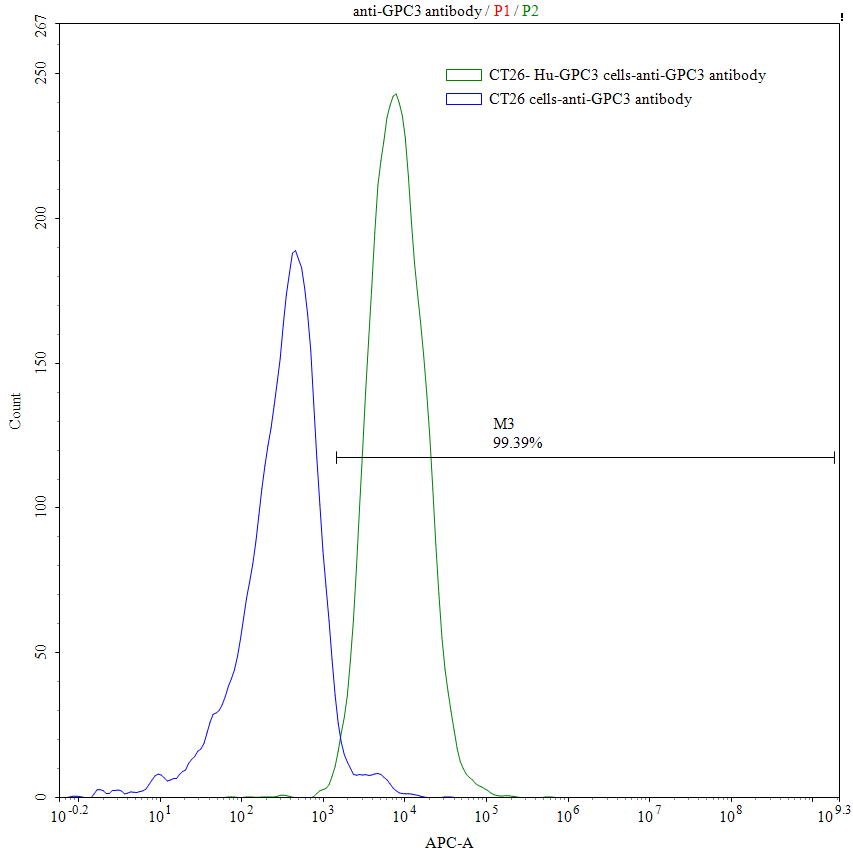
CT26/Human GPC3 Stable Cell Line
CSB-SC009705HU2
Untransfected CT26 cells (green line) and transfected Human GPC3 CT26 Stable cells (red line) were stained with anti-GPC3 antibody(CSB-RA009705A1HU) (2µg/1*106 cells), washed and then followed by APC-conjugated anti-Human IgG Fc antibody and analyzed with flow cytometry.
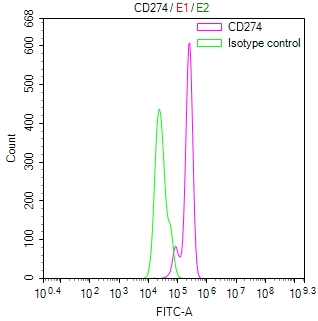
Overlay Peak curve showing Hela cells surface stained with CSB-RA878942MA1HU (red line) at 1:100.
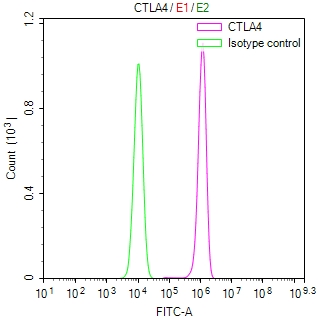
Overlay Peak curve showing JK cells surface stained with CSB-RA006163MA1HU (red line) at 1:50.
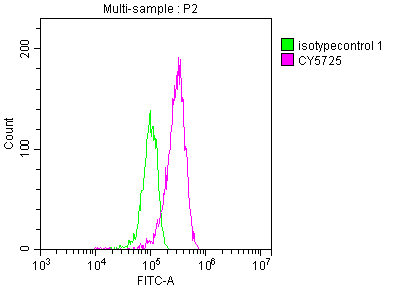
Overlay histogram showing HepG2 cells stained with CSB-RA792129A0HU (red line) at 1:50.
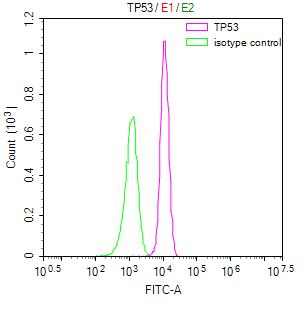
Overlay Peak curve showing Hela cells surface stained with CSB-RA024077MA1HU (red line) at 1:100.
Tumour


