







Call us
301-363-4651 (Available 9 a.m. to 5 p.m. CST from Monday to Friday)


World Pancreatic Cancer Day is observed on the third Thursday of November each year, aiming to raise public awareness and attention to pancreatic cancer. Pancreatic cancer is a malignant tumor that occurs in the cells of the pancreas, which is located in the back of the stomach and is responsible for secreting digestive enzymes and hormones that regulate blood glucose levels.
The etiology of pancreatic cancer is not fully understood, but several risk factors are known, including smoking, obesity, diabetes, chronic pancreatitis, and family history. Pancreatic cancer usually has a poor prognosis, with a 5-year survival rate of less than 10%. Early symptoms are nonspecific and often go unnoticed until the cancer is in its advanced stages, earning it the nickname "king of cancers." Globally, pancreatic cancer ranks 13th in incidence among all malignant tumors and 8th in mortality related to cancer.
There are two main types of pancreatic cancer: exocrine pancreatic cancer, which accounts for about 95% of all cases, and endocrine or islet cell tumors (also known as insulinocytomas), the latter of which is rarer. Early symptoms of pancreatic cancer are atypical and may include upper abdominal discomfort or vague pain, weight loss, and fatigue, which can easily be mistaken for other digestive diseases. Therefore, enhancing early diagnosis and treatment of pancreatic cancer is of great significance in improving the prognosis of pancreatic cancer patients.
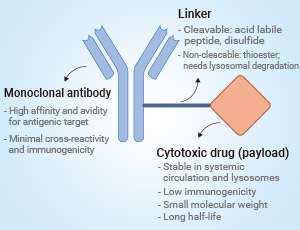
The treatments for pancreatic cancer mainly include surgical resection, chemotherapy, radiotherapy, immunotherapy and targeted therapy. Immunotherapy has emerged as a new focus in the treatment of pancreatic cancer in recent years. Currently, several antibody drugs targeting different antigens, such as IGF-1R, EGFR, HER2, VEGF, CTLA-4, and PD-1, are in clinical research stages [1].
In order to better assist you in pancreatic cancer related mechanism research and drug development, CUSABIO has compiled a list of popular targets and corresponding products for pancreatic cancer research for your reference.
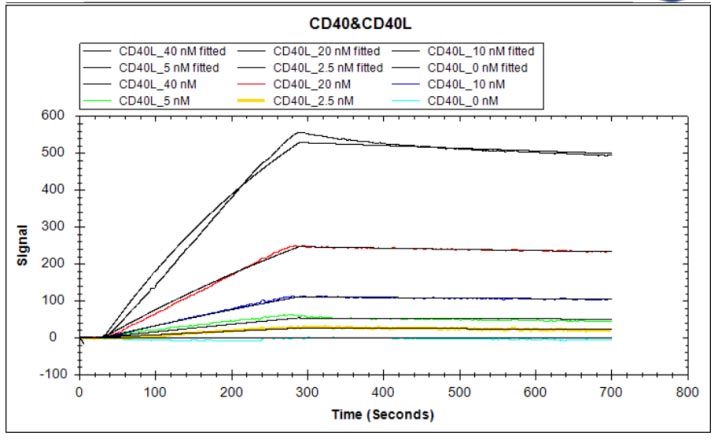
Human CD40 protein hFc tag (CSB-MP004936HU1) captured on COOH chip can bind Human CD40L protein hFc and Flag tag (CSB-MP004937HU3) with an affinity constant of 2.06 nM as detected by LSPR Assay.
-AC1.jpg)
Measured by its binding ability in a functional ELISA. Immobilized human CLDN18.2 (CSB-MP005498HU(A5)) at 5 μg/ml can bind anti-CLDN18.2 recombinant Monoclonal Antibody (CSB-RA005498A1HU), the the EC50 is 5.225-9.256 ng/ml.
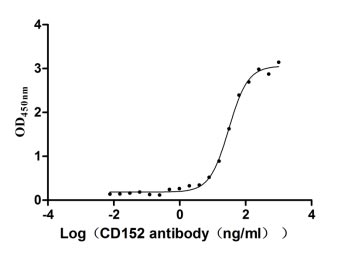
Measured by its binding ability in a functional ELISA. Immobilized CD152 at 2 μg/ml can bind Anti-CD152 rabbit monoclonal antibody (CSB-RA213310A0HU), the EC50 of human CD152 protein is 27.14-34.82 ng/ml
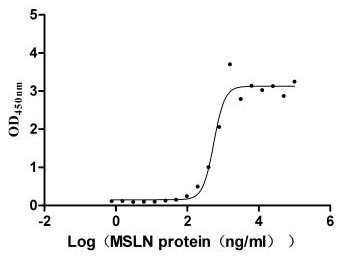
Measured by its binding ability in a functional ELISA. Immobilized MUC16 at 10 μg/ml can bind MSLN (CSB-MP015044HUc9), the EC50 is 460.7-662.2 ng/ml.
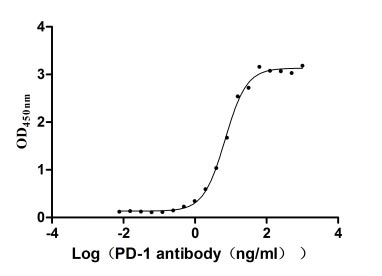
Measured by its binding ability in a functional ELISA. Immobilized PD-1 at 2 μg/ml can bind Anti-PD-1 recombinant antibody, the EC50 of human PD-1 protein is 6.087-7.854 ng/ml.
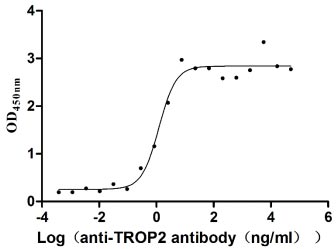
Measured by its binding ability in a functional ELISA. Immobilized Human TROP2 at 2 μgg/mL can bind Anti-TROP2 recombinant antibody (CSB-RA023072MA1HU), the EC50 is 0.9108-1.640 ng/mL.
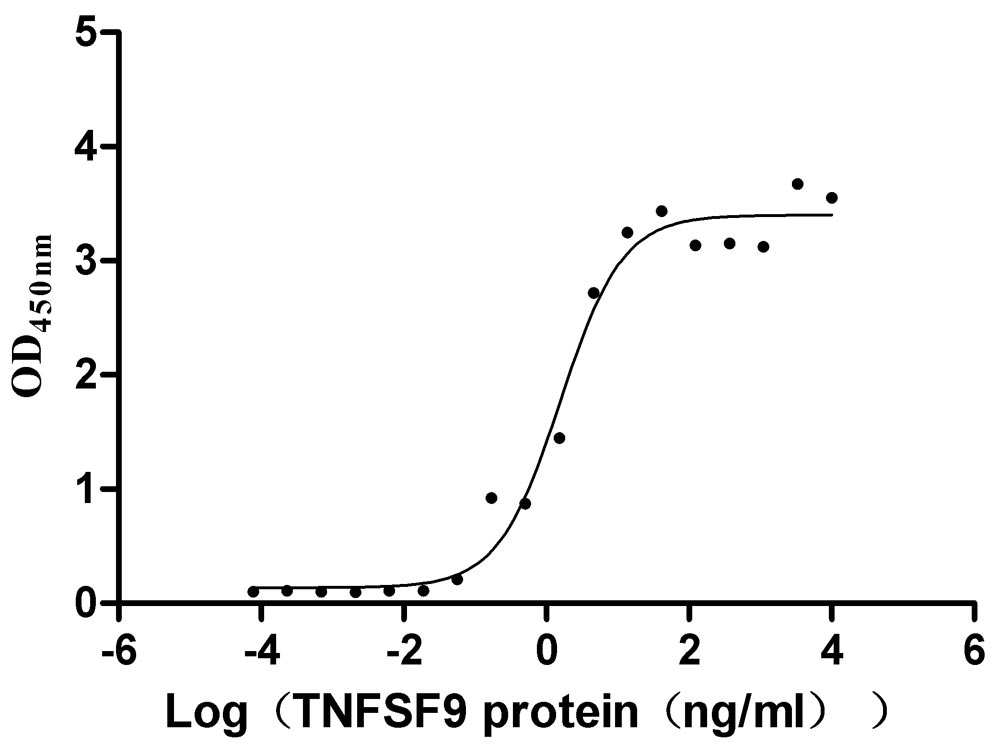
Measured by its binding ability in a functional ELISA. Immobilized TNFRSF9 at 2 μg/ml can bind TNFSF9 (CSB-MP023997HU1), the EC50 is 1.011-2.429 ng/mL.
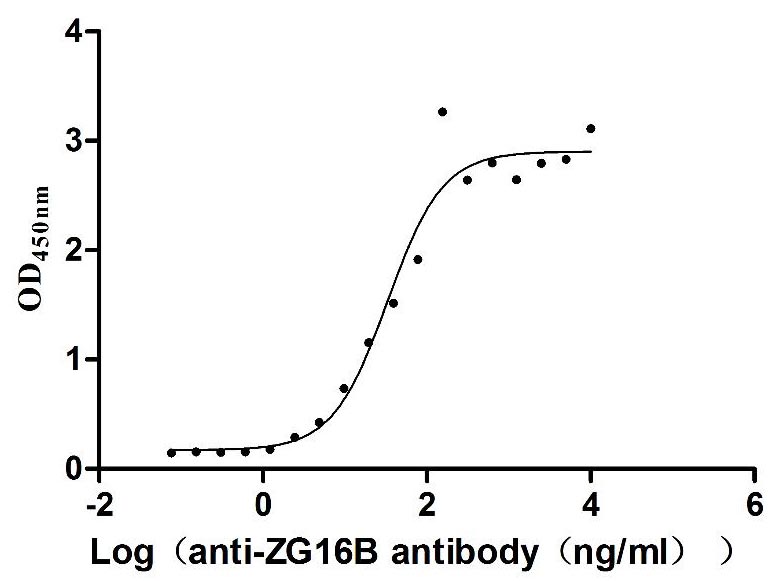
Measured by its binding ability in a functional ELISA. Immobilized Human ZG16B at 2 μg/ml can bind Anti-ZG16B recombinant antibody (CSB-RA836195MA1HU), the EC50 is 24.13-46.04 ng/mL.

CT26/Human ROR1 Stable Cell Line
CSB-SC004847HU2
Untransfected CHO-K1 cells (green line) and transfected Human CCR8 CHO-K1 stable cells (red line) were stained with anti-CCR8 antibody (CSB-RA004847A1HU) (2µg/1*106 cells), washed and then followed by FITC-conjugated anti-Human IgG Fc antibody and analyzed with flow cytometry.
CT26/Human ROR1 Stable Cell Line
CSB-SC004847HU3
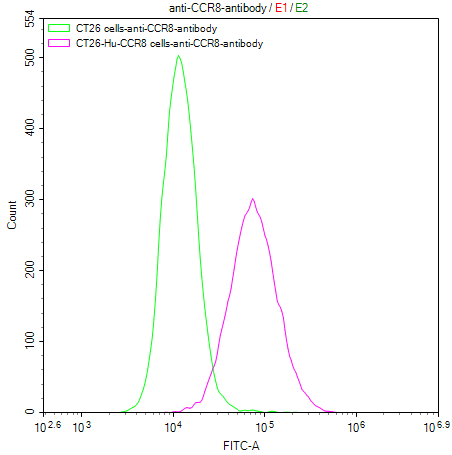
Untransfected CT26 cells (green line) and transfected Human CCR8 CT26 Stable cells (red line) were stained with anti-CCR8 antibody (2µg/1*106 cells), washed and then followed by FITC-conjugated anti-Human IgG Fc antibody and analyzed with flow cytometry.

CT26/Human ROR1 Stable Cell Line
CSB-SC004847MO
Untransfected CHO-K1 cells (green line) and transfected Mouse CCR8 CHO-K1 Stable cells (red line) were stained with anti-Mouse CD198-PE antibody (2µg/1*106 cells) and analyzed with flow cytometry.

HEK293T/Human CDH17 Stable Cell Line
CSB-SC613267HU2
Untransfected HEK293T cells (green line) and transfected Human CDH17 HEK293T stable cells (red line) were stained with anti-CDH17 antibody (CSB-RA613267MA1HU) (2µg/1*106), washed and then followed by FITC-conjugated anti-Human IgG Fc antibody and analyzed with flow cytometry.
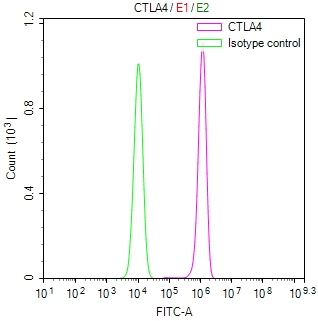
Tested Applications:
ELISA, WB, IF, FC
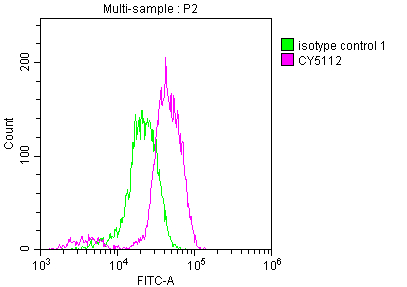
Tested Applications:
ELISA, WB, IHC, IF, FC
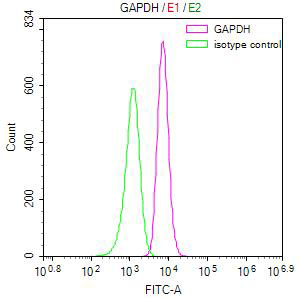
Tested Applications:
ELISA, WB, IHC, IF, FC
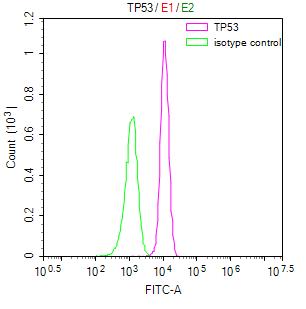
Tested Applications:
ELISA, WB, IF, FC
References
[1] Therapeutic Application of Monoclonal Antibodies in Pancreatic Cancer: Advances, Challenges and Future Opportunities. Cancers (Basel), 2021.
Tumour


