


Call us
301-363-4651 (Available 9 a.m. to 5 p.m. CST from Monday to Friday)

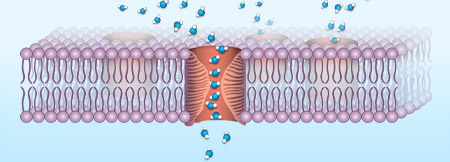
Transmembrane protein (TP), also known as intact protein, is a type of membrane protein exists in the whole biofilm. Transmembrane protein plays an important role in basic physiological processes, including molecule transport, signal transduction, energy utilization, etc. On one hand, they are useful for signaling to the cell what the external environment contains. On the other hand, they serve as a way for the cell to gather information about the external environment.
Almost 30% of genes in genomic sequence encode transmembrane proteins, of which 50% are targets for currently known drugs. However, expression and purification of transmembrane protein are very difficult. And CUSABIO will help you to overcome the difficulties.
● Multiple membrane protein expression technology platforms.
During the expression process of enveloped virus capsid protein, it can self-assemble into nanoparticles. After the expression of the target protein (transmembrane protein), it is located on the cell membrane, and VLP is released by budding. The transmembrane proteins are displayed on the envelope of the released nanoparticles (ie, VLPs particles).
In this platform, CUSABIO mainly use the mammalian cell expression system for target protein expression. The post-translational modification of the mammalian cell system is the closest to the natural protein, and most pharmaceutical companies choose the drug target proteins from human species, so the Mammalian cell system is the best choice.

Advantages:
Because of their strong hydrophobicity, transmembrane proteins are either difficult to dissolve in conventional solvents or cannot display the correct conformation. Appropriate detergents need to be added to aid solubility. CUSABIO has specially built a detergent technology platform based on cell free expression. Synthesize proteins by adding DNA templates, ATP, amino acids, various substrates, and enzymes derived from cell extracts in vitro, and then extract the target protein by screening different detergents.
In this platform, CUSABIO uses in vitro E.coli expression system for the target protein expression, then by screening different detergents to extract the target protein.

Advantages:
In the buffer containing detergents, most membrane proteins can maintain stability and activity. However, a few membrane proteins that are sensitive to detergents are not suitable for buffering conditions containing detergents, which are specifically incapable of purification and poor stability (easy to be degraded or obvious precipitation) and no activity. For this type of membrane protein, we suggest to try the nanodiscs technology.
In this platform, CUSABIO uses in vitro E.coli expression system for the target protein expression, the other expression systems such as mammalian cell system is also suitable, but we haven't developed yet. In the process of protein expression in the in vitro E.coli system, membrane skeleton protein (MSP) and phospholipid molecule (DMPC) were added to assemble nanodiscs during expression. Components: target protein (transmembrane protein), membrane skeleton protein (MSP), phospholipid molecule (DMPC).

Advantages:
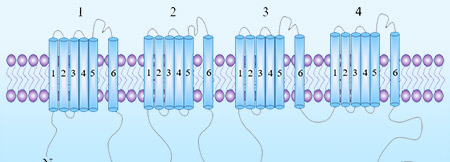
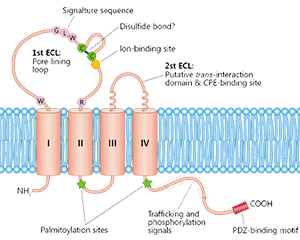
CUSABIO, as an experienced protein manufacturer, provides the above three technology platforms to fuel the development of transmembrane proteins. Since establishment of these platforms, 200 proteins have been successfully produced with a yield of mg/ml, which contains 99 transmembrane proteins (TPs) with 1-15 transmembrane domains and toxic proteins that are difficult to express in traditional E.coli expression systems. We have also produced high molecular weight proteins (130 kDa -140 kDa) that contain multiple transmembrane domains.
● Nearly 400 full-length membrane proteins have been successfully developed.
CLDN18.2
(4 times)
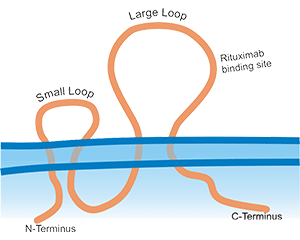
CD20
(4 times)
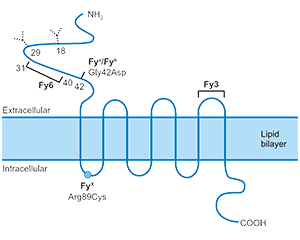
ACKR1
(7 times)

ADIPOR1
(7 times)
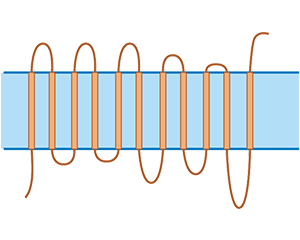
RHD
(11 times)
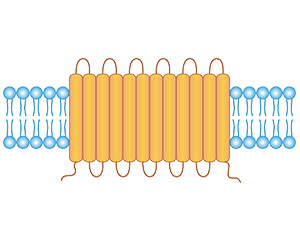
SLC7A11
(12 times)
● High purity determined by SDS-PAGE.
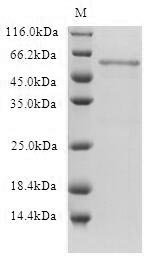
The purity of HTR1B (CSB-CF010882HUb2) (7 times) is greater than 90% as determined by SDS-PAGE with 5% enrichment gel and 15% separation gel.
-SDS.jpg)
The purity of CLCN3 (CSB-CF005482HU(A4) (15 times) is greater than 85% as determined by SDS-PAGE with 5% enrichment gel and 15% separation gel.
● High Specificity Validated by Western blot (WB).
-WB.jpg)
CLDN18.2 (CSB-MP005498HU(A5)) (4 times) is detected by Mouse anti-6*His monoclonal antibody. The three bands respectively correspond to monomer, Homodimer, Homotrimer.

CD20 (CSB-MP015007HU) (4 times) is detected by Mouse anti-6*His monoclonal antibody.
● Good bioactivity validated by Functional ELISA.

Immobilized ABCD1 (CSB-CF001068HU) (5 times) at 5 μg/ml can bind human PEX19, the EC50 of human PEX19 is 22.96-33.00 μg/ml.
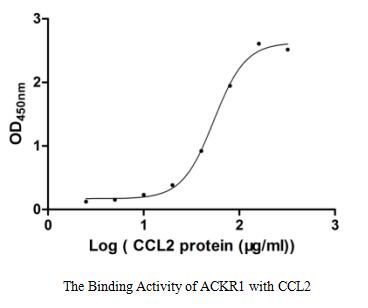
Immobilized ACKR1 (CSB-CF624105HU) (7 times) at 1 μg/ml can bind human CCL2, the EC50 of human CCL2 protein is 48.64-60.24 μg/ml.
● Correct structure validated by SEM.
-TEM1.jpg)
The VLP-like structures of CLDN18.2 (CSB-MP005498HU(A5)) (4 times) has been confirmed by TEM.
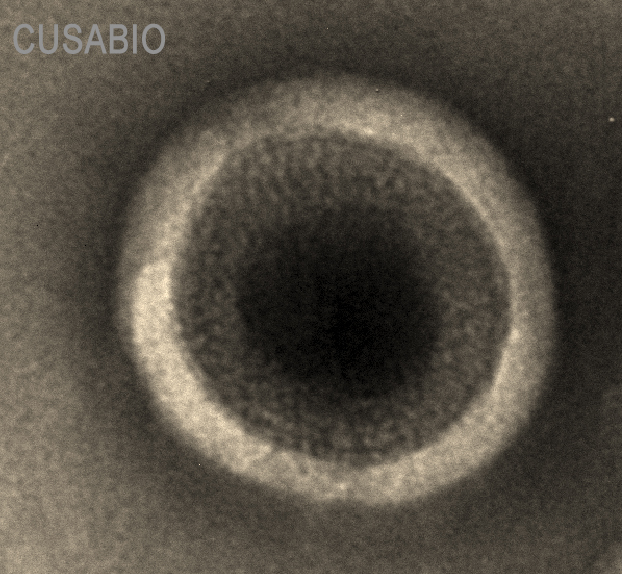
The VLP-like structures of CD20 (CSB-MP015007HU) (4 times) has been confirmed by TEM.
CLDN18.2
CSB-MP005498HU(A5)
-AC1.jpg)
Measured by its binding ability in a functional ELISA. Immobilized human CLDN18.2 (CSB-MP005498HU(A5)) at 5 μg/ml can bind anti-CLDN18.2 recombinant Monoclonal Antibody (CSB-RA005498A1HU), the the EC50 is 5.225-9.256 ng/ml.
CLDN6
CSB-MP005508HU(A4)
-AC1.jpg)
Measured by its binding ability in a functional ELISA. Immobilized Human CLDN6 at 10 μg/ml can bind Anti-CLDN6/9 recombinant antibody (CSB-RA005508MA1HU), the EC50 is 1.501-2.035 ng/mL
-AC1.jpg)
Measured by its binding ability in a functional ELISA. Immobilized human GPC3 (G537R) at 5 μg/ml can bind Anti-GPC3 recombinant antibody, the EC50 is 4.739-7.092 ng/ml.
CCR4
CSB-MP004843HU
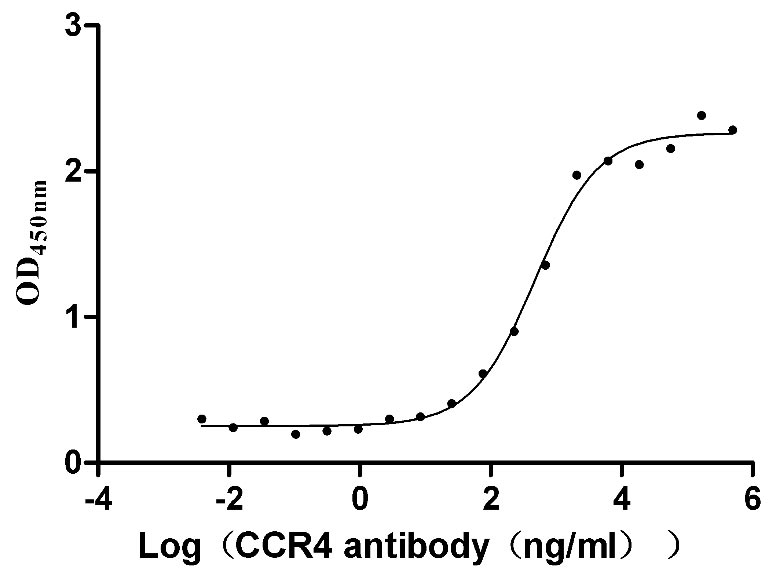
Measured by its binding ability in a functional ELISA. Immobilized Human CCR4 at 10 μg/ml can bind Anti-CCR4 recombinant antibody (CSB-RA004843MA01HU), the EC50 is 362.3-630.8 ng/mL.
GPRC5D
CSB-MP882153HU
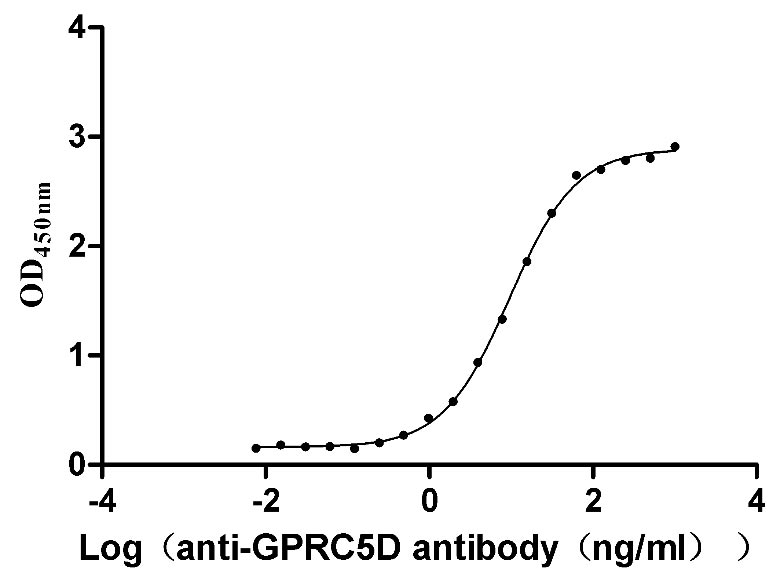
Measured by its binding ability in a functional ELISA. Immobilized Human GPRC5D at 5 μg/mL can bind Anti-GPRC5D recombinant antibody (CSB-RA882153MA01HU), the EC50 is 8.847-10.38 ng/mL.
CXCR4
CSB-MP006254HU(F1)
-AC1.jpg)
Measured by its binding ability in a functional ELISA. Immobilized Human CXCR4 at 10 μg/ml can bind Anti-CXCR4 recombinant antibody (CSB-RA006254MA01HU), the EC50 is 101.7-253.6 ng/mL.
CCR8
CSB-MP004847HU

Measured by its binding ability in a functional ELISA. Immobilized human CCR8 (CSB-MP004847HU) at 5 μg/ml can bind Anti-CCR8 recombinant Antibody, the the EC50 is 11.13-17.29 ng/ml.
C5AR1
CSB-MP003996HU
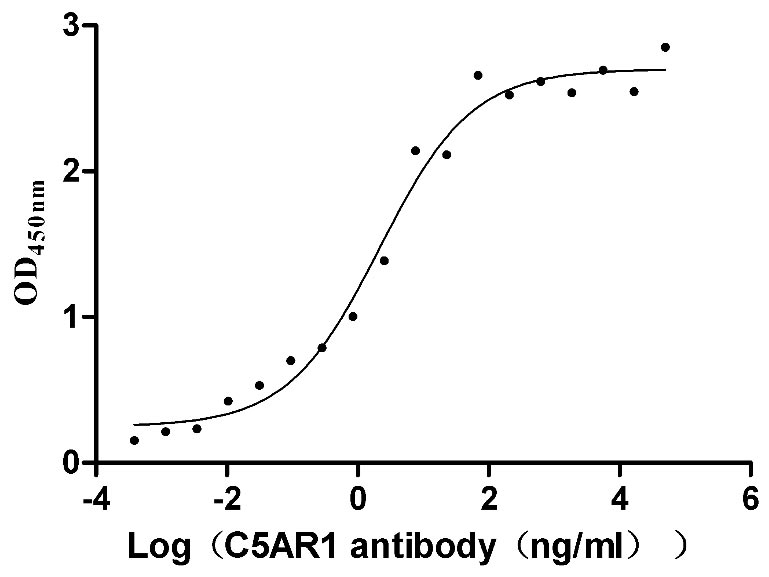
Measured by its binding ability in a functional ELISA. Immobilized human C5AR1 at 10 μg/ml can bind Anti-C5AR1 recombinant antibody (CSB-RA003996A0HU), the EC50 is 1.239-3.760 ng/mL.
A: Different membrane protein technology platforms have their own advantages and disadvantages. The selection should be based on the specific protein expression needs and application scenarios. You can consult with technical personnel from CUSABIO for specific guidance. Below is a comparison of different platforms:
| Technology Platforms | Virus Like Particles (VLP) Platform | Detergent Micelle Platform | Nanodisc Platform |
|---|---|---|---|
| Coating for ELISA | Direct coating | Direct coating | Direct coating |
| Activity | Great | Good | Good |
| Stability | Most stable | Relatively stable | Relatively stable |
| Purity | Mixture | Relatively pure (only target protein) | Mixture |
| SPR/BLI | Detectable | Detectable (solution adjustment required) | Detectable |
| Factors to consider | Total protein concentration; relatively short preparation cycle | Relatively long preparation cycle | Relatively long preparation cycle |
A: Mammalian enveloped VLPs are enveloped virus-like particles, which are self-assembled by one or several structural proteins of the virus into a virus-free genome that cannot replicate and have no infectivity, but are similar in shape and structure to complete viruses and do not contain viral nucleic acid substances. It’s safe. Now many vaccines will also choose this technology, which shows that it is safe.
Mammalian enveloped VLPs are co-transfected with two expression plasmids (expressing transmembrane protein and capsid protein respectively) without using any virus and viral vector, and the transfection reagents are used for transient transfection.
A: In the early stage of platform development, a variety of membrane skeleton proteins and phospholipid molecules were tried, and orthogonal combinations were attempted, and finally a pair of optimal membrane skeleton proteins and phospholipid molecules was screened out. At present, the platform is mature and we use this same combination for different projects.
A: Considering that the total concentration of VLPs is measured, the recommended coating concentration is 2-10ug/ml, and the amount used for one well is 0.2-1ug.
Transmembrane proteins are located at the interface between cells and the outside world, mediating the signal transduction between cells and the outside world, and performing many important cellular biological functions. For example, it is a receptor for various signaling molecules, hormones and other substrates; it is involved in the exchange of substances, energy and signal between the inside and outside of the cell membrane; it constitutes a channel for various ion transmembranes, which inputs nutrients and some inorganic electrolytes into cells, and discharges toxic or useless metabolites into cells.
Transmembrane protein products expressed by cell-free expression systems can be used to study the functions of transmembrane proteins. The integration of transmembrane proteins into vesicles for structural and functional studies is a hot topic in membrane protein research.
According to its structure, transmembrane proteins can be classified into alpha helix and β - barrel membrane proteins. For details, please refer to the article: A Resume for Transmembrane Proteins.




