




Call us
301-363-4651 (Available 9 a.m. to 5 p.m. CST from Monday to Friday)


Idiopathic Pulmonary Fibrosis (IPF) is a chronic, progressive, and fatal form of interstitial pneumonia characterized by irreversible fibrotic remodeling of lung tissue, ultimately leading to respiratory failure. Its core pathological mechanisms include repeated injury to alveolar epithelial cells and abnormal repair processes, which drive the activation of fibroblasts into myofibroblasts. This results in excessive deposition of extracellular matrix, forming pulmonary scars.
Clinically, it presents with exertional dyspnea, dry cough, and fatigue, often accompanied by progressive decline in lung function. Approximately 50% of patients also have interstitial lung disease (ILD). IPF primarily affects individuals over 50 years old, with a median survival of only 2-5 years. Its prognosis is worse than many cancers, earning it the moniker "the cancer that isn't cancer."
Drug development for Idiopathic Pulmonary Fibrosis (IPF) focuses on core mechanisms like fibrosis, inflammation, and cellular repair, targeting key pathways including:
● Transforming Growth Factor-beta (TGF-β) Pathway: The existing drug nintedanib delays lung function decline by inhibiting TGF-β downstream receptors (VEGFR, PDGFR, FGFR). Bristol Myers Squibb's BMS-986278 (Admilparant), a lysophosphatidic acid receptor 1 (LPAR1) antagonist, demonstrated a 54% reduction in the annual rate of forced vital capacity (FVC) decline in its Phase II study and is currently in Phase III trials.
● Phosphodiesterase 4B (PDE4B): Boehringer Ingelheim's oral inhibitor nerandomilast significantly slowed FVC decline in the Phase III FIBRONEER-IPF trial with a manageable safety profile. It has been submitted for marketing approval in China and granted priority review.
● Connective Tissue Growth Factor (CTGF): Pliant Therapeutics' bexotegrast (PLN-74809), which inhibits the binding of CTGF to TGF-β, showed reduced FVC decline in a Phase IIa study and is now advancing to Phase IIb/III trials.
Current IPF drug discovery is breaking new ground with multi-target approaches and novel mechanisms. Insilico Medicine leveraged AI to discover the TNIK kinase inhibitor INS018_055, which demonstrated superior anti-fibrotic effects to nintedanib in preclinical studies and synergistic effects when combined with pirfenidone. The National Institute of Biological Sciences, Beijing (NIBS), identified AREG protein as a key target, and its inhibitor has entered Phase I clinical trials. In the realm of cell therapies, Shanghai Jiao Tong University's autologous basal stem cell transplantation and Genmir Biotech's REGEND001 airway basal stem cell therapy have both shown positive outcomes, including improved lung function, in clinical trials. Furthermore, Korean research confirmed that ezetimibe inhibits fibroblast differentiation, and Chinese scientists identified the GOLM1-KLF4-NEAT1 signaling pathway as having potential value, offering new hope for IPF treatment.
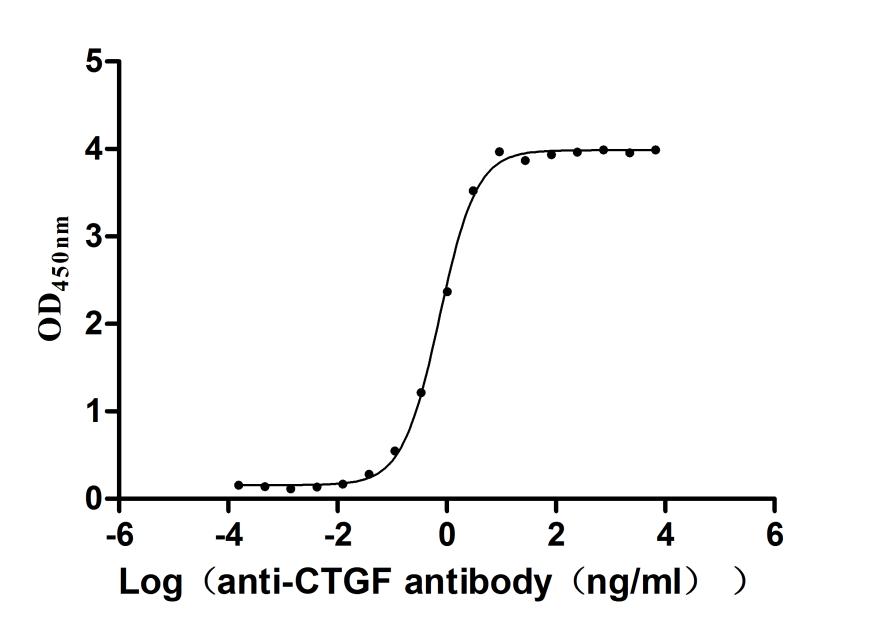
Measured by its binding ability in a functional ELISA. Immobilized Rhesus macaque CTGF at 1 μg/ml can bind Anti-CTGF recombinant antibody (CSB-RA006147MA2HU). The EC50 is 0.6886-0.7825 ng/mL.
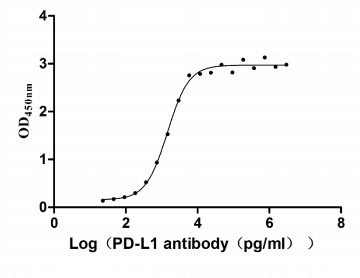
Measured by its binding ability in a functional ELISA. Immobilized PD-L1 at 2 μg/ml can bind Anti- PD-L1 mouse monoclonal antibody(CSB-MA878942A1m,antigen from E.coli), the EC50 of human PD-L1 protein is 1.252-1.653 ng/mL.
-AC1.jpg)
Measured by its binding ability in a functional ELISA. Immobilized Human CXCR4 at 10 μg/ml can bind Anti-CXCR4 recombinant antibody (CSB-RA006254MA01HU), the EC50 is 101.7-253.6 ng/mL.

Measured by its binding ability in a functional ELISA. Immobilized CD73 at 2 μg/ml can bind Anti- CD73 Rabbit Monoclonal Antibody(CSB-RA978310A0HU), the EC50 is 3.212-4.525 ng/ml.
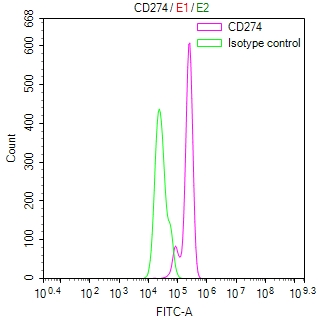
Tested Applications:
ELISA, IHC, FC

Tested Applications:
ELISA, WB, IHC

Tested Applications:
ELISA, WB, IF
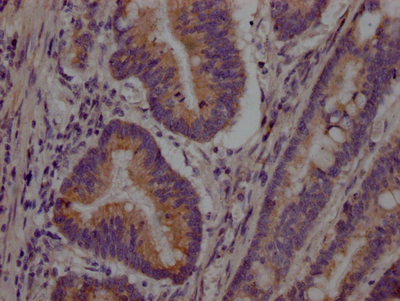
Tested Applications:
ELISA, WB, IHC
| Target | Product Name | Species Reactivity | Tested Applications | Code |
|---|---|---|---|---|
| CD274 | CD274 Recombinant Monoclonal Antibody | Human | ELISA, WB, IHC | CSB-RA977797A0HU |
| CD274 | CD274 Recombinant Monoclonal Antibody | Human | ELISA, IHC, FC | CSB-RA878942MA1HU |
| CD38 | CD38 Recombinant Monoclonal Antibody | Human | ELISA, WB, IHC | CSB-RA796695A0HU |
| CD40 | CD40 Recombinant Monoclonal Antibody | Human | ELISA, IF, FC | CSB-RA004936MA1HU |
| GCGR | GCGR Recombinant Monoclonal Antibody | Human | ELISA | CSB-RA009316A1HU |
| IL17A | IL17A Recombinant Monoclonal Antibody | Human | ELISA | CSB-RA624104MA1HU |
| IL23A | IL23A Recombinant Monoclonal Antibody | Human | ELISA, WB | CSB-RA251959A0HU |
| IL6 | IL6 Recombinant Monoclonal Antibody | Human | ELISA | CSB-RA011664MA1HU |
| ITGAL | ITGAL Recombinant Monoclonal Antibody | Human | ELISA, WB, IF | CSB-RA787996A0HU |
| MS4A1 | CD20 Recombinant Monoclonal Antibody | Human | ELISA | CSB-RA015007A0HU |
| MS4A1 | MS4A1 Recombinant Monoclonal Antibody | Human | ELISA | CSB-RA015007A1HU |
| MS4A1 | MS4A1 Recombinant Monoclonal Antibody | Human, Dog, Macaca fascicularis | ELISA | CSB-RA015007MA3HU |
| MS4A1 | MS4A1 Recombinant Monoclonal Antibody | Human | ELISA, IHC, IF | CSB-RA015007MA4HU |
| PCSK9 | PCSK9 Recombinant Monoclonal Antibody | Human | ELISA, WB, IHC | CSB-RA259644A0HU |
| SELPLG | SELPLG Recombinant Monoclonal Antibody | Human | ELISA, IHC | CSB-RA567010A0HU |
| Target | Product Name | Species Reactivity | Tested Applications | Code |
|---|---|---|---|---|
| CD2 | CD2 Monoclonal Antibody | Human,Mouse,Rat | ELISA, IHC | CSB-MA000227 |
| CD2 | CD2 Monoclonal Antibody,FITC Conjugated | Human | ELISA, IF, FC | CSB-MA785710 |
| CD38 | CD38 Monoclonal Antibody | Human | ELISA, IHC | CSB-MA785760 |
| IL1B | IL1B Monoclonal Antibody | Human | ELISA | CSB-MA065741A0m |
| IL1B | IL1B Monoclonal Antibody | Human | ELISA, WB, IHC, ICC | CSB-MA010884 |
| IL6 | IL6 Monoclonal Antibody | Human | ELISA, WB, IHC | CSB-MA067571A0m |
| ITGAL | ITGAL Monoclonal Antibody,FITC Conjugated | Human | ELISA, IF, FC | CSB-MA120024 |
| ITGAL | ITGAL Monoclonal Antibody,PE Conjugated | Human | ELISA, IF, FC | CSB-MA897229 |
| MS4A1 | MS4A1 Monoclonal Antibody | Human,Mouse,Rat | ELISA, IHC | CSB-MA000204 |
| MS4A1 | MS4A1 Monoclonal Antibody | Human | ELISA, IHC | CSB-MA996413 |
| TNF | TNF Monoclonal Antibody | Bovine | ELISA | CSB-MA084771A0m |
| TNF | TNF Monoclonal Antibody | Human,Mouse,Rat | ELISA, WB, IHC | CSB-MA080271 |
| TNF | TNF Monoclonal Antibody | Human,Mouse,Rat | ELISA, WB, IHC | CSB-MA080272 |


