
Call us
301-363-4651 (Available 9 a.m. to 5 p.m. CST from Monday to Friday)

Endometrial cancer is the most common gynecologic malignancy in the United States. This cancer begins in the uterus, which is the hollow, pear-shaped pelvic organ where fetal development occurs. The incidence of endometrial cancer among malignant gynecological tumors has increased with lifestyle and environmental changes, and has reached almost half of all cases of uterine cancer in Western countries [1].
Traditional classification of endometrial cancer is usually based on clinical and endocrine features: types I and II. Type I endometrial carcinomas generally develop before the time of menopause. Type II endometrial carcinomas occur in older, post-menopausal women in most cases. Regarding to the mechanisms of carcinogenesis in endometrial cancer, genetic abnormalities (mutations in the DNA) of cells in the endometrium are currently clear. The figure 1 shows that several gene mutations have emerged as candidates for roles in carcinogenesis of type I and II endometrial cancer, based on observation of the mutation in endometrial hyperplasia and at least a similar incidence of mutation in endometrial cancer.
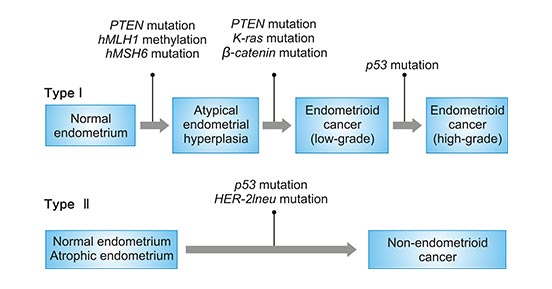
Figure 1. Gene mutations in the carcinogenesis of endometrial cancer
*this diagram is derived from publication on The Journal of Obstetrics and Gynaecology Research [2]
In this article, we list part of these proteins involved in endometrial cancer based on the information provided by NCG (web resource to analyze duplicability, orthology and network properties of cancer genes).
Here, we display several key targets involved in mechanism of endometrial cancer, including:
References
[1] Kouji Banno, Megumi Yanokura, Yusuke Kobayashi et al. Endometrial Cancer as a Familial Tumor: Pathology and Molecular Carcinogenesis (Review) [J]. Curr Genomics. 2009, 10(2): 127–132.
[2] Kouji Banno, Megumi Yanokura, Miho Iida et al. Carcinogenic mechanisms of endometrial cancer: Involvement of genetics and epigenetics [J]. The Journal of Obstetrics and Gynaecology Research. 2014.
[3] Haesen D, Abbasi Asbagh L, Derua R et al. Recurrent PPP2R1A Mutations in Uterine Cancer Act through a Dominant-Negative Mechanism to Promote Malignant Cell Growth [J]. Cancer Res. 2016, 76(19): 5719-5731.
[4] Nagendra DC, Burke J 3rd, Maxwell GL, Risinger JI. PPP2R1A mutations are common in the serous type of endometrial cancer [J]. Mol Carcinog. 2012, 51(10):826-31.
[5] TAKASHI TAKEDA, KOUJI BANNO, RYUICHIRO OKAWA et al. ARID1A gene mutation in ovarian and endometrial cancers (Review) [J]. Oncol Rep. 2016, 35(2): 607–613.
[6] CHRISAVGI TOUMPEKI, ANASTASIOS LIBERIS, IOANNIS TSIRKAS et al. The Role of ARID1A in Endometrial Cancer and the Molecular Pathways Associated With Pathogenesis and Cancer Progression [J]. In Vivo. 2019, 33(3): 659–667.
[7] Yang Li, Qingxin Liu, Daniel J McGrail et al. CHD4 mutations promote endometrial cancer stemness by activating TGF-beta signaling [J]. Am J Cancer Res. 2018, 8(5): 903- 914.
[8] Garcia-Dios, Diego A.; Lambrechts, Diether; Coenegrachts, Lieve et al. High-throughput interrogation of PIK3CA, PTEN, KRAS, FBXW7 and TP53 mutations in primary endometrial carcinoma [J]. Gynecologic Oncology. 2013, 128(2), 327–334.
[9] P Zhang, K Gao, X Jin et al. Endometrial cancer-associated mutants of SPOP are defective in regulating estrogen receptor-α protein turnover [J]. Cell Death Dis. 2015, 12;6(3):e1687.
Most Common Cancers
The Pathogenesis of Cancer
Related Articles
Related Pathways


