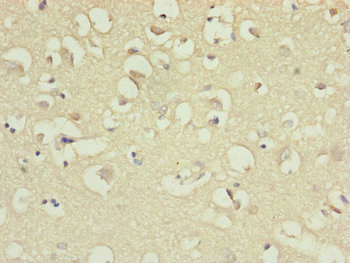
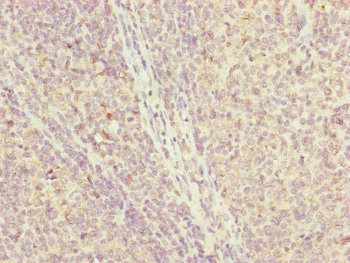
FIL1 antibody; FIL1 epsilon antibody; FIL1(EPSILON) antibody; FIL1E antibody; IL 1 epsilon antibody; IL 1F6 antibody; IL 1H1 antibody; IL-1 epsilon antibody; IL-1F6 antibody; IL1E antibody; IL1F6 antibody; IL1F6_HUMAN antibody; IL1RP2 antibody; IL36 alpha antibody; IL36A antibody; Interleukin 1 epsilon antibody; Interleukin 1 family member 6 (epsilon) antibody; Interleukin 1 family member 6 antibody; Interleukin 36 alpha antibody; Interleukin-1 epsilon antibody; Interleukin-1 family member 6 antibody; MGC129552 antibody; MGC129553 antibody; MGC151479 antibody; MGC151481 antibody; OTTMUSP00000012798 antibody; RP23-176J12.4 antibody
Raised in
Rabbit
Species Reactivity
Human
Immunogen
Recombinant Human Interleukin-36 alpha protein (1-158AA)
Immunogen Species
Homo sapiens (Human)
Conjugate
Non-conjugated
Clonality
Polyclonal
Isotype
IgG
Purification Method
Antigen Affinity Purified
Concentration
It differs from different batches. Please contact us to confirm it.
Buffer
PBS with 0.02% sodium azide, 50% glycerol, pH7.3.
Form
Liquid
Note: We will preferentially ship the format that we have in stock, however, if you have any special requirement for the format, please remark your requirement when placing the order, we will prepare according to your demand.
Upon receipt, store at -20°C or -80°C. Avoid repeated freeze.
Lead Time
Basically, we can dispatch the products out in 1-3 working days after receiving your orders. Delivery time maybe differs from different purchasing way or location, please kindly consult your local distributors for specific delivery time.
Note: All of our proteins are default shipped with normal blue ice packs, if you request to ship with dry ice, please communicate with us in advance and extra fees will be charged.
Usage
For Research Use Only. Not for use in diagnostic or therapeutic procedures.
Cytokine that binds to and signals through the IL1RL2/IL-36R receptor which in turn activates NF-kappa-B and MAPK signaling pathways in target cells linked to a pro-inflammatory response. Part of the IL-36 signaling system that is thought to be present in epithelial barriers and to take part in local inflammatory response; similar to the IL-1 system with which it shares the coreceptor IL1RAP. Seems to be involved in skin inflammatory response by acting on keratinocytes, dendritic cells and indirectly on T-cells to drive tissue infiltration, cell maturation and cell proliferation. In cultured keratinocytes induces the expression of macrophage, T-cell, and neutrophil chemokines, such as CCL3, CCL4, CCL5, CCL2, CCL17, CCL22, CL20, CCL5, CCL2, CCL17, CCL22, CXCL8, CCL20 and CXCL1, and the production of proinflammatory cytokines such as TNF-alpha, IL-8 and IL-6. In cultured monocytes upregulates expression of IL-1A, IL-1B and IL-6. In myeloid dendritic cells involved in cell maturation by upregulating surface expression of CD83, CD86 and HLA-DR. In monocyte-derived dendritic cells facilitates dendritic cell maturation and drives T-cell proliferation. May play a role in proinflammatory effects in the lung.
Gene References into Functions
serum IL-36alpha levels were higher in active systemic lupus erythematosus patients and correlated with disease activity and arthritisPMID:29571080
Data suggest that interleukin-36alpha (IL-36alpha) plays an important role in the pathophysiology of inflammation and fibrosis in the pancreas via an autocrine function.PMID:28099250
The data identify a novel role for IL-36 signaling in colonic inflammation and indicate that the IL-36R pathway may represent a novel target for therapeutic intervention.PMID:26813344
IL-36a was displayed to be able to suppress the growth of epithelial ovarian cancer cells in our setting, which is suggestive of its druggable potential in curing the epithelial ovarian cancer and that upregulation of IL-36a was found to be capable of inhibiting the growth of epithelial ovarian cancer cells.PMID:28621240
Increased Expression of Interleukin-36 is associated with Inflammatory Bowel Disease.PMID:26752465
IL-36alpha acts as a pro-inflammatory cytokine at cartilage level, by increasing the expression of markers of inflammation and cartilage catabolism.PMID:26560022
Study shows that plasma concentrations of IL-36alpha and IL-36gamma are overexpressed in active systemic lupus erythematosus patients and that IL-36alpha has a substantial pro-inflammatory effect through regulation of IL-6 and CXCL8 production.PMID:26516833
increases maturation of monocyte-derived dendritic cellsPMID:25700962
IL36A-IL36R axis is modulated in patients with primary Sjogren's syndrome.PMID:25902739
IL-36alpha was highly expressed in nearly half of all colorectal cancer patients. Low expression level of IL-36alpha correlated with larger tumor size and advanced cancer stage. Low expression of IL-36alpha resulted in a poor prognosis of colorectal cancer patients.PMID:25550854
Results show that IL-36alpha expression may play a pivotal role in determining the prognosis of hepatocellular carcinoma (HCC).PMID:24061617
The novel cytokine interleukin-36alpha is expressed in psoriatic and rheumatoid arthritis synovium.PMID:23268368
Expression of IL-1F6 is increased in human plaque psoriasis skin and in the lesional skin of transgenic mice compared with monotransgenic littermates.PMID:21242515
A functional IL-6 polymorphism has been weakly associated with level of peak bone mineral density and the rate of forearm trabecular postmenopausal bone loss in a cohort of women.PMID:12110411
Dysregulated expression in transgenic mice can promote cutaneous inflammation, revealing potential novel targets for the treatment of inflammatory skin disorders.PMID:17908936
IL-1 epsilon, an interleukin-1 agonist, activates NF-kappa B through the orphan IL-1 receptor-related protein 2 and may constitute part of an independent signaling system present in human epithelial barriers.PMID:11466363
Show
More
Hide
All
Subcellular Location
Cytoplasm. Secreted.
Protein Families
IL-1 family
Tissue Specificity
Expressed in immune system and fetal brain, but not in other tissues tested or in multiple hematopoietic cell lines. Predominantly expressed in skin keratinocytes but not in fibroblasts, endothelial cells or melanocytes. Increased in lesional psoriasis sk