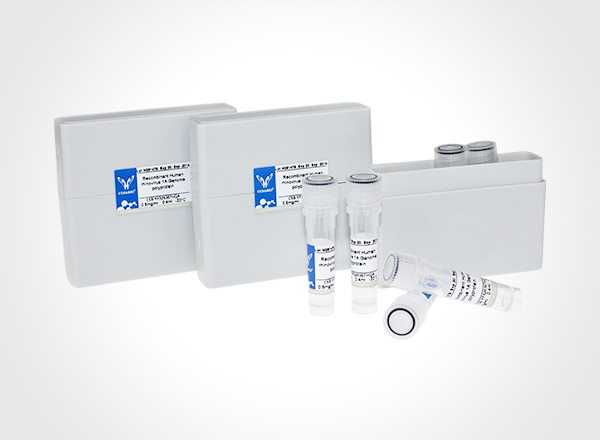
CRTAM; Cytotoxic and regulatory T-cell molecule; Class-I MHC-restricted T-cell-associated molecule; CD antigen CD355
Species
Homo sapiens (Human)
Source
in vitro E.coli expression system
Expression Region
18-393
Target Protein Sequence
SLTNHTETITVEEGQTLTLKCVTSLRKNSSLQWLTPSGFTIFLNEYPALKNSKYQLLHHSANQLSITVPNVTLQDEGVYKCLHYSDSVSTKEVKVIVLATPFKPILEASVIRKQNGEEHVVLMCSTMRSKPPPQITWLLGNSMEVSGGTLHEFETDGKKCNTTSTLIIHTYGKNSTVDCIIRHRGLQGRKLVAPFRFEDLVTDEETASDALERNSLSSQDPQQPTSTVSVTEDSSTSEIDKEEKEQTTQDPDLTTEANPQYLGLARKKSGILLLTLVSFLIFILFIIVQLFIMKLRKAHVIWKKENEVSEHTLESYRSRSNNEETSSEEKNGQSSHPMRCMNYITKLYSEAKTKRKENVQHSKLEEKHIQVPESIV
Note: The complete
sequence may include tag sequence, target protein sequence, linker sequence and extra sequence that is
translated with the protein sequence for the purpose(s) of secretion, stability, solubility, etc.
If the exact amino acid sequence of this recombinant protein is critical to your application,
please explicitly request the full and complete sequence of this protein before ordering.
Protein Length
Full Length of Mature Protein
Tag Info
N-terminal 10xHis-tagged
The tag type will be determined during production process. If you have specified tag type, please tell us and we will develop the specified tag preferentially.
Storage Condition
Store at -20°C, for extended storage, conserve at -20°C or -80°C.
Shelf Life
The shelf life is related to many factors, storage state, buffer ingredients, storage temperature and the stability of the protein itself.
Generally, the shelf life of liquid form is 6 months at -20°C/-80°C. The shelf life of lyophilized form is 12 months at -20°C/-80°C.
Notes
Repeated freezing and thawing is not recommended. Store working aliquots at 4°C for up to one week.
Mediates heterophilic cell-cell adhesion which regulates the activation, differentiation and tissue retention of various T-cell subsets. Interaction with CADM1 promotes natural killer (NK) cell cytotoxicity and IFNG/interferon-gamma secretion by CD8+ T-cells in vitro as well as NK cell-mediated rejection of tumors expressing CADM1 in vivo. Regulates CD8+ T-cell proliferation in response to T-cell receptor (TCR) activation. Appears to be dispensable for CD8+ T-cell-mediated cytotoxicity. Interaction with SCRIB promotes the late phase of cellular polarization of a subset of CD4+ T-cells, which in turn regulates TCR-mediated proliferation and IFNG, IL17 and IL22 production. By interacting with CADM1 on CD8+ dendritic cells, regulates the retention of activated CD8+ T-cells within the draining lymph node. Required for the intestinal retention of intraepithelial CD4+ CD8+ T-cells and, to a lesser extent, intraepithelial and lamina propria CD8+ T-cells and CD4+ T-cells. Interaction with CADM1 promotes the adhesion to gut-associated CD103+ dendritic cells, which may facilitate the expression of gut-homing and adhesion molecules on T-cells and the conversion of CD4+ T-cells into CD4+ CD8+ T-cells.
Gene References into Functions
These results reveal that CRTAM is critical to instruct the differentiation of CD4(+)CTL through the induction of Eomes and CTL-related gene.PMID:26694968
CRTAM is negatively regulated by ZEB1 in T cells.PMID:25910959
Case-control studies reveal malignant mesothelioma risk associated with variants in the SDK1, CRTAM and RASGRF2 genes.PMID:23827383
The cell adhesion molecule Necl-2 competitively binds the immune receptor CRTAM.PMID:23871486
The expression of CRTAM in activated Vgamma9Vdelta2 T cells is quickly downregulated following interaction with Necl-2 on tumor cells.PMID:23530148
Three common variants in the class I MHC-restricted T cell-associated molecule gene were identified that were associated with an increased rate of asthma exacerbations based on the presence of a low circulating vitamin D level.PMID:22051697
Results show that CRTAM is a molecule involved in epithelial cell adhesion.PMID:20556794
Necl2/CRTAM molecular pair could regulate a large panel of cell/cell interactions both within and outside of the immune systemPMID:15781451
NK cells and T8 cells recognize Necl-2 through CRTAM, expressed only on activated cells. CRTAM-Necl-2 interactions promote cytotoxicity of NK cells and IFN-gamma secretion of T8 cells as well as NK cell-mediated rejection of tumors expressing Necl-2PMID:15811952
CRTAM expression is driven by the JNK-AP-1 signaling pathway.PMID:19695707
Show
More
Hide
All
Subcellular Location
Cell membrane; Single-pass type I membrane protein.
Protein Families
Nectin family
Tissue Specificity
In the immune system, expression is restricted to activated class-I MHC-restricted cells, including NKT and CD8 T-cells. Strongly expressed in spleen, thymus, small intestine, peripheral blood leukocyte, and in Purkinje neurons in cerebellum. Expressed at