Recombinant Human Mas-related G-protein coupled receptor member X2 (MRGPRX2)

In Stock
Code: CSB-CF839361HUa0
Size:
20ug
20ug100ug
US$1040
Quantity:
Express system: in vitro E.coli expression system
Species: Homo sapiens (Human)
Tag Info: N-terminal 6xHis-tagged
For inquiries on large quantities or another requirements
Send an Inquiry
Start an on-line Chat
Online ordering is currently available for U.S. customers only. For orders outside the U.S., please kindly submit an inquiry or start a chat with us.

Product Details

Abbreviation
Recombinant Human MRGPRX2 protein
Purity
Greater than 90% as determined by SDS-PAGE.
Target Names
MRGPRX2
Uniprot NO.
Research Area
Neuroscience
Species
Homo sapiens (Human)
Source
in vitro E.coli expression system
Expression Region
1-330aa
Target Protein Sequence
MDPTTPAWGTESTTVNGNDQALLLLCGKETLIPVFLILFIALVGLVGNGFVLWLLGFRMRRNAFSVYVLSLAGADFLFLCFQIINCLVYLSNFFCSISINFPSFFTTVMTCAYLAGLSMLSTVSTERCLSVLWPIWYRCRRPRHLSAVVCVLLWALSLLLSILEGKFCGFLFSDGDSGWCQTFDFITAAWLIFLFMVLCGSSLALLVRILCGSRGLPLTRLYLTILLTVLVFLLCGLPFGIQWFLILWIWKDSDVLFCHIHPVSVVLSSLNSSANPIIYFFVGSFRKQWRLQQPILKLALQRALQDIAEVDHSEGCFRQGTPEMSRSSLV
Note: The complete sequence may include tag sequence, target protein sequence, linker sequence and extra sequence that is translated with the protein sequence for the purpose(s) of secretion, stability, solubility, etc.
If the exact amino acid sequence of this recombinant protein is critical to your application, please explicitly request the full and complete sequence of this protein before ordering.
Mol. Weight
43.1 kDa
Protein Length
Full Length
Tag Info
N-terminal 6xHis-tagged
The tag type will be determined during production process. If you have specified tag type, please tell us and we will develop the specified tag preferentially.
Buffer
If the delivery form is liquid, the default storage buffer is Tris/PBS-based buffer, 5%-50% glycerol. If the delivery form is lyophilized powder, the buffer before lyophilization is Tris/PBS-based buffer, 6% Trehalose.
Reconstitution
We recommend that this vial be briefly centrifuged prior to opening to bring the contents to the bottom. Please reconstitute protein in deionized sterile water to a concentration of 0.1-1.0 mg/mL.We recommend to add 5-50% of glycerol (final concentration) and aliquot for long-term storage at -20°C/-80°C. Our default final concentration of glycerol is 50%. Customers could use it as reference.
Troubleshooting and FAQs
Datasheet & COA
Please contact us to get it.
Images
  • (Tris-Glycine gel) Discontinuous SDS-PAGE (reduced) with 5% enrichment gel and 15% separation gel.

Customer Reviews and Q&A

 Customer Reviews
Average Rating:
5.0 - 1 reviews

Submit a Review here

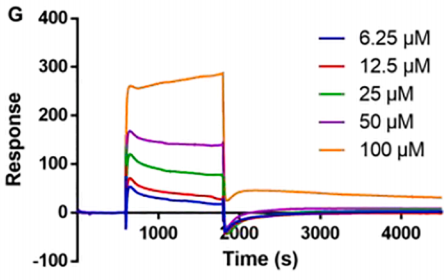
Applications : Surface plasmon resonance (SPR) assay

Review: SPR results predict that RA displayed a structure affinity (KD = 8.89 × 10⁻⁴) with MRGPRX2. Indepth mechanistic analysis shows that RA can downregulate the mRNA and protein levels of MRGPRX2.

By Anonymous

Target Background

Function(From Uniprot)
Mast cell-specific receptor for basic secretagogues, i.e. cationic amphiphilic drugs, as well as endo- or exogenous peptides, consisting of a basic head group and a hydrophobic core. Recognizes and binds small molecules containing a cyclized tetrahydroisoquinoline (THIQ), such as non-steroidal neuromuscular blocking drugs (NMBDs), including tubocurarine and atracurium. In response to these compounds, mediates pseudo-allergic reactions characterized by histamine release, inflammation and airway contraction. Acts as a receptor for a number of other ligands, including peptides and alkaloids, such as cortistatin-14, proadrenomedullin N-terminal peptides PAMP-12 and, at lower extent, PAMP-20, antibacterial protein LL-37, PMX-53 peptide, beta-defensins, and complanadine A.
Gene References into Functions
  1. Low levels of MRGPRX2 were detected in non-asthma lung mast cells, but its expression was significantly up-regulated in asthma lung mast cells. PMID:29295703
  2. the present study demonstrates that FceRI and MRGPRX2 function can be inversely regulated by SCF in an acute scenario, suggesting that the signaling requirements differ profoundly between the routes. PMID:28859248
  3. The authors discuss the possibility that MRGPRX2 responds to various as-yet-unidentified endogenous ligands that have specific characteristics, and propose that MRGPRX2 plays an important role in regulating inflammatory responses to endogenous harmful stimuli, such as protein breakdown products released from damaged or dying cells. PMID:29484687
  4. these peptides are identified as fragments of albumin. The isolated fragments activate MRGPRX2 and degranulate MRGPRX2 expressing LAD 2 cells in dose-dependent manner. The isolated basic peptides generated from human albumin are able to degranulate mast cells via the MRGPRX2. PMID:28844982
  5. The results showed a kind of mechanism that sinomenine-induced anaphylactoid reactions were mediated by MRGPRX2 via activating PLC molecular signaling pathways to provoke mast cells Ca(2+) mobilization and degranulation. PMID:28987593
  6. data suggest that mast cells play important roles in both gingival homeostasis and periodontal disease by orchestrating an interaction between gingival epithelial cells and neutrophils via MRGPRX2-mediated degranulation PMID:28694291
  7. MRGX2 is related to nociception, adrenal gland secretion and mast cell degranulation. (Review) PMID:26106044
  8. contributes to larger and longer lasting wheal reactions to intradermally injected neuropeptides in patients with chronic urticaria PMID:24954276
  9. Ectopic expression of MrgX2 in rat basophilic leukemia RBL-2H3 cells and murine bone marrow mast cells renders these cells responsive to human beta-defensin for degranulation. PMID:23698749
  10. identified MrgX2 as a novel G protein-coupled receptor for the antibacterial peptide LL-37 and demonstrated that unlike most G protein-coupled receptors it is resistant to agonist-induced receptor phosphorylation, desensitization, and internalization. PMID:22069323
  11. cortistatin-14 shown to be a high affinity ligand for G protein coupled receptor MrgX2 which is expressed in dorsal root ganglion PMID:12915402
  12. MRGX2 amino acid substitutions may alter the interactions between MRGX2 protein and its ligand, thus, potentially led to adaptive changes of the pain-perception-related nervous system during human evolution. PMID:15862286

Show More

Hide All

Subcellular Location
Cell membrane; Multi-pass membrane protein.
Protein Families
G-protein coupled receptor 1 family, Mas subfamily
Tissue Specificity
Mainly expressed in mast cells. Has a limited expression profile, both peripheral and within the central nervous system, with highest levels in dorsal root ganglion. Detected in blood vessels, scattered lymphocytes, and gastrointestinal ganglia (at protei
Database Links

HGNC: 17983

UNIGENE: Hs.350566

KEGG: hsa:117194

STRING: 9606.ENSP00000333800

OMIM: 607228

icon of phone
Call us
301-363-4651 (Available 9 a.m. to 5 p.m. CST from Monday to Friday)
icon of address
Address
No. 269, Shendun 5th Road, Donghu Hi-Tech Development Area, Hubei Province, 430206, P.R.China
icon of social media
Join us with

Subscribe newsletter

Leave a message

* To protect against spam, please pass the CAPTCHA test below.
CAPTCHA verification
© 2007-2025 CUSABIO TECHNOLOGY LLC All rights reserved. 鄂ICP备15011166号-1
Select 0 Products