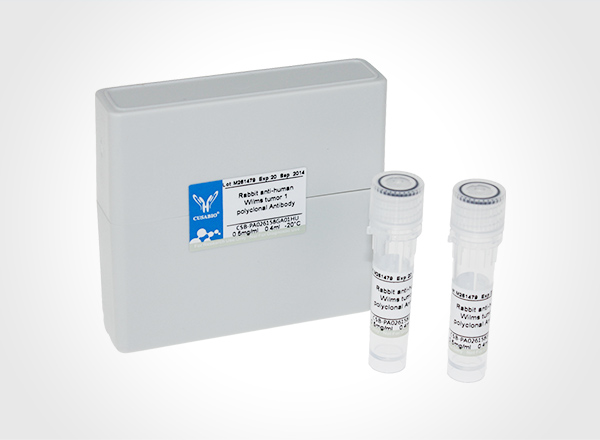
Liquid
Note: We will preferentially ship the format that we have in stock, however, if you have any special requirement for the format, please remark your requirement when placing the order, we will prepare according to your demand.
Storage
Upon receipt, store at -20°C or -80°C. Avoid repeated freeze.
Lead Time
Basically, we can dispatch the products out in 1-3 working days after receiving your orders. Delivery time maybe differs from different purchasing way or location, please kindly consult your local distributors for specific delivery time.
Note: All of our proteins are default shipped with normal blue ice packs, if you request to ship with dry ice, please communicate with us in advance and extra fees will be charged.
Usage
For Research Use Only. Not for use in diagnostic or therapeutic procedures.
Ubiquitin-like protein which plays a key role in the innate immune response to viral infection either via its conjugation to a target protein (ISGylation) or via its action as a free or unconjugated protein. ISGylation involves a cascade of enzymatic reactions involving E1, E2, and E3 enzymes which catalyze the conjugation of ISG15 to a lysine residue in the target protein. Its target proteins include IFIT1, MX1/MxA, PPM1B, UBE2L6, UBA7, CHMP5, CHMP2A, CHMP4B and CHMP6. Isgylation of the viral sensor IFIH1/MDA5 promotes IFIH1/MDA5 oligomerization and triggers activation of innate immunity against a range of viruses, including coronaviruses, flaviviruses and picornaviruses. Can also isgylate: EIF2AK2/PKR which results in its activation, DDX58/RIG-I which inhibits its function in antiviral signaling response, EIF4E2 which enhances its cap structure-binding activity and translation-inhibition activity, UBE2N and UBE2E1 which negatively regulates their activity, IRF3 which inhibits its ubiquitination and degradation and FLNB which prevents its ability to interact with the upstream activators of the JNK cascade thereby inhibiting IFNA-induced JNK signaling. Exhibits antiviral activity towards both DNA and RNA viruses, including influenza A, HIV-1 and Ebola virus. Restricts HIV-1 and ebola virus via disruption of viral budding. Inhibits the ubiquitination of HIV-1 Gag and host TSG101 and disrupts their interaction, thereby preventing assembly and release of virions from infected cells. Inhibits Ebola virus budding mediated by the VP40 protein by disrupting ubiquitin ligase activity of NEDD4 and its ability to ubiquitinate VP40. ISGylates influenza A virus NS1 protein which causes a loss of function of the protein and the inhibition of virus replication. The secreted form of ISG15 can: induce natural killer cell proliferation, act as a chemotactic factor for neutrophils and act as a IFN-gamma-inducing cytokine playing an essential role in antimycobacterial immunity. The secreted form acts through the integrin ITGAL/ITGB2 receptor to initiate activation of SRC family tyrosine kinases including LYN, HCK and FGR which leads to secretion of IFNG and IL10; the interaction is mediated by ITGAL.
Gene References into Functions
These results demonstrate that virus-induced IFN-lambda4 potently blocks IFN-alpha signalling by inducing high protein levels of ISG15 and USP18. Moreover, the data clearly demonstrate that DAA therapy restores IFN-alpha responsiveness in HCV-infected cells.PMID:28630501
IFN-gamma increases free ISG15 levels in the cytoplasm and ISGylation in the nucleus and cytoplasm, but in a manner distinct between MCF-7 and MDA-MB-231cells.PMID:29626479
Hepatitis E virus may promote production of IFN-alpha/beta and expression of ISG15 via ORF3 in the early stages, and increased ISG15 subsequently inhibited the production of IFN-alpha/beta.PMID:29853735
ISGylation is a ubiquitin-like modification that controls exosome release. ISGylation induction decreases microvesicular body numbers and impairs exosome secretion. Specifically, ISGylation of the MVB protein TSG101 induces its aggregation and degradation, being sufficient to impair exosome secretion.PMID:27882925
The species-specific gain-of-function in antiviral immunity observed in ISG15 deficiency is explained by the requirement of ISG15 to sustain USP18 levels in humans.PMID:27193971
HIV-1 IIIB infection of myeloid ThP-1 cells also reduced the IFN-alpha-mediated induction of the anti-viral gene, ISG15, but not MxA, revealing a functional consequence of this HIV-1-mediated immune evasion strategy.PMID:29580840
DNA damage induces ISG15 conjugation to p53 and this modification markedly enhances the binding of p53 to the promoters of its target genes as well as of its own gene by promoting phosphorylation and acetylation.PMID:27545325
Studied foot-and-mouth disease virus (FMDV) Lbpro targeting of ISG15. Show a previously undescribed mechanism by which viruses interfere with the ubiquitin and ubiquitin-like systems.PMID:29463763
ISG15 is able to trigger IFN-gamma production and other signaling pathways suggesting it is a potential cytokine that could interact with still unknown receptors. (Review)PMID:28467275
ISG15 induces cancer cell apoptosis by disrupting the NF-kappaB signaling pathway. This study highlighted a novel role of ISG15 in tumor suppression.PMID:27659523
The Interferon-stimulated 15-KDa protein (ISG15) rs1921 variant and ISG15 expression are associated with HBV-related liver diseases.PMID:27626177
findings revealed that MERS-CoV PLpro chiefly engages human ISG15 through its C-terminal domain; structure of MERS-CoV PLpro was solved to 2.4 A in complex with the C-terminal domain of hISG15; structure of MERS-CoV PLpro in complex with this domain exposed the interface between these two entitiesPMID:28931677
Our study demonstrates a protumor role of ISG15, and suggests that ISG15 is a prognostic predictor and a potential therapeutic target for nasopharyngeal carcinomaPMID:26919245
Results show that HERC5 mediates covalent ISG15 conjugation to parkin in mammalian cells and that ISG15 is conjugated to the Lys349 and Lys369 residues of parkin which increases its ubiquitin E3 ligase activity.PMID:27534820
Extracellular ISG15 signals cytokine secretion through the LFA-1 integrin receptor (CD11a/CD18) in natural killer cells.PMID:29100055
Results suggest that unconjugated ISG15 affects the functions of HCV NS5A through protein-protein interaction.PMID:28543875
This report demonstrates that ISG15 induced by Hepatitis E virus replication in Huh7-S10-3 human liver cells plays an immunomodulatory role by negatively regulating type I Interferon signaling and, thus, Hepatitis E virus sensitivity to type I Interferon.PMID:28724761
epletion of either ISG15 or UBE2L6/UBCH8 resulted in enhanced endogenous autophagic flux.PMID:28186990
unlike ISG15, ubiquitin and FAT10 are conjugated to a similar degree to newly translated and pre-existing proteins.PMID:27926780
This paper shows that ISG15 directly regulates Human Cytomegalovirus replication and that its accumulation restricts productive virus growth.PMID:28202760
The results suggest that integrin-adhesion-induced MRTF-A-SRF activation and ISG15 expression constitute a newly discovered signaling circuit that promotes cell migration and invasion.PMID:26872785
These data indicate that hepatic expression of PSMA6, which is upregulated during viral hepatitis, likely depends on TLR3 activation and, that PSMA6 affects the expression of immunoregulatory ISG15, a proviral factor in the pathogenesis of hepatitis C virus infection.PMID:26833585
ISG15 dysregulation may be involved in the pathogenesis of glomerular inflammationPMID:26844778
This study shows that interferon-stimulated gene 15 (ISG15) lowers Human respiratory syncytial virus growth through protein ISGylation.PMID:26763998
Data show the induction of signal transducer and activator of transcription (STAT)1 and IFN-stimulated gene 15 protein (ISG15) in Rickettsia conorii-infected human umbilical vein endothelial cells (HUVECs).PMID:26560068
ISG15 might serve as a novel prognostic biomarker in drinkers with esophageal squamous cell cancerPMID:26617815
Cellular ubiquitin is a substrate of ISG15 and Lys 29 on ubiquitin is the major ISG15 acceptor site.PMID:26226047
Microparticles released from Mycobacterium tuberculosis-infected human macrophages contain increased levels of the type I interferon inducible protein ISG15.PMID:26036210
The inhibitory effect of ISG15 on HCV RNA replication does not require its conjugation to substrates by HERC5.PMID:26361997
These data reveal a previously uncharacterized ISG15-dependent restriction of Listeria infection, reinforcing the view that ISG15 is a key component of the innate immune response.PMID:26259872
free ISG15 may have antitumor and immunoregulatory function in vivo in breast cancerPMID:25749047
Propose that Isg15-dependent degradation of p53 represents an alternative mechanism of controlling p53 protein levels, and, thus, it is an attractive pathway for drug discovery.PMID:24844324
Results suggest that high ISG15 expression is an intrinsic feature of hepatocellular carcinoma and a trigger for tumorigenesis and metastasis.PMID:25238261
our work demonstrates that ISG15 is a previously unrecognized support factor for CSC in the PDAC microenvironment with a key role in pathogenesis and progression.PMID:25368022
intracellular ISG15 is IFN-alpha/beta-inducible not to serve as a substrate for ISGylation-dependent antiviral immunity, but to ensure USP18-dependent regulation of IFN-alpha/beta and prevention of IFN-alpha/beta-dependent autoinflammationPMID:25307056
The ISG15 conjugation system represents a critical innate response mechanism in cardiomyocytes to fight the battle against invading pathogens, limiting inflammatory cardiomyopathy, heart failure, and death.PMID:25165091
suppression of ISG15 by siRNA sensitized A549-CUG2 cells to vesicular stomatitis virus infection.PMID:24452380
ISG15 does not appear to play a key role in IFN-beta-mediated C2C12 myoblast cell fusionPMID:23750257
ISG15 is a potential prognostic marker in high-grade serous carcinoma of the ovaryPMID:24300530
Results showed that ISG15 modification (ISGylation) of PCNA plays a key role in translesion DNA synthesis termination.PMID:24768535
These data support the interferon-induced generation of a Tsg101- and ISG15-dependent checkpoint in the secretory pathway that compromises influenza virus release.PMID:24237697
Findings support the development of ISG15 conjugation inhibitors for treating breast and also other cancers expressing oncogenic Ki-Ras.PMID:23318454
expression of the ISG15 and/or ISGylation system attenuates HIF-1alpha-mediated gene expression and tumorigenic growth.PMID:24056783
ISG15 is counteracted by vaccinia virus E3 protein and controls the proinflammatory response against viral infection.PMID:24257616
Our results suggest that ISG15 overexpression could be developed into a powerful gene-therapeutic tool for treating IFN-alpha-resistant HCC.PMID:24024201
HIV-1 infection up-regulating expression of ISG15 in cell lines.PMID:24386835
High interferon-stimulated gene ISG-15 expression affects HCV treatment outcome in patients co-infected with HIV and HCV.PMID:23588721
Activation of double-stranded RNA-activated protein kinase (PKR) by interferon-stimulated gene 15 (ISG15) modification down-regulates protein translationPMID:23229543
ISG15 deregulates autophagy in genotoxin-treated ataxia telangiectasia cellsPMID:23212917
Show
More
Hide
All
Subcellular Location
Cytoplasm. Secreted. Note=Exists in three distinct states: free within the cell, released into the extracellular space, or conjugated to target proteins.
Tissue Specificity
Detected in lymphoid cells, striated and smooth muscle, several epithelia and neurons. Expressed in neutrophils, monocytes and lymphocytes. Enhanced expression seen in pancreatic adenocarcinoma, endometrial cancer, and bladder cancer, as compared to non-c