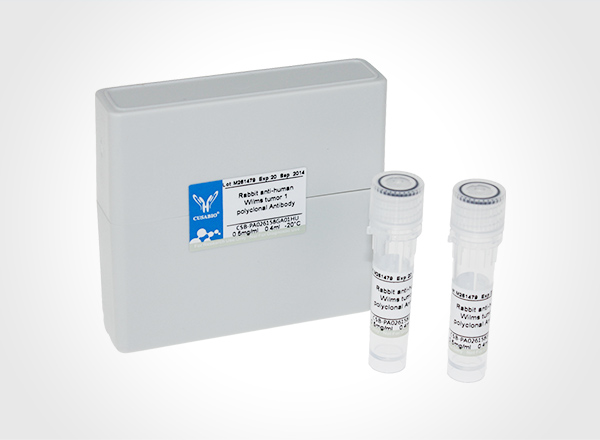
Liquid
Note: We will preferentially ship the format that we have in stock, however, if you have any special requirement for the format, please remark your requirement when placing the order, we will prepare according to your demand.
Upon receipt, store at -20°C or -80°C. Avoid repeated freeze.
Lead Time
Basically, we can dispatch the products out in 1-3 working days after receiving your orders. Delivery time maybe differs from different purchasing way or location, please kindly consult your local distributors for specific delivery time.
Note: All of our proteins are default shipped with normal blue ice packs, if you request to ship with dry ice, please communicate with us in advance and extra fees will be charged.
Usage
For Research Use Only. Not for use in diagnostic or therapeutic procedures.
May play a role in cell-cell recognition and signaling.
Gene References into Functions
A33 shows similar sensitivity to but is more specific than CDX2 as an immunomarker of colorectal carcinomaPMID:28226180
A33 expression is directly correlated to colorectal tumor differentiation.PMID:27272411
Data indicate that EpCAM- and A33-Exos were released from the apical and basolateral surfaces, respectively.PMID:23230278
Data indicate positive staining was observed for both A33 expression and KRN330 binding from patients biopsied on Day 8, 9 or 14 following initial dosing of 3 mg/kg.PMID:23294608
The A33-dependent incorporation of B5 into extracellular enveloped vaccinia virions is mediated through an interaction between their lumenal domains.PMID:22623777
Increased interaction between vaccinia virus proteins A33 and B5 is detrimental to infectious extracellular enveloped virion production.PMID:22623782
cloning, chromosomal localizations, exon-intron structures and transcription start sites - target gene for the intestine-specific homeobox transcription factor, CDX1.PMID:12114523
Regulation of A33 antigen expression by GKLF.PMID:12853980
This work has demonstrated that the antigen is both highly immobile and extremely persistent-retaining its surface localization for a turnover halflife of greater than 2 days.PMID:18236042
Show
More
Hide
All
Subcellular Location
Membrane; Single-pass type I membrane protein.
Tissue Specificity
Expressed in normal gastrointestinal epithelium and in 95% of colon cancers.