* Sample kit cost can be deducted as a $30 credit for each 96-assay kit of the same analyte and brand you subsequently purchase within six months until depleted. More details >>
Interested in a trial size? Please leave a message below.

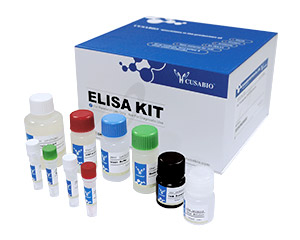
This ELISA kit provides quantitative measurement of CXCL10 (IP-10) in rat samples, supporting immunological research into interferon-γ-driven inflammatory signaling. Because CXCL10 is rapidly induced during Th1-polarized immune responses yet circulates at low baseline levels, accurate quantification across both resting and inflamed states demands a carefully calibrated assay.
Detection Range: The 62.5–4000 pg/mL range spans from near-baseline rat serum CXCL10 concentrations to the elevated levels observed during acute viral infection, transplant rejection, or LPS challenge. Tissue homogenates from inflamed organs may require dilution to fall within range, while unstimulated plasma samples can typically be assayed neat.
Sensitivity: At 31.25 pg/mL, the kit detects CXCL10 in low-expression conditions such as early post-infection time points, naïve control animals, or conditioned media from unstimulated macrophage cultures where the chemokine is minimally secreted.
Sample Compatibility: Validation across serum, plasma, and tissue homogenates allows researchers to correlate systemic CXCL10 levels with local tissue expression — critical for studies mapping chemokine gradients that drive CXCR3⁺ T-cell recruitment to target organs.
Assay Efficiency: The 1–5 hour protocol and 50–100 µL sample volume accommodate longitudinal bleeding protocols in rats, where repeated sampling limits available volume per time point.
This kit is well suited for studies of experimental autoimmune encephalomyelitis, renal allograft rejection, and hepatic ischemia-reperfusion injury in rat models.





