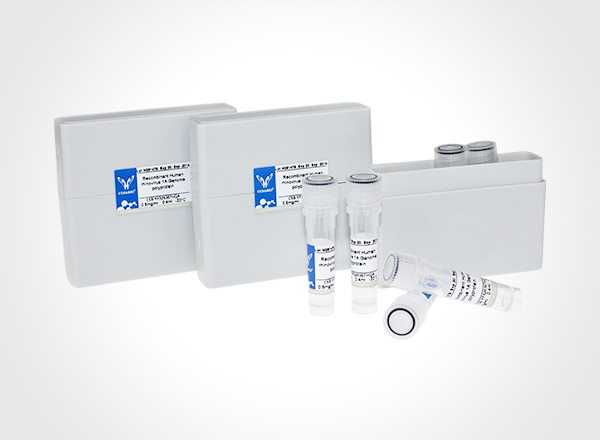
Recombinant Rat Glucagon receptor (Gcgr)

Code: CSB-CF009316RA
Size:
20μg
20μg100μg
US$5929
Quantity:
Express system: in vitro E.coli expression system
Species: Rattus norvegicus (Rat)
Tag Info: N-terminal 10xHis-tagged
For inquiries on large quantities or another requirements
Send an Inquiry
Start an on-line Chat
Online ordering is currently available for U.S. customers only. For orders outside the U.S., please kindly submit an inquiry or start a chat with us.

Product Details

Target Names
Gcgr
Uniprot NO.
Alternative Names
Gcgr; Glucagon receptor; GL-R
Species
Rattus norvegicus (Rat)
Source
in vitro E.coli expression system
Expression Region
27-485
Target Protein Sequence
AQVMDFLFEKWKLYSDQCHHNLSLLPPPTELVCNRTFDKYSCWPDTPPNTTANISCPWYL PWYHKVQHRLVFKRCGPDGQWVRGPRGQSWRDASQCQMDDDEIEVQKGVAKMYSSYQVMY TVGYSLSLGALLLALVILLGLRKLHCTRNYIHGNLFASFVLKAGSVLVIDWLLKTRYSQK IGDDLSVSVWLSDGAVAGCRVATVIMQYGIIANYCWLLVEGVYLYSLLSITTFSEKSFFS LYLCIGWGSPLLFVIPWVVVKCLFENVQCWTSNDNMGFWWILRIPVLLAILINFFIFVRI IHLLVAKLRAHQMHYADYKFRLARSTLTLIPLLGVHEVVFAFVTDEHAQGTLRSTKLFFD LFFSSFQGLLVAVLYCFLNKEVQAELLRRWRRWQEGKALQEERMASSHGSHMAPAGTCHG DPCEKLQLMSAGSSSGTGCEPSAKTSLASSLPRLADSPT
Note: The complete sequence may include tag sequence, target protein sequence, linker sequence and extra sequence that is translated with the protein sequence for the purpose(s) of secretion, stability, solubility, etc.
If the exact amino acid sequence of this recombinant protein is critical to your application, please explicitly request the full and complete sequence of this protein before ordering.
Protein Length
Full Length of Mature Protein
Tag Info
N-terminal 10xHis-tagged
The tag type will be determined during production process. If you have specified tag type, please tell us and we will develop the specified tag preferentially.
Storage Condition
Store at -20°C, for extended storage, conserve at -20°C or -80°C.
Shelf Life
The shelf life is related to many factors, storage state, buffer ingredients, storage temperature and the stability of the protein itself.
Generally, the shelf life of liquid form is 6 months at -20°C/-80°C. The shelf life of lyophilized form is 12 months at -20°C/-80°C.
Notes
Repeated freezing and thawing is not recommended. Store working aliquots at 4°C for up to one week.
Troubleshooting and FAQs
Datasheet & COA
Please contact us to get it.

Customer Reviews and Q&A

 Customer Reviews
 Q&A
Q:

Is this product bioactive?

A:

For the activity, sorry, we haven't expressed this protein/ have not tested its activity, so its activity is not 100% guaranteed.
In theory, this is a full length of mature protein and we adopt affinity chromatography for purification, which is purified under a very mild condition, it's very likely to be active.

Target Background

Function(From Uniprot)
G-protein coupled receptor for glucagon that plays a central role in the regulation of blood glucose levels and glucose homeostasis. Regulates the rate of hepatic glucose production by promoting glycogen hydrolysis and gluconeogenesis. Plays an important role in mediating the responses to fasting. Ligand binding causes a conformation change that triggers signaling via guanine nucleotide-binding proteins (G proteins) and modulates the activity of down-stream effectors, such as adenylate cyclase. Promotes activation of adenylate cyclase. Besides, plays a role in signaling via a phosphatidylinositol-calcium second messenger system.
Gene References into Functions
  1. The vasodilatation due to glucagon evokes via the glucagon-receptor, but also via the receptor for GLP-1, and it is endothelium-independent. PMID:26975347
  2. Significant higher GluR density (mRNA and proteins) following exercise and fasting than in the control group. PMID:23918690
  3. Gln(3) residue of glucagon did not interact with the equivalent binding pocket as the Asp(3) residue of vasoactive intestinal peptide or secretin PMID:11853547
  4. A model is proposed for glucagon receptor activation whereby glucagon first interacts with the receptor N-terminal domain followed by more specific interactions between the N-terminal half of the peptide and the first extracellular loop of the receptor. PMID:12269822
  5. glucagon were unaffected by the GLP-1 receptor antagonist exendin-(9-39) but abolished by des-His1-[Glu9]-glucagon-amide, a specific blocker of the glucagon receptor PMID:15459251
  6. The present results indicate that the feeding of an HF diet is associated with a reduction in plasma membrane hepatic glucagon receptor density and G(s)alpha protein content, which is not attenuated by a 30-min exercise bout. PMID:15687107
  7. within hepatic target cells and consequent to glucagon-mediated internalization of the serine-phosphorylated glucagon receptor and the Gsalpha protein, extended signal transduction may occur in vivo at the locus of the endo-lysosomal apparatus PMID:17010343
  8. High fat diet induced obesity is associated with a desensitization and destruction of the hepatic GR PMID:17053032
  9. These results suggest that glucagon stimulates acute release of both forms of ghrelin and thereafter upregulates synthesis and release of desacyl-ghrelin in the rat stomach. PMID:17462598
  10. The actin cytoskeleton, beta-arrestin1, beta-arrestin2, and the glucagon receptor's carboxyl terminus are involved in its recycling. PMID:18787074

Show More

Hide All

Subcellular Location
Cell membrane; Multi-pass membrane protein.
Protein Families
G-protein coupled receptor 2 family
Database Links
icon of phone
Call us
301-363-4651 (Available 9 a.m. to 5 p.m. CST from Monday to Friday)

icon of address
Address
No. 269, Shendun 5th Road, Donghu Hi-Tech Development Area, Hubei Province, 430206, P.R.China
icon of social media
Join us with

Subscribe newsletter

Leave a message

* To protect against spam, please pass the CAPTCHA test below.
CAPTCHA verification
© 2007-2025 CUSABIO TECHNOLOGY LLC All rights reserved. 鄂ICP备15011166号-1
Select 0 Products


