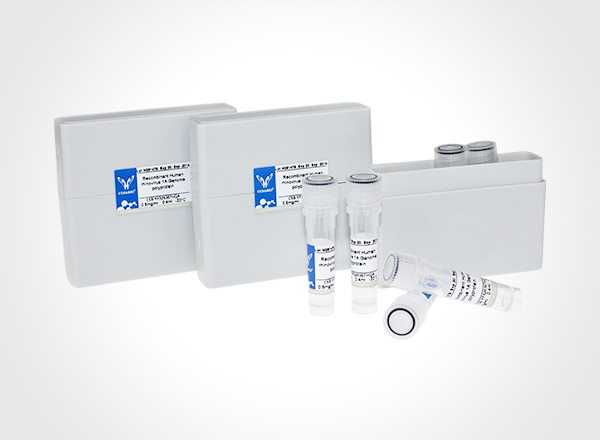
Recombinant Human Succinate receptor 1 (SUCNR1)-VLPs

Code: CSB-MP022921HU
Size:
20ug
20ug100ug1mg(1mg*1 or 500ug*2)
Pls inquire
Quantity:
Express system: Mammalian cell
Species: Homo sapiens (Human)
Tag Info: C-terminal 10xHis-tagged
If you have specified tag type, please tell us and we will check if it's possible to develop.
For inquiries on large quantities or another requirements
Send an Inquiry
Start an on-line Chat
Online ordering is currently available for U.S. customers only. For orders outside the U.S., please kindly submit an inquiry or start a chat with us.

Product Details

Target Names
SUCNR1
Uniprot NO.
Alternative Names
G-protein coupled receptor 91;P2Y purinoceptor 1-like
Research Area
Signal Transduction
Species
Homo sapiens (Human)
Source
Mammalian cell
Expression Region
1-334aa
Target Protein Sequence
MLGIMAWNATCKNWLAAEAALEKYYLSIFYGIEFVVGVLGNTIVVYGYIFSLKNWNSSNIYLFNLSVSDLAFLCTLPMLIRSYANGNWIYGDVLCISNRYVLHANLYTSILFLTFISIDRYLIIKYPFREHLLQKKEFAILISLAIWVLVTLELLPILPLINPVITDNGTTCNDFASSGDPNYNLIYSMCLTLLGFLIPLFVMCFFYYKIALFLKQRNRQVATALPLEKPLNLVIMAVVIFSVLFTPYHVMRNVRIASRLGSWKQYQCTQVVINSFYIVTRPLAFLNSVINPVFYFLLGDHFRDMLMNQLRHNFKSLTSFSRWAHELLLSFREK
Note: The complete sequence may include tag sequence, target protein sequence, linker sequence and extra sequence that is translated with the protein sequence for the purpose(s) of secretion, stability, solubility, etc.
If the exact amino acid sequence of this recombinant protein is critical to your application, please explicitly request the full and complete sequence of this protein before ordering.
Protein Length
Full Length
Tag Info
C-terminal 10xHis-tagged
If you have specified tag type, please tell us and we will check if it's possible to develop.
The tag type will be determined during production process. If you have specified tag type, please tell us and we will develop the specified tag preferentially.
Form
Lyophilized powder
Note: We will preferentially ship the format that we have in stock, however, if you have any special requirement for the format, please remark your requirement when placing the order, we will prepare according to your demand.
Buffer
Lyophilized from PBS, 6% Trehalose, pH 7.4.
Reconstitution
We recommend that this vial be briefly centrifuged prior to opening to bring the contents to the bottom. Please reconstitute protein indeionized sterile water to a concentration of 0.1-1.0 mg/mL.Aliquot for long-term storage at -80°C. Solubilize for 60 minutes at room temperature with occasional gentle mixing. Avoid vigorous shaking or vortexing.
Storage Condition
The shelf life is related to many factors, storage state, buffer ingredients, storage temperature and the stability of the protein itself. Generally, the shelf life of liquid form is 6 months at -20°C/-80°C. The shelf life of lyophilized form is 12 months at -20°C/-80°C.
Shelf Life
The shelf life is related to many factors, storage state, buffer ingredients, storage temperature and the stability of the protein itself.
Generally, the shelf life of liquid form is 6 months at -20°C/-80°C. The shelf life of lyophilized form is 12 months at -20°C/-80°C.
Lead Time
Delivery time may differ from different purchasing way or location, please kindly consult your local distributors for specific delivery time.
Note: All of our proteins are default shipped with normal blue ice packs, if you request to ship with dry ice, please communicate with us in advance and extra fees will be charged.
Notes
The VLPs are expressed from human 293 cells (HEK293).Mix the sample gently by repeatedly pipetting it up and down. Do not vortex. Repeated freezing and thawing is not recommended.Store the protein at -20°C/-80°C upon receiving it, and ensure to avoid repeated freezing and thawing, otherwise, it will affect the protein activity. The immunization strategy should be optimized (antigen dose, regimen and adjuvant).
Troubleshooting and FAQs
Datasheet & COA
Please contact us to get it.

Customer Reviews and Q&A

 Customer Reviews

Target Background

Function(From Uniprot)
Receptor for succinate.
Gene References into Functions
  1. activation of SUCNR1 in macrophages is important for both infiltration and inflammation of adipose tissue in obesity PMID:28382382
  2. This study shows that metformin can attenuate activation of HSCs by activating the AMPK pathway and inhibiting the succinate-GPR91 pathway. Metformin has therapeutic potential for treating steatohepatitis and liver fibrosis. PMID:29278707
  3. This study reports the expression of GPR91 on mouse and human mast cells and reveals a hyperactive behavior of mouse Sucnr1-/- mast cells in a mechanistic in vivo model of skin inflammation. PMID:27527650
  4. Data show that succinate upregulates vascular endothelial growth factor (VEGF) expression by activation of signal transducer and activator of transcription 3 (STAT3) and extracellular regulated kinase (ERK)1/2 via its receptor G-protein coupled receptor 91 (GPR91). PMID:28061458
  5. Succinate is abundant in synovial fluids from rheumatoid arthritis (RA) patients, and these fluids elicit IL-1beta release from macrophages in a GPR91-dependent manner. PMID:27481132
  6. We give an exhaustive overview of the known and hypothetical signaling partners of SUCNR1 in different in vitro and in vivo systems and also discuss the link between SUCNR1 intracellular pathways and its pathophysiological roles. PMID:26808164
  7. Through GPR91, succinate is involved in functions such as regulation of blood pressure, inhibition of lipolysis in white adipose tissue, development of retinal vascularization and cardiac hypertrophy. [review] PMID:26759054
  8. The findings indicate that succinate-GPR91 signaling may be involved in right ventricular hypertrophy via PI3K/Akt signaling in vivo and in vitro. PMID:26824665
  9. results show that succinate plays an important role in HSC activation through GPR91 induction, and suggest that succinate and GPR91 may represent new therapeutic targets for modulating hepatic fibrosis PMID:26051274
  10. These results show for the first time that succinate plays an important role in cardiomyocyte hypertrophy through GPR91 activation and extend our understanding of how ischemia can induce hypertrophic cardiomyopathy PMID:25539979
  11. These findings suggest that deficiency in SUCNR1 is a possible contributing factor to the pathogenesis of dry age-related macular degeneration. PMID:23833031
  12. results show that GPR91 when expressed in HEK293s cells couples exclusively through the Galphai pathway and acts through Galphai not only to inhibit cAMP production but also to increase intracellular Ca(2+) PMID:23770096
  13. A review of how neuron-derived factors, GPR91 and Semaphorin 3A, guide retinal vascularization and are major contributors to the pathogenesis of retinopathy of prematurity . PMID:22497252
  14. Succinate stimulates cell proliferation through GPR91 and requires activation of the Erk MAPK pathway. PMID:19204147
  15. This paper describes function in another species. PMID:15141213
  16. GPR91 is a receptor for succinate and mediates succinate-induced hypertension. PMID:15141213

Show More

Hide All

Subcellular Location
Cell membrane; Multi-pass membrane protein.
Protein Families
G-protein coupled receptor 1 family
Tissue Specificity
Expressed specifically in kidney.
Database Links

HGNC: 4542

UNIGENE: Hs.133181

KEGG: hsa:56670

STRING: 9606.ENSP00000355156

OMIM: 606381

icon of phone
Call us
301-363-4651 (Available 9 a.m. to 5 p.m. CST from Monday to Friday)
icon of address
Address
No. 269, Shendun 5th Road, Donghu Hi-Tech Development Area, Hubei Province, 430206, P.R.China
icon of social media
Join us with

Subscribe newsletter

Leave a message

* To protect against spam, please pass the CAPTCHA test below.
CAPTCHA verification
© 2007-2025 CUSABIO TECHNOLOGY LLC All rights reserved. 鄂ICP备15011166号-1
Select 0 Products