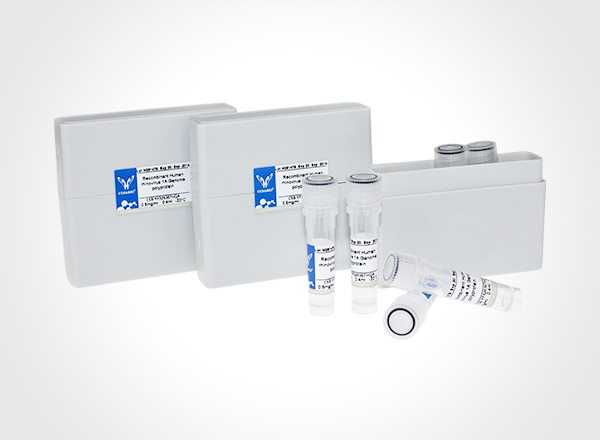
KCNK10; TREK2; Potassium channel subfamily K member 10; Outward rectifying potassium channel protein TREK-2; TREK-2 K(+ channel subunit
Species
Homo sapiens (Human)
Source
in vitro E.coli expression system
Expression Region
1-538
Target Protein Sequence
MFFLYTDFFLSLVAVPAAAPVCQPKSATNGQPPAPAPTPTPRLSISSRATVVARMEGTSQ GGLQTVMKWKTVVAIFVVVVVYLVTGGLVFRALEQPFESSQKNTIALEKAEFLRDHVCVS PQELETLIQHALDADNAGVSPIGNSSNNSSHWDLGSAFFFAGTVITTIGYGNIAPSTEGG KIFCILYAIFGIPLFGFLLAGIGDQLGTIFGKSIARVEKVFRKKQVSQTKIRVISTILFI LAGCIVFVTIPAVIFKYIEGWTALESIYFVVVTLTTVGFGDFVAGGNAGINYREWYKPLV WFWILVGLAYFAAVLSMIGDWLRVLSKKTKEEVGEIKAHAAEWKANVTAEFRETRRRLSV EIHDKLQRAATIRSMERRRLGLDQRAHSLDMLSPEKRSVFAALDTGRFKASSQESINNRP NNLRLKGPEQLNKHGQGASEDNIINKFGSTSRLTKRKNKDLKKTLPEDVQKIYKTFRNYS LDEEKKEEETEKMCNSDNSSTAMLTDCIQQHAELENGMIPTDTKDREPENNSLLEDRN
Note: The complete
sequence may include tag sequence, target protein sequence, linker sequence and extra sequence that is
translated with the protein sequence for the purpose(s) of secretion, stability, solubility, etc.
If the exact amino acid sequence of this recombinant protein is critical to your application,
please explicitly request the full and complete sequence of this protein before ordering.
Protein Length
Full length protein
Tag Info
N-terminal 10xHis-tagged
The tag type will be determined during production process. If you have specified tag type, please tell us and we will develop the specified tag preferentially.
Storage Condition
Store at -20°C, for extended storage, conserve at -20°C or -80°C.
Shelf Life
The shelf life is related to many factors, storage state, buffer ingredients, storage temperature and the stability of the protein itself.
Generally, the shelf life of liquid form is 6 months at -20°C/-80°C. The shelf life of lyophilized form is 12 months at -20°C/-80°C.
Notes
Repeated freezing and thawing is not recommended. Store working aliquots at 4°C for up to one week.
Outward rectifying potassium channel. Produces rapidly activating and non-inactivating outward rectifier K(+) currents. Activated by arachidonic acid and other naturally occurring unsaturated free fatty acids.
Gene References into Functions
The M2-glycine hinge controls the macroscopic currents of TREK1 channels.PMID:28676394
This study showed that KCNK10 gene involved in neuronal growth and cerebellum development and associated with neurological and psychological disorders.PMID:26381449
The selectivity filter conformations of alternative translation initiation isoforms and wild type human TREK-2 are similar in the S4 site and pHo position.PMID:26271386
Results suggest that the cytosolic C-terminal domain and the bottom of transmembrane segment M2 are required for the 2-aminoethoxydiphenyl borate activation on TREK-2 channelsPMID:25982558
How ion channels sense mechanical force: insights from mechanosensitive K2P channels TRAAK, TREK1, and TREK2.PMID:26332952
Modulation of K2P 2.1 and K2P 10.1 K(+) channel sensitivity to carvedilol by alternative mRNA translation initiationPMID:25168769
PLD2, but not PLD1, directly binds to the C terminus of TREK1 and TREK2.PMID:25197053
crystal structures of TREK-2 channel in 2 conformations and in complex with norfluoxetine, a state-dependent blocker of TREK channels; results provide an explanation for TREK channel mechanosensitivity, regulation by diverse stimuli and possible off-target effects of ProzacPMID:25766236
High TREK-2 expression is associated with epithelial ovarian cancer.PMID:23479219
Tissue-specific mRNA splicing regulates alternative translation initiation (ATI) of human K(2P)10.1 K+ background channels via recombination of 5 nucleotide motifs.PMID:21669980
Expression pattern and functional characteristics of two novel splice variants of the two-pore-domain potassium channel TREK-2.PMID:11897838
Predicts the role of TREK-2 in brain ischemia, memory and other tissues.[REVIEW]PMID:17689202
Show
More
Hide
All
Subcellular Location
Membrane; Multi-pass membrane protein.
Protein Families
Two pore domain potassium channel (TC 1.A.1.8) family
Tissue Specificity
Abundantly expressed in pancreas and kidney and to a lower level in brain, testis, colon, and small intestine. Isoform b is strongly expressed in kidney (primarily in the proximal tubule) and pancreas, whereas isoform c is abundantly expressed in brain.