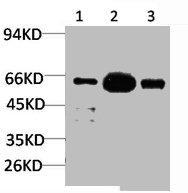
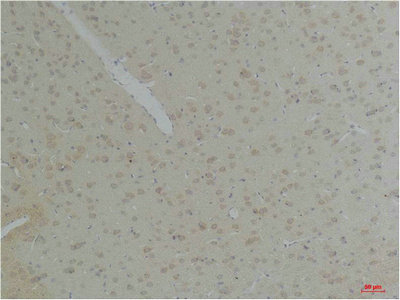
KCNK10; TREK2; Potassium channel subfamily K member 10; Outward rectifying potassium channel protein TREK-2; TREK-2 K(+ channel subunit
Raised in
Rabbit
Species Reactivity
Human,Mouse,Rat
Immunogen
Synthetic Peptide
Immunogen Species
Homo sapiens (Human)
Conjugate
Non-conjugated
Purification Method
The antibody was affinity-purified from rabbit antiserum by affinity-chromatography using specific immunogen.
Concentration
It differs from different batches. Please contact us to confirm it.
Buffer
Liquid in PBS containing 50% glycerol, 0.5% BSA and 0.02% sodium azide.
Form
Liquid
Note: We will preferentially ship the format that we have in stock, however, if you have any special requirement for the format, please remark your requirement when placing the order, we will prepare according to your demand.
Upon receipt, store at -20°C or -80°C. Avoid repeated freeze.
Lead Time
Basically, we can dispatch the products out in 1-3 working days after receiving your orders. Delivery time maybe differs from different purchasing way or location, please kindly consult your local distributors for specific delivery time.
Note: All of our proteins are default shipped with normal blue ice packs, if you request to ship with dry ice, please communicate with us in advance and extra fees will be charged.
Usage
For Research Use Only. Not for use in diagnostic or therapeutic procedures.
Outward rectifying potassium channel. Produces rapidly activating and non-inactivating outward rectifier K(+) currents. Activated by arachidonic acid and other naturally occurring unsaturated free fatty acids.
Gene References into Functions
The M2-glycine hinge controls the macroscopic currents of TREK1 channels.PMID:28676394
This study showed that KCNK10 gene involved in neuronal growth and cerebellum development and associated with neurological and psychological disorders.PMID:26381449
The selectivity filter conformations of alternative translation initiation isoforms and wild type human TREK-2 are similar in the S4 site and pHo position.PMID:26271386
Results suggest that the cytosolic C-terminal domain and the bottom of transmembrane segment M2 are required for the 2-aminoethoxydiphenyl borate activation on TREK-2 channelsPMID:25982558
How ion channels sense mechanical force: insights from mechanosensitive K2P channels TRAAK, TREK1, and TREK2.PMID:26332952
Modulation of K2P 2.1 and K2P 10.1 K(+) channel sensitivity to carvedilol by alternative mRNA translation initiationPMID:25168769
PLD2, but not PLD1, directly binds to the C terminus of TREK1 and TREK2.PMID:25197053
crystal structures of TREK-2 channel in 2 conformations and in complex with norfluoxetine, a state-dependent blocker of TREK channels; results provide an explanation for TREK channel mechanosensitivity, regulation by diverse stimuli and possible off-target effects of ProzacPMID:25766236
High TREK-2 expression is associated with epithelial ovarian cancer.PMID:23479219
Tissue-specific mRNA splicing regulates alternative translation initiation (ATI) of human K(2P)10.1 K+ background channels via recombination of 5 nucleotide motifs.PMID:21669980
Expression pattern and functional characteristics of two novel splice variants of the two-pore-domain potassium channel TREK-2.PMID:11897838
Predicts the role of TREK-2 in brain ischemia, memory and other tissues.[REVIEW]PMID:17689202
Show
More
Hide
All
Subcellular Location
Membrane; Multi-pass membrane protein.
Protein Families
Two pore domain potassium channel (TC 1.A.1.8) family
Tissue Specificity
Abundantly expressed in pancreas and kidney and to a lower level in brain, testis, colon, and small intestine. Isoform b is strongly expressed in kidney (primarily in the proximal tubule) and pancreas, whereas isoform c is abundantly expressed in brain.