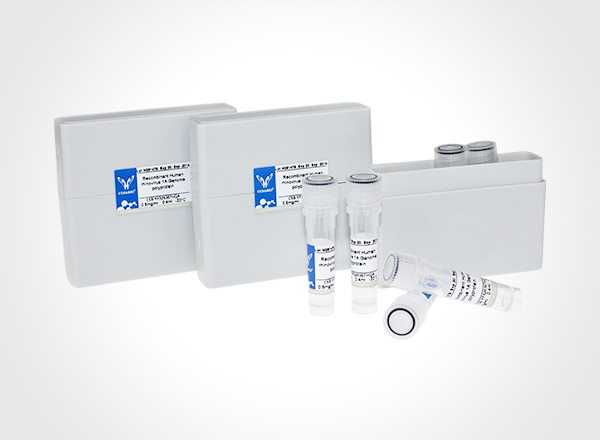
Recombinant Human Long-chain-fatty-acid--CoA ligase 3 (ACSL3)

Code: CSB-CF001192HU
Size:
20μg
20μg100μg
US$7882
Quantity:
Express system: in vitro E.coli expression system
Species: Homo sapiens (Human)
Tag Info: N-terminal 10xHis-tagged
For inquiries on large quantities or another requirements
Send an Inquiry
Start an on-line Chat
Online ordering is currently available for U.S. customers only. For orders outside the U.S., please kindly submit an inquiry or start a chat with us.

Product Details

Target Names
ACSL3
Uniprot NO.
Species
Homo sapiens (Human)
Source
in vitro E.coli expression system
Expression Region
1-720
Target Protein Sequence
MNNHVSSKPSTMKLKHTINPILLYFIHFLISLYTILTYIPFYFFSESRQEKSNRIKAKPVNSKPDSAYRSVNSLDGLASVLYPGCDTLDKVFTYAKNKFKNKRLLGTREVLNEEDEVQPNGKIFKKVILGQYNWLSYEDVFVRAFNFGNGLQMLGQKPKTNIAIFCETRAEWMIAAQACFMYNFQLVTLYATLGGPAIVHALNETEVTNIITSKELLQTKLKDIVSLVPRLRHIITVDGKPPTWSEFPKGIIVHTMAAVEALGAKASMENQPHSKPLPSDIAVIMYTSGSTGLPKGVMISHSNIIAGITGMAERIPELGEEDVYIGYLPLAHVLELSAELVCLSHGCRIGYSSPQTLADQSSKIKKGSKGDTSMLKPTLMAAVPEIMDRIYKNVMNKVSEMSSFQRNLFILAYNYKMEQISKGRNTPLCDSFVFRKVRSLLGGNIRLLLCGGAPLSATTQRFMNICFCCPVGQGYGLTESAGAGTISEVWDYNTGRVGAPLVCCEIKLKNWEEGGYFNTDKPHPRGEILIGGQSVTMGYYKNEAKTKADFFEDENGQRWLCTGDIGEFEPDGCLKIIDRKKDLVKLQAGEYVSLGKVEAALKNLPLVDNICAYANSYHSYVIGFVVPNQKELTELARKKGLKGTWEELCNSCEMENEVLKVLSEAAISASLEKFEIPVKIRLSPEPWTPETGLVTDAFKLKRKELKTHYQADIERMYGRK
Note: The complete sequence may include tag sequence, target protein sequence, linker sequence and extra sequence that is translated with the protein sequence for the purpose(s) of secretion, stability, solubility, etc.
If the exact amino acid sequence of this recombinant protein is critical to your application, please explicitly request the full and complete sequence of this protein before ordering.
Protein Length
full length protein
Tag Info
N-terminal 10xHis-tagged
The tag type will be determined during production process. If you have specified tag type, please tell us and we will develop the specified tag preferentially.
Troubleshooting and FAQs
Datasheet & COA
Please contact us to get it.

Customer Reviews and Q&A

 Customer Reviews
 Q&A
Q:

Would you please advise if these products are appropriate to be used as detection reagents for the measuring of ACSL1 and ACSL3.

A:

The above products are appropriate to be used as detection reagents for the measuring of ACSL1 and ACSL3.

Q:

Has this been tested for activity?

A:

For the activity, we haven't expressed this protein/ have not tested its activity, so its activity is not 100% guaranteed.
In theory, we adopt affinity chromatography for purification, which is purified under a very mild condition, it's very likely to be active.
We suggest ordering a small size of this protein for testing purposes.

Target Background

Function(From Uniprot)
Acyl-CoA synthetases (ACSL) activates long-chain fatty acids for both synthesis of cellular lipids, and degradation via beta-oxidation. Required for the incorporation of fatty acids into phosphatidylcholine, the major phospholipid located on the surface of VLDL (very low density lipoproteins). Has mainly an anabolic role in energy metabolism. Mediates hepatic lipogenesis. Preferentially uses myristate, laurate, arachidonate and eicosapentaenoate as substrates. Both isoforms exhibit the same level of activity.
Gene References into Functions
  1. ACSL3 distribution closely overlapped with proteins involved in trafficking from the trans-Golgi network and endosomes. In contrast, the ACSL4 localisation pattern more closely followed that of calnexin which is an endoplasmic reticulum resident chaperone. PMID:29450800
  2. Subcellular fractionation showed that at least 68% of ACSL3 remain at the ER even during extensive fatty acid supplementation. High resolution single molecule microscopy confirmed the abundance of cytoplasmic ACSL3 outside of LDs. PMID:29526665
  3. ACSL3 is essential for mutant KRAS lung cancer tumorigenesis in vivo and is highly expressed in human lung cancer PMID:27477280
  4. Study shows that ACSL3 contributes to intratumoral steroidogenesis by modulating the steroidogenic genes and plays an important role in the growth of castration-resistant prostate cancer. PMID:28771887
  5. ACLS4 and ACLS3 have roles in insulin secretion PMID:28193492
  6. The prominent expression of ACSL3 in VSMC. PMID:23840832
  7. activation of fatty acid import is linked to the up-regulation of cellular long chain acyl-CoA synthetase activity and identify the long chain acyl-CoA syntheatse3 (Acsl3) as a novel host factor required for polio replication. PMID:23762027
  8. role of N-terminal region of acyl-CoA synthetase 3 in its function and localization on lipid droplets PMID:22357706
  9. expression of ACSL3 was induced by endoplasmic reticulum stress PMID:21328461
  10. Results suggest that initiation of Golgi export of Lyn involves association of ACSL3 with the Lyn C-lobe, which is exposed to the molecular surface in an open conformation. PMID:20605918
  11. Results suggest that liver X receptors play a regulatory role in fatty acid metabolism by direct regulation of ACSL3 in human placental trophoblast cells. PMID:20219900
  12. ACSL3 is a novel molecular target of PPARdelta in HepG2 cells; there is a regulatory mechanism for ACSL3 transcription in liver tissue PMID:20308079
  13. Sequence analysis of genomic clones demonstrates that the human ACS3 gene spans at least 80.6 kb and contains 17 exons. PMID:11707336
  14. Repression of FAS mRNA expression is the consequence of feedback inhibition of FAS expression by long chain fatty acyl-CoAs, which are formed by FACL3 during its upregulation by vitamin D3in prostate cancer cells. PMID:15556626
  15. Oncostatin M directly lowers the plasma triglycerides in hyperlipidemia by stimulating the transcription of ACSL3/5 in the liver. PMID:17761945
  16. Data suggest that endogenous FATP4 does not function to translocate fatty acids across the plasma membrane, but functions more as a very long-chain acyl-CoA synthetase. PMID:17901542
  17. Small interfering RNA targeting ACSL3 inhibits secretion of hepatitis c virus from human hepatoma-derived cells PMID:18003621
  18. Data suggest that methylated ACSL3 5'CpG islands in umbilical cord white blood cell DNA may be a surrogate endpoint for transplacental polycyclic aromatic hydrocarbon exposure and/or a potential biomarker for environmentally-related asthma. PMID:19221603

Show More

Hide All

Subcellular Location
Mitochondrion outer membrane; Single-pass type III membrane protein. Peroxisome membrane; Single-pass type III membrane protein. Microsome membrane; Single-pass type III membrane protein. Endoplasmic reticulum membrane; Single-pass type III membrane protein.
Protein Families
ATP-dependent AMP-binding enzyme family
Database Links

HGNC: 3570

UNIGENE: Hs.655772

KEGG: hsa:2181

STRING: 9606.ENSP00000350012

OMIM: 602371

icon of phone
Call us
301-363-4651 (Available 9 a.m. to 5 p.m. CST from Monday to Friday)

icon of address
Address
No. 269, Shendun 5th Road, Donghu Hi-Tech Development Area, Hubei Province, 430206, P.R.China
icon of social media
Join us with

Subscribe newsletter

Leave a message

* To protect against spam, please pass the CAPTCHA test below.
CAPTCHA verification
© 2007-2025 CUSABIO TECHNOLOGY LLC All rights reserved. 鄂ICP备15011166号-1
Select 0 Products


