
Call us
301-363-4651 (Available 9 a.m. to 5 p.m. CST from Monday to Friday)

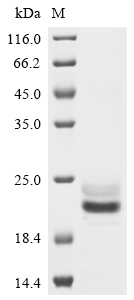
Recombinant Human E3 ubiquitin-protein ligase ZNRF3 (ZNRF3) comes from a yeast expression system and contains a partial protein length spanning amino acids 56 to 219. The product includes a C-terminal 6xHis-tag, which makes purification and detection more straightforward. SDS-PAGE analysis confirms the protein achieves greater than 90% purity, suggesting it should deliver reliable results in research applications.
ZNRF3 belongs to the E3 ubiquitin ligase family and appears to play a critical role in regulating the Wnt signaling pathway. Through this pathway modulation, ZNRF3 likely influences cellular proliferation, differentiation, and apoptosis. Its function seems vital for maintaining cellular homeostasis, which is why it has become a significant focus in various research areas—particularly those investigating cell signaling and cancer biology.
Potential Applications
Note: The applications listed below are based on what we know about this protein's biological functions, published research, and experience from experts in the field. However, we haven't fully tested all of these applications ourselves yet. We'd recommend running some preliminary tests first to make sure they work for your specific research goals.
1. Protein-Protein Interaction Studies
This recombinant ZNRF3 fragment (56-219aa) may be used in pull-down assays to map specific protein-protein interactions involving its contained extracellular region. The His-tag facilitates immobilization. However, it is critical to note that this fragment lacks the RING domain and intracellular regions, so it cannot be used to study interactions dependent on those domains (e.g., with E2 ubiquitin-conjugating enzymes or certain downstream signaling partners). Any findings would be limited to interactions specific to the 56-219aa segment and may not represent the full functionality of the native, full-length ZNRF3 protein.
2. Antibody Development and Validation
This protein fragment can serve as an immunogen for generating antibodies specifically targeting the 56-219aa region of human ZNRF3. The high purity is suitable for this purpose. It can also be used as a positive control in Western blotting or ELISA to validate antibody specificity. A critical limitation is that antibodies generated against this fragment may not recognize conformational epitopes present on the full-length, correctly folded ZNRF3 protein at the cell membrane. Their utility in applications like immunoprecipitation or immunofluorescence of native ZNRF3 would require empirical validation.
3. Structural and Biochemical Characterization
This ZNRF3 fragment is suitable for biophysical and structural studies aimed at characterizing the intrinsic properties of its contained region (56-219aa). Techniques like circular dichroism spectroscopy or dynamic light scattering can be used to analyze its folding stability and oligomerization state in solution. The goal here would be to study the fragment itself, not to draw direct conclusions about the structure of the full-length protein.
4. ELISA-Based Quantitative Assa
This protein is well-suited for use as a standard in quantitative immunoassays (e.g., ELISA) designed to measure the abundance of ZNRF3 protein or specific antibodies in a sample. The His-tag allows for convenient immobilization. It is crucial to understand that such an assay would only detect the presence of the linear epitopes within the 56-219aa region. It does not provide any information about the functional activity or cellular localization of the full-length ZNRF3 protein in biological samples.
Final Recommendation & Action Plan:
This ZNRF3 protein fragment is best viewed as a tool for studying a specific linear portion of the protein's extracellular domain, with its most reliable applications being antibody generation, biochemical characterization, and serving as a standard in detection assays. For any research aiming to investigate the canonical functions of ZNRF3—such as its E3 ubiquitin ligase activity, its role in the Wnt/β-catenin pathway, or its regulation of receptors like FZD and EGFR—a full-length or functionally structured protein is essential. If you decide to use this product, it is highly recommended to perform additional quality control checks to confirm the identity and consistency of the protein batch.


Email: support@cusabio.com
Distributors Worldwide



