Recombinant Human CD48 antigen (CD48) (Active)

CSB-MP004941HU
Size:
20ug
20ug100ug1mg
US$114
Quantity:
Express system: Mammalian cell
Species: Homo sapiens (Human)
Tag Info: C-terminal hFc1-tagged
For inquiries on large quantities or another requirements
Send an Inquiry
Start an on-line Chat
Orders can only be placed from within the U.S.
Promotion

Product Details

Purity
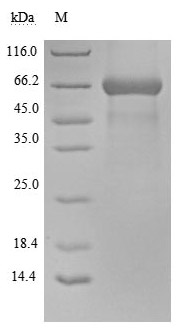
Greater than 90% as determined by SDS-PAGE.
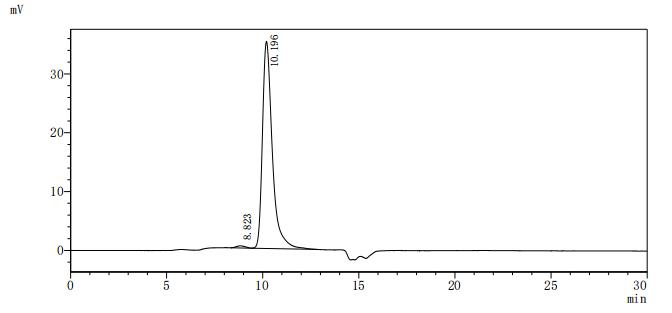
Greater than 95% as determined by SEC-HPLC.
Endotoxin
Less than 1.0 EU/ug as determined by LAL method.
Activity
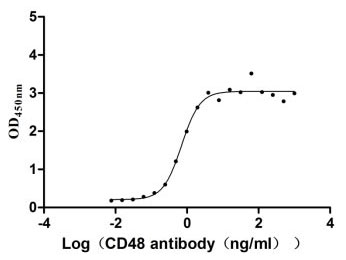
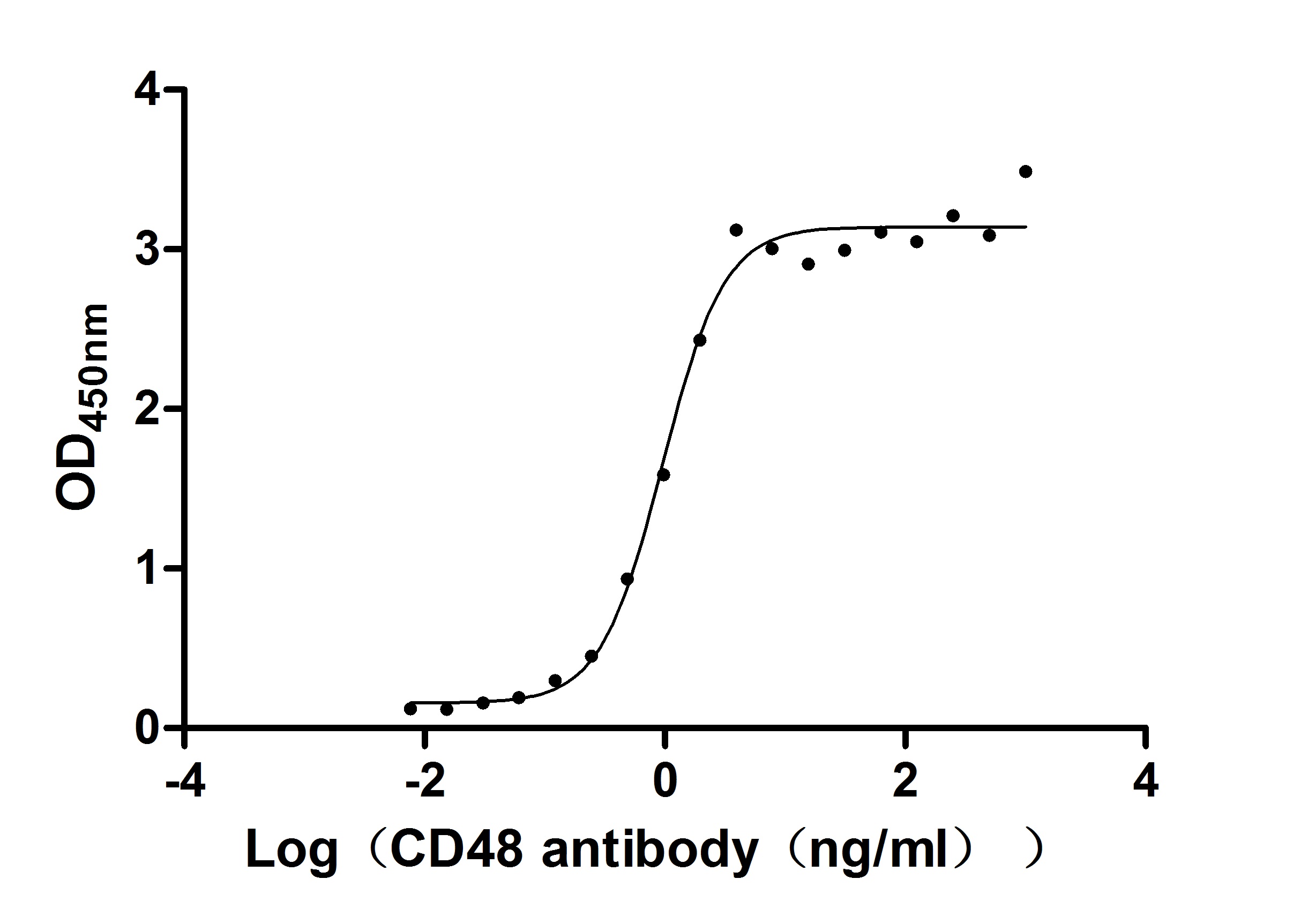
Measured by its binding ability in a functional ELISA. Immobilized CD48 at 2 μg/ml can bind Anti-CD48 rabbit monoclonal antibody, the EC50 of human CD48 protein is 0.5806-0.8463 ng/ml.
Target Names
CD48
Uniprot NO.
Research Area
Cancer
Alternative Names
B-lymphocyte activation marker BLAST-1 (BCM1 surface antigen) (Leukocyte antigen MEM-102) (SLAM family member 2) (SLAMF2) (Signaling lymphocytic activation molecule 2) (TCT.1) (CD48) (BCM1) (BLAST1)
Molecular Characterization
Species
Homo sapiens (Human)
Source
Mammalian cell
Expression Region
27-220aa
Target Protein Sequence
QGHLVHMTVVSGSNVTLNISESLPENYKQLTWFYTFDQKIVEWDSRKSKYFESKFKGRVRLDPQSGALYISKVQKEDNSTYIMRVLKKTGNEQEWKIKLQVLDPVPKPVIKIEKIEDMDDNCYLKLSCVIPGESVNYTWYGDKRPFPKELQNSVLETTLMPHNYSRCYTCQVSNSVSSKNGTVCLSPPCTLARS
Mol. Weight
51.3 kDa
Protein Length
Full Length of Mature Protein
Tag Info
C-terminal hFc1-tagged
Storage
Store at -20°C/-80°C upon receipt, aliquoting is necessary for mutiple use. Avoid repeated freeze-thaw cycles.
Lead Time
3-7 business days
Notes
Repeated freezing and thawing is not recommended. Store working aliquots at 4°C for up to one week.
Shelf Life
The shelf life is related to many factors, storage state, storage temperature and the stability of the product itself. Generally, the shelf life of lyophilized form is 6 months at -20°C/-80°C from the date of receipt.
Troubleshooting and FAQs
Datasheet & COA
Please contact us to get it.
Images
  • (Tris-Glycine gel) Discontinuous SDS-PAGE (reduced) with 5% enrichment gel and 15% separation gel.

  • Activity
    Measured by its binding ability in a functional ELISA. Immobilized CD48 at 2 μg/ml can bind Anti-CD48 rabbit monoclonal antibody, the EC50 of human CD48 protein is 0.5806-0.8463 ng/ml.

  • The purity of CD48 was greater than 95% as determined by SEC-HPLC
Description

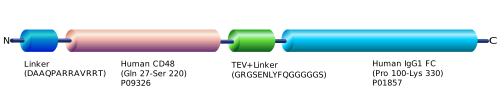
Human CD48 amino acid Gln27-Ser220 with an N-terminal linker, a TEV (tobacco etch virus)+linker, and a C-terminal human IgG1 Fc tag (Pro100-Lys330), was expressed in mammalian cells. The resulting product is the recombinant human CD48 antigen. The purity of this CD48 protein reaches up to 90% detected by SDS-PAGE. This protein ran at a molecular weight of about 60 kDa by SDS-PAGE due to glycosylation. Its endotoxin content is less than 1.0 EU/ug as determined by the LAL method. The bioactivity of this recombinant CD48 protein was measured in a functional ELISA. This CD48 protein can bind to the CD48 antibody with an EC50 constant of 0.5806-0.8463 ng/ml. And it is available now.

CD48 is a glycosylphosphatidylinositol-anchored protein mainly expressed on hematopoietic cells as membrane-associated and soluble forms. Through interaction with its ligands such as CD2 and CD244, CD48 is involved in adhesion and activation of immune cells, modulation of target cell lysis by cytolytic cells, and detection of microbes through the CD48-Fimh interaction. CD48 is upregulated under inflammatory conditions and some hematologic malignancies.

Customer Reviews and Q&A

 Customer Reviews
Average Rating:
5.0 - 1 reviews

Submit a Review here

Applications : a:1:{i:0;a:2:{i:0;s:41:"Binding assay/Protein-protein interaction";i:1;s:0:"";}}

Review: describe

By Anonymous

Target Background

Function
Ligand for CD2. Might facilitate interaction between activated lymphocytes. Probably involved in regulating T-cell activation.
Gene References into Functions
  1. soluble CD48 levels were significantly elevated in patients with nonallergic asthma compared to control and to the allergic asthma cohort PMID:30306094
  2. mCD48 and sCD48 are differentially expressed in the peripheral blood of asthma patients of varying severity. sCD48 inhibits CD244-mediated eosinophil activation. These findings suggest that CD48 may play an important role in human asthma. PMID:27859399
  3. The present study provides further insights into the role of the 2B4-CD48 interaction in the fine regulation of CD8(+) T-cell effector function upon antigenic stimulation. PMID:26860368
  4. Data show that 2B4 not only can bind to CD48 in trans but also interacts with CD48 in cis by using the same binding interface. Also, the results demonstrated that constitutive phosphorylation of 2B4 occurs only in the presence of CD48, and that cis binding is sufficient to induce substantial levels of baseline phosphorylation. PMID:27249817
  5. Our data indicate sCD48 as a SEB-induced 'decoy' receptor derived from eosinophil and therefore as a potential anti-inflammatory tool in S. aureus-induced eosinophil inflammation often associated with allergy. PMID:26836239
  6. CD48 expression was increased in patients with a short disease duration compared to both controls and patients with longer disease duration. In patients with short disease duration, increased CD48 expression was associated with alveolar inflammation. PMID:26926492
  7. These data demonstrate the important role of CD48 in SA/exotoxins-eosinophil activating interactions that can take place during allergic responses and indicate CD48 as a novel therapeutic target for allergy and especially of AD. PMID:25255823
  8. Blockade of 2B4/CD48 interaction resulted in improvement in function via perforin expression and degranulation as measured by CD107a surface mobilization on HTLV-1 specific CD8+ T cells. PMID:24505299
  9. we propose that SLAMF2 engagement regulates adaptive immune responses PMID:24670806
  10. Monocyte-induced natural killer cell dysfunction was markedly attenuated by blocking CD48 receptor 2B4 on NK cells, but not by blockade of NKG2D and NKp30. PMID:23225218
  11. replication study of association of 2 SNPs in HERV-K18 and 19 tagSNPs in CD48 with schizophrenia (SZ)and type 2 diabetes (T2D) in patients with SZ in 2 Danish samples; no association was found with SZ or with T2D among individuals with SZ for any of the SNPs PMID:22495247
  12. Stimulation of CD48 induces rearrangement of signaling factors in lipid rafts, Lck-kinase activity, and tyrosine phosphorylation. PMID:20833258
  13. The ligand (CD48) of the 2B4 receptor can exert both activating and inhibiting signals; natural killer (NK) cells might be at risk for self-killing were it not for the inhibiting signals generated by the 2B4-CD48 interaction. PMID:20164429
  14. CM1-induced apoptosis is achieved via different initiation pathways, which are cell-type dependent PMID:12072193
  15. Signal-dependent adhesion of resting NK cells initiated by expression of ICAM-1 is greatly enhanced by coexpression of CD48, even in the absence of cytokines. PMID:12496412
  16. Engagement of natural killer (NK) cell receptor 2B4 by its counterreceptor, CD48, expressed on target cells leads to an inhibition in NK cytotoxicity independent of signaling lymphocytic activation molecule-associated protein (SAP) expression. PMID:15356144
  17. IL-18, IL-18 receptor alpha, and CD48 complex formation via glycosylphosphatidylinositol anchor glycan triggers binding to IL-18 receptor beta, and thereby induces intracellular signal transduction and IFN-gamma production. PMID:15760905
  18. Review of recent studies suggests an important role for interactions between 2B4 and CD48 in the course of T cell activation and proliferation PMID:16081768
  19. 2B4 (CD244) can stimulate NK cell cytotoxicity and cytokine production by interacting with NK cell expressed CD48 and adds CD48 to the growing number of activating NK cell receptors PMID:16585556
  20. CD48 is an interleukin (IL)-3-induced activating receptor on eosinophils and may be involved in promoting allergic inflammation. PMID:16785501
  21. In conclusion, we cannot confirm a role of human endogenous retrovirus-K18 superantigen polymorphisms or of the CD48 CA repeat for type 1 diabetes susceptibility. PMID:16866884
  22. findings indicate that FimH induces host cell signalling cascades that are involved in E. coli K1 invasion of human brain microvascular endothelial cells (HBMEC) and CD48 is a putative HBMEC receptor for FimH PMID:17222190
  23. the mechanism of signal transduction by CD244 is to regulate FYN kinase recruitment and/or activity and the outcome of CD48/CD244 interactions is determined by which other receptors are engaged. PMID:17599905

Show More

Hide All

Subcellular Location
Cell membrane; Lipid-anchor, GPI-anchor.
Database Links

HGNC: 1683

UNIGENE: Hs.243564

KEGG: hsa:962

STRING: 9606.ENSP00000357025

OMIM: 109530

icon of phone
Call us
301-363-4651 (Available 9 a.m. to 5 p.m. CST from Monday to Friday)

icon of address
Address
7505 Fannin St., Ste 610, Room 7 (CUBIO Innovation Center), Houston, TX 77054, USA
icon of social media
Join us with

Subscribe newsletter

Leave a message

* To protect against spam, please pass the CAPTCHA test below.
CAPTCHA verification
© 2007-2025 CUSABIO TECHNOLOGY LLC All rights reserved. 鄂ICP备15011166号-1
Select 0 Products