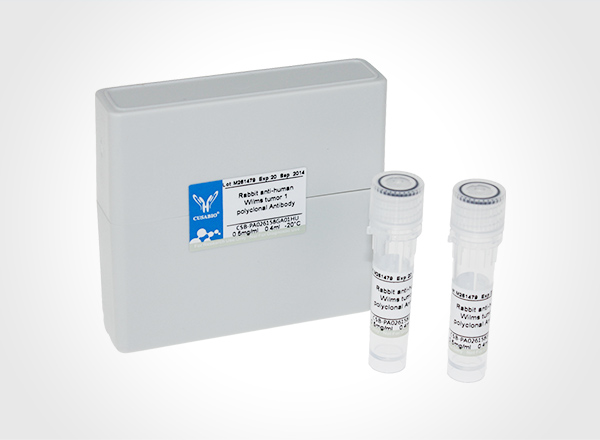
Liquid
Note: We will preferentially ship the format that we have in stock, however, if you have any special requirement for the format, please remark your requirement when placing the order, we will prepare according to your demand.
Upon receipt, store at -20°C or -80°C. Avoid repeated freeze.
Lead Time
Basically, we can dispatch the products out in 1-3 working days after receiving your orders. Delivery time maybe differs from different purchasing way or location, please kindly consult your local distributors for specific delivery time.
Note: All of our proteins are default shipped with normal blue ice packs, if you request to ship with dry ice, please communicate with us in advance and extra fees will be charged.
Usage
For Research Use Only. Not for use in diagnostic or therapeutic procedures.
Plays a role in nuclear translocation of the viral pre-integration complex (PIC), thus is required for the virus to infect non-dividing cells. Targets specific host proteins for degradation by the 26S proteasome. Acts by associating with the cellular CUL4A-DDB1 E3 ligase complex through direct interaction with host VPRPB/DCAF-1. This change in the E3 ligase substrate specificity results in the degradation of host SAMHD1. In turn, SAMHD1 depletion allows viral replication in host myeloid cells by preventing SAMHD1-mediated hydrolysis of intracellular dNTPs necessary for reverse transcription.
Gene References into Functions
These results indicate that Vpx, in addition to SAMHD1, overcomes a previously unappreciated restriction for lentiviruses at the level of reverse transcription (RT)that acts independently of dNTP concentrations and is specific to resting CD4 T cells.PMID:28228523
zinc binding appears to mitigate flexibility of the three-helix fold of Vpx, thereby preventing dysfunction.PMID:28284276
Data indicate that proline residue P109 within the C-terminal poly-proline motif (PPM) of Vpx protein plays a unique role in the regulation of SAM domain and HD domain 1 protein SAMHD1 degradation.PMID:25936766
HIV-2 Vpr can trigger G2 cell cycle arrest through either CUL4A or CUL4B.PMID:24719410
Vpx expression results in decreased promoter binding activity of IRF5PMID:24532789
Poly-proline motif in Vpx is critical for its efficient expression in cells.PMID:24114794
Data suggest that, in an evolutionary model of virus-host interactions, binding of Vpx/Vpr with SAMHD1 (and subsequent degradation of SAMHD1 [SAM domain/HD domain-containing protein 1]) exhibits dynamic requirements that have toggled back and forth.PMID:23874202
the crystal structure of a ternary complex of Vpx with the human E3 ligase substrate adaptor DCAF1 and the carboxy-terminal region of human SAMHD1PMID:24336198
direct down-modulation of Vpx catalytic activity, mediated by the same binding event that leads to SAMHD1 recruitment to the E3 ubiquitin ligase for proteasome-dependent degradationPMID:23677995
Effective immune control of viral replication in HIV-2-infected individuals is not associated with increased Vpx-mediated degradation of SAMHD1.PMID:23497283
there are several Vpx residues required for SAMHD1 degradationPMID:23076149
The Vpx lentiviral accessory protein targets human SAMHD1 for degradation in the nucleus.PMID:22973040
Vpx targets SAMHD1 for degradation in a viral strategy to control cellular deoxynucleotide levels for efficient replicationPMID:22069334
These studies map critical residues of the Vpx nuclear localization signal that are required for efficient infection of non-dividing cells.PMID:16325220
We found that insertion within the polyproline-containing C-terminus destabilizes nuclear localization, whereas mutating a second helix in the central domain disrupts viral packaging.PMID:16457868
results indicated that Vpx and Vpr of HIV-2 may cooperatively contribute to virion infectivity without affecting virion morphogenesisPMID:16953064
The results here clearly demonstrated that the entire Vpx protein is critical for reverse transcription of the HIV-2 genome in human monocyte-derived macrophages.PMID:18495778
when transferred in the context of a replication-competent viral clone, Vpx was required for replication in dendritic cellsPMID:18829761
Vpx diverts the Cul4A-DDB1(DCAF1) ligase to inactivate an evolutionarily conserved factor, which restricts macrophage infection by HIV-2.PMID:19264781