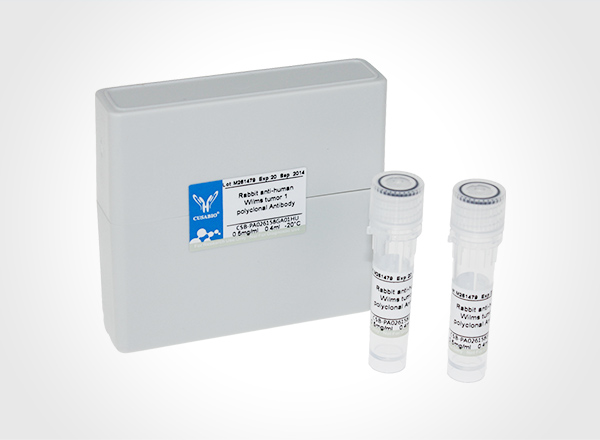
It differs from different batches. Please contact us to confirm it.
Buffer
PBS with 0.02% sodium azide, 50% glycerol, pH7.3.
Form
Liquid
Note: We will preferentially ship the format that we have in stock, however, if you have any special requirement for the format, please remark your requirement when placing the order, we will prepare according to your demand.
Upon receipt, store at -20°C or -80°C. Avoid repeated freeze.
Lead Time
Basically, we can dispatch the products out in 1-3 working days after receiving your orders. Delivery time maybe differs from different purchasing way or location, please kindly consult your local distributors for specific delivery time.
Note: All of our proteins are default shipped with normal blue ice packs, if you request to ship with dry ice, please communicate with us in advance and extra fees will be charged.
Usage
For Research Use Only. Not for use in diagnostic or therapeutic procedures.
Chemotactic activity for lymphocytes but not for monocytes or neutrophils. In thymus, mediates medullary accumulation of thymic dendritic cells and contributes to regulatoy T cell development, playing a role in self-tolerance establishment.
Gene References into Functions
higher serum XCL1 levels at diagnosis and their progressive decline throughout chemotherapy could be correlated with higher survival.PMID:29027574
This study defines a Glycosaminoglycan binding surface on XCL1 dimer that includes residues that are important for HIV-1 inhibition.PMID:26836755
Electrostatics and Hydrophobic Effects in the Metamorphic Protein Human LymphotactinPMID:26134347
XCL1 acts via direct interaction with the external viral envelope glycoprotein, gp120, to block HIV-1 infectionPMID:26085164
analysis of XCL1 and XCL2, members of the C-chemokine subfamily, in the immune systemPMID:25497737
XCL1 displays antimicrobial activity against E. coli and S. aureus.PMID:12949249
XCL1-mediated inhibition is associated with direct interaction of the chemokine with the HIV-1 envelope.PMID:24385911
In native annulus fibrosus tissue homeostasis and repair, CXCR3 is evident, whereas XCL1 could not be detected.PMID:21270681
The expression patterns of XCR1 and XCL1 were conserved in human and mice blood cells, including certain dendritic cell subsets.PMID:20541533
Data indicated increased expression of XCL1 in CD4+ and CD8+ T cells in Wegener's granulomatosis (WG), and suggest that XCL1 might be a key modulator of T cell recruitment in WG.PMID:19797511
NMR spectra of human lymphotactin (hLtn), obtained under various solution conditions, have revealed that the protein undergoes a major conformational rearrangement dependent on temperature and salt concentration.PMID:11889129
lymphotactin, as well as MCP-1, may contribute to leukocyte infiltration and disease progression in IgA nephropathy.PMID:12053063
Lptn might be a key modulator for T cell trafficking in the pathogenesis of rheumatoid arthritisPMID:12847680
In humans XCL1 expression is mainly a property of CD8+ T cells; the contribution to its synthesis by different T cell receptor alpha beta-expressing T cell subsets, namely CD4+ lymphocytes, is negligible.PMID:14568926
lymphotactin utilizes highly specific glycosaminoglycan-binding sitesPMID:14707146
XCL1 activation is positively correlated with HIV-1 Tat expression in human U87.MG astrocytes in vitro.PMID:14734774
description of a lymphotactin-producing monoclonal T-cell lymphoproliferative disorder with extreme lymphocytopenia and progressive leukoencephalopathy [case report]PMID:16923584
The monocyte-derived dendritic cells can express Lptn mRNA in a maturation-dependent manner.PMID:17077010
Elevated serum lymphotactin levels correlate with relatively milder manifestations in diffuse cutaneous systemic sclerosis (dSSc), especially lower severity of lung involvement, suggesting that lymphotactin may play a role in the development of dSSc.PMID:18322986
functional repertoire and regulation of a single naturally occurring amino acid sequence can be expanded by access to a set of highly dissimilar native-state structuresPMID:18364395
XCL1 enhances regulatory activities of CD4+ CD25(high) CD127(low/-) T cells in human allergic asthmaPMID:18832695
ATAC Is a GCN5/PCAF-containing acetylase complex with a novel NC2-like histone fold module that interacts with the TATA-binding proteinPMID:18838386
Show
More
Hide
All
Subcellular Location
Secreted.
Protein Families
Intercrine gamma family
Tissue Specificity
Highest level in spleen, lower in peripheral leukocytes and very low levels in lung, colon and small intestine.