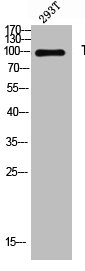
Synthesized peptide derived from the Internal region of Human Thrombospondin 4.
Immunogen Species
Homo sapiens (Human)
Conjugate
Non-conjugated
Isotype
IgG
Purification Method
The antibody was affinity-purified from rabbit antiserum by affinity-chromatography using epitope-specific immunogen.
Concentration
It differs from different batches. Please contact us to confirm it.
Buffer
Liquid in PBS containing 50% glycerol, 0.5% BSA and 0.02% sodium azide.
Tested Applications
WB, IHC, ELISA
Storage
Upon receipt, store at -20°C or -80°C. Avoid repeated freeze.
Lead Time
Basically, we can dispatch the products out in 1-3 working days after receiving your orders. Delivery time maybe differs from different purchasing way or location, please kindly consult your local distributors for specific delivery time.
Note: All of our proteins are default shipped with normal blue ice packs, if you request to ship with dry ice, please communicate with us in advance and extra fees will be charged.
Usage
For Research Use Only. Not for use in diagnostic or therapeutic procedures.
Adhesive glycoprotein that mediates cell-to-cell and cell-to-matrix interactions and is involved in various processes including cellular proliferation, migration, adhesion and attachment, inflammatory response to CNS injury, regulation of vascular inflammation and adaptive responses of the heart to pressure overload and in myocardial function and remodeling. Binds to structural extracellular matrix (ECM) proteins and modulates the ECM in response to tissue damage, contributing to cardioprotective and adaptive ECM remodeling. Plays a role in ER stress response, via its interaction with the activating transcription factor 6 alpha (ATF6) which produces adaptive ER stress response factors and protects myocardium from pressure overload. May contribute to spinal presynaptic hypersensitivity and neuropathic pain states after peripheral nerve injury. May play a role in regulating protective astrogenesis from the subventricular zone (SVZ) niche after injury in a NOTCH1-dependent manner.
Gene References into Functions
establish a novel molecular mechanism by which miR-148a-3p upregulates Tsp-4 expression in tenocytes to promote angiogenesis by targeting KLF6, which could be helpful for the treatment of tendinopathy in the futurePMID:29807011
Findings indicate that loss of miR-142 results in the over-expression of THBS4, which enhances HCC migration and vascular invasion.PMID:28177895
the present study demonstrates that THBS4 and lncRNA-THBS4-003 serve a significant role in PCa proliferation and migration via the MMP-9 and p38 MAPK signaling pathway.PMID:27357608
The THBS4 A387P polymorphism was associated with coronary artery disease in American population.PMID:25976449
Tsp4 functions as an ECM scaffold at myotendinous junctions, with potential therapeutic uses in tendon strengthening and repairPMID:24941943
THBS4 expression in breast cancer-associated extracellular matrix contributes to the activated stromal response exhibited during tumour progressionPMID:23942617
the balancing selection target in THBS4 is likely represented by one or more variants that regulate tissue-specific and sex-specific gene expressionPMID:23420636
The results of thid study suggested that injury-induced spinal TSP4 may contribute to spinal presynaptic hypersensitivity and neuropathic pain states.PMID:22745497
genetic polymorphism predicts cardiovascular risk in postinfarction patients with high HDL cholesterol and C-reactive protein levelsPMID:22011848
Identify THBS4 as a powerful marker for diffuse-type gastric adenocarcinomas and to provide an initial characterization of its expression in the course of this disease.PMID:21701537
High THBS4 methylation resulting in inactivation of the gene is associated with colorectal cancer.PMID:20846368
thrombospondin-4 C-terminal peptide has a role in stimulating erythroid cell proliferationPMID:15474480
Promoter hypermethylation of thrombospondin 4 is associated with cutaneous T-cell lymphomaPMID:15897551
Homozygosity for thrombospondin-4 1186C (Arg387Pro) variant is a risk factor for myocardial infarction especially in older women.PMID:16923428
The functional analysis of the rat counterpart.PMID:7490284