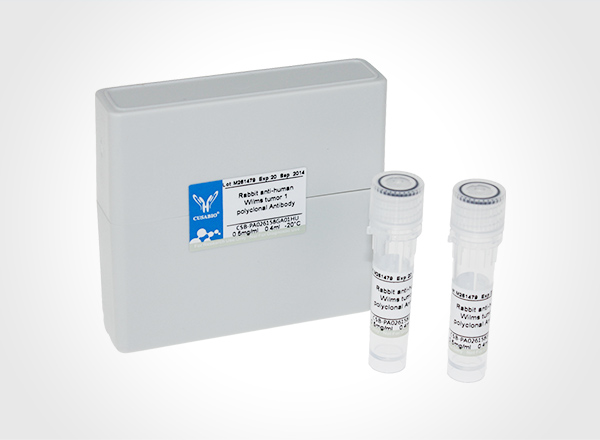
Synthesized peptide derived from the Internal region of Human T2R3.
Immunogen Species
Homo sapiens (Human)
Conjugate
Non-conjugated
Isotype
IgG
Purification Method
The antibody was affinity-purified from rabbit antiserum by affinity-chromatography using epitope-specific immunogen.
Concentration
It differs from different batches. Please contact us to confirm it.
Buffer
Liquid in PBS containing 50% glycerol, 0.5% BSA and 0.02% sodium azide.
Form
Liquid
Note: We will preferentially ship the format that we have in stock, however, if you have any special requirement for the format, please remark your requirement when placing the order, we will prepare according to your demand.
Upon receipt, store at -20°C or -80°C. Avoid repeated freeze.
Lead Time
Basically, we can dispatch the products out in 1-3 working days after receiving your orders. Delivery time maybe differs from different purchasing way or location, please kindly consult your local distributors for specific delivery time.
Note: All of our proteins are default shipped with normal blue ice packs, if you request to ship with dry ice, please communicate with us in advance and extra fees will be charged.
Usage
For Research Use Only. Not for use in diagnostic or therapeutic procedures.
Gustducin-coupled receptor implicated in the perception of bitter compounds in the oral cavity and the gastrointestinal tract. Signals through PLCB2 and the calcium-regulated cation channel TRPM5.
Gene References into Functions
differences in the bitterness from chemicals associated with genetic polymorphisms in bitter taste receptor genes, specifically in TAS2R3, -4, -5 as well as TAS2R38.PMID:26785164
Our results show that the expression rate of some of the T2R taste receptor genes was increased significantly in patients with phantogeusia.PMID:22397221
Includes the study of a polymorphic upstream ORF in this gene, and shows that it functions to reduce protein levels by ~58%.PMID:19372376
Show
More
Hide
All
Subcellular Location
Membrane; Multi-pass membrane protein.
Protein Families
G-protein coupled receptor T2R family
Tissue Specificity
Expressed in subsets of taste receptor cells of the tongue and palate epithelium and exclusively in gustducin-positive cells. Expressed in the antrum and fundus (part of the stomach), duodenum and in gastric endocrine cells.