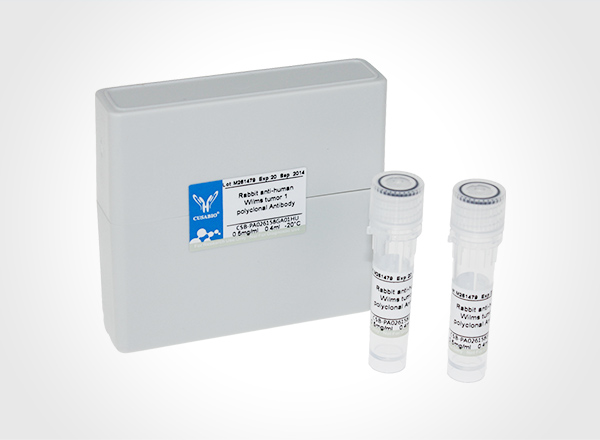
Upon receipt, store at -20°C or -80°C. Avoid repeated freeze.
Lead Time
Basically, we can dispatch the products out in 1-3 working days after receiving your orders. Delivery time maybe differs from different purchasing way or location, please kindly consult your local distributors for specific delivery time.
Note: All of our proteins are default shipped with normal blue ice packs, if you request to ship with dry ice, please communicate with us in advance and extra fees will be charged.
Usage
For Research Use Only. Not for use in diagnostic or therapeutic procedures.
Component of cohesin complex, a complex required for the cohesion of sister chromatids after DNA replication. The cohesin complex apparently forms a large proteinaceous ring within which sister chromatids can be trapped. At anaphase, the complex is cleaved and dissociates from chromatin, allowing sister chromatids to segregate. The cohesin complex may also play a role in spindle pole assembly during mitosis.
Gene References into Functions
STAG2 deficiency induces interferon responses via cGAS-STING pathway and restricts virus infection.PMID:29662124
STAG2 loss of Expression is Associated with Cancer Progression in Upper Urinary Tract Carcinoma.PMID:28967037
these data suggest that STAG2 acts as a tumor suppressor gene in bladder cancer and may be a potential therapeutic target in bladder cancerPMID:28627627
Extending the lifespan of normal human cells due to inactivation of STAG2 could promote tumorigenesis by extending the period during which tumor-driving mutations occur.PMID:28819029
TAG2 is the most commonly mutated subunit, and in a recent analysis was identified as one of only 12 genes that are significantly mutated in four or more cancer types.PMID:27207471
the clinical features of these three cases are remarkably similar to those observed in other well-established cohesinopathies. Herein, we suggest that STAG2 is a dosage-sensitive gene and that heterozygous loss-of-function variants lead to a cohesinopathy.PMID:28296084
results indicated that the complete loss of STAG2 expression was predictive for better recurrence-free survival and cancer-specific survival, suggesting its potential value as a prognostic biomarker in bladder cancerPMID:26838030
We suggest that increased STAG2 gene copy number and dysregulation of its downstream target genes may be responsible for the specific clinical findings of this syndrome.PMID:25677961
Characterization of C-terminal nuclear localization signal of the human SA2 stromalinPMID:25979289
Data show a significantly higher stromal antigen 2 (STAG2) mRNA and protein levels in normal bladder cells than bladder cancer cells.PMID:25867412
Microduplication of chromosome Xq25 encompassing STAG2 gene in a boy with intellectual disabilityPMID:25450604
STAG2 promotes the correction of kMT attachment errors to ensure faithful chromosome segregation during mitosis.PMID:25074805
Genomic landscape of Ewing sarcoma defines an aggressive subtype with co-association of STAG2 and TP53 mutationsPMID:25223734
Loss of STAG2 expression occurs in 15% of tumors and is associated with metastatic disease, suggesting a potential genetic vulnerability in Ewing sarcomaPMID:25186949
our study identifies the duplication of XIAP and STAG2 as the minimal duplicated region leading to the ID, facial morphological anomalies, and speech delay, specific to the patients with Xq25 duplication.PMID:24733578
In an independent EFT tissue microarray cohort, we show that STAG2 loss as detected by immunohistochemistry may be associated with more advanced disease (p = 0.15) and a modest decrease in overall survival (p = 0.10).PMID:25010205
Aneuploidy in human salivary gland carcinomas is not driven by loss of expression of STAG2.PMID:24822266
These data suggest that PARP is a potential target for tumors harboring inactivating mutations in STAG2, and strongly recommend that STAG2 status be determined and correlated with therapeutic response to PARP inhibitorsPMID:24356817
Cross-sectional deep-sequencing analysis for clonal hierarchy demonstrated STAG2, SMC3, and RAD21 mutations to be ancestral in 18%, 18%, and 47% of cases, respectively, and each expanded to clonal dominance concordant with disease transformationPMID:25006131
Loss of STAG2 function is associated with non-invasive bladder cancer.PMID:24270882
Mutations in STAG2 is associated with acute myeloid leukemia.PMID:24335498
STAG2 is one of the most commonly mutated genes in bladder cancer.PMID:24121789
STAG2 is a new urothelial bladder cancer tumor suppressor acting through mechanisms that are different from its role in preventing aneuploidy.PMID:24121791
Inactivating point mutations in the STAG2 gene are not common in neuroblastoma tumorsPMID:24088605
Somatic mutation of STAG2, an aneuploidy-related gene, is rare in acute leukemias.PMID:22132872
Low STAG2 expression and not mutation is associated with neoplasms.PMID:22668012
study has shown that diverse human cancers harbor mutations in the X-linked chromatid cohesion gene STAG2 and that these mutations cause aneuploidyPMID:21852505
evidence suggests STAG2 functions as a transcriptional co-activator by a mechanism involving protein-protein interactions with transcription factorsPMID:14660624
Phosphorylation of SA2 is essential for cohesin dissociation during prophase and prometaphase, but is not required for cohesin cleavage by separase.PMID:15737063
Cohesion between sister chromatids is essential for their bi-orientation on mitotic spindles is mediated by a multisubunit complex called cohesin.PMID:15737064
Show
More
Hide
All
Subcellular Location
Nucleus. Chromosome. Chromosome, centromere. Note=Associates with chromatin. Before prophase it is scattered along chromosome arms. During prophase, most of cohesin complexes dissociate from chromatin probably because of phosphorylation by PLK1, except at centromeres, where cohesin complexes remain. At anaphase, the RAD21 subunit of cohesin is cleaved, leading to the dissociation of the complex from chromosomes, allowing chromosome separation. In germ cells, cohesin complex dissociates from chromatin at prophase I, and may be replaced by a meiosis-specific cohesin complex.