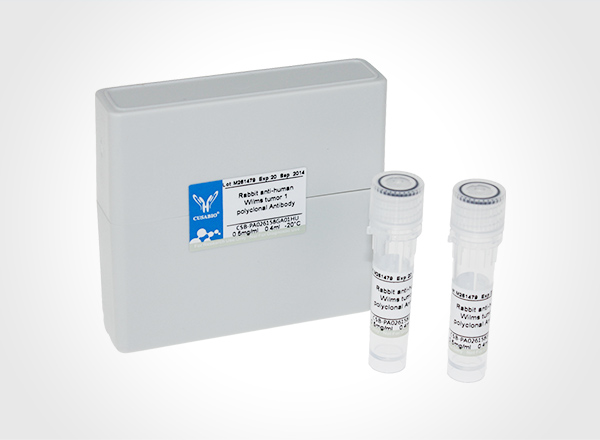
Liquid
Note: We will preferentially ship the format that we have in stock, however, if you have any special requirement for the format, please remark your requirement when placing the order, we will prepare according to your demand.
Storage
Upon receipt, store at -20°C or -80°C. Avoid repeated freeze.
Lead Time
Basically, we can dispatch the products out in 1-3 working days after receiving your orders. Delivery time maybe differs from different purchasing way or location, please kindly consult your local distributors for specific delivery time.
Note: All of our proteins are default shipped with normal blue ice packs, if you request to ship with dry ice, please communicate with us in advance and extra fees will be charged.
Usage
For Research Use Only. Not for use in diagnostic or therapeutic procedures.
Responsible for the biosynthesis of pyroglutamyl peptides. Has a bias against acidic and tryptophan residues adjacent to the N-terminal glutaminyl residue and a lack of importance of chain length after the second residue. Also catalyzes N-terminal pyroglutamate formation. In vitro, catalyzes pyroglutamate formation of N-terminally truncated form of APP amyloid-beta peptides [Glu-3]-amyloid-beta. May be involved in the N-terminal pyroglutamate formation of several amyloid-related plaque-forming peptides.
Gene References into Functions
The addition of QC activity to core diagnostic CSF biomarkers may be of specific interest in clinical cases with discordant imaging and biochemical biomarker results.PMID:28587659
these findings demonstrate a significant association between common single nucleotide polymorphism within QPCT gene and schizophrenia risk in a Han Chinese population.PMID:26572640
the genetic risk of QPCT gene for schizophrenia also exists in the Han Chinese population.PMID:26492838
observations provide evidence for an involvement of QC in Alzheimer's disease pathogenesis and cognitive decline by QC-catalyzed pGlu-Abeta formationPMID:24164736
this study demonistrated that QPCT mRNAand protein from mononuclear cells correlated with theseverity of dementia.PMID:23207485
Upregulation of QPCT expression is associated with thyroid carcinomas.PMID:23183267
This study presents a first comparison of two mammalian QCs (human and mouse) containing typical, conserved post-translational modifications.PMID:21671571
The resilts of this studt provided histopathological evidence for QC being a prerequisite for pE-Abeta pathology in vivo and further underline the therapeutic potential of QC inhibition in Alzheimer Disease.PMID:21301857
Upon binding to PBD150, a large loop movement in gQC allows the inhibitor to be tightly held in its active site primarily by hydrophobic interactions.PMID:21288892
This study demonstrated that glutaminyl cyclase expression and pE-Abeta formation in subcortical brain regions( Edinger-Westphal nucleus, locus coeruleus and nucleus basalis Meynert) affected in Alzheimer's disease.PMID:20383514
Human isoQC proteins displayed a broad substrate specificity and preference for hydrophobic substrates, similar to the related QC.PMID:19804409
Functional expression of human glutaminyl cyclase in Pichia pastoris reveals the presence of a disulfide bond with an important role in the stabilization of active protein structure.PMID:12196024
human glutaminyl cyclase is a metal-dependent transferasePMID:14522962
Glutaminyl cyclase was expressed as a fully active 37 kDa enzyme with kcat/Km values of 14.3, 9.3, and 2.4 mM(-1)s(-1) for the substrates Gln-Gln, Gln-NH(2), and Gln-t-butyl ester, respectivelyPMID:14680951
Genetic variations in QPCT are important factors affecting the bone mineral density of adult women that contribute to susceptibility for osteoporosis.PMID:15231017
structure of human QC in free form and bound to a substrate and three imidazole-derived inhibitorsPMID:16135565
Our results suggest that QPCT may be the QTL gene at chromosome 2p for spine BMD variation in the Chinese populationPMID:17687619
combined steady-state enzyme kinetic and X-ray structural analyses of 11 single-mutation human QCs to investigate the roles of the H-bond network in catalysisPMID:18072935
The computations outline the important role of Trp329 in helping the substrate binding process and stabilizing the cyclization transition state.PMID:18470930
Golgi apparatus retention implies a "housekeeping" protein maturation machinery conducting glycosylation and pyroglutamyl formation. For these isoenzymes, apparently similar strategies evolved to retain the proteins in the Golgi complex.PMID:18486145