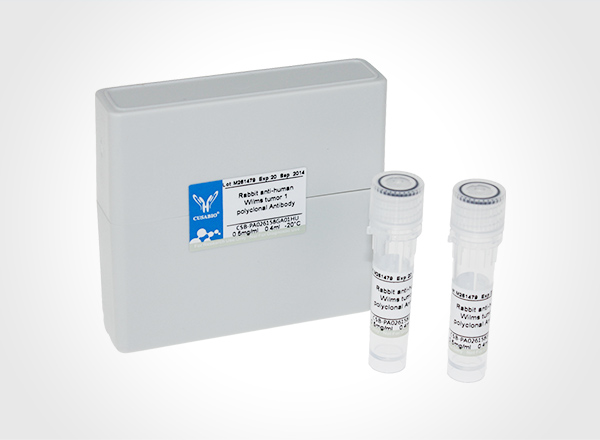
Liquid
Note: We will preferentially ship the format that we have in stock, however, if you have any special requirement for the format, please remark your requirement when placing the order, we will prepare according to your demand.
Upon receipt, store at -20°C or -80°C. Avoid repeated freeze.
Lead Time
Basically, we can dispatch the products out in 1-3 working days after receiving your orders. Delivery time maybe differs from different purchasing way or location, please kindly consult your local distributors for specific delivery time.
Note: All of our proteins are default shipped with normal blue ice packs, if you request to ship with dry ice, please communicate with us in advance and extra fees will be charged.
Usage
For Research Use Only. Not for use in diagnostic or therapeutic procedures.
Potently contracts gastrointestinal (GI) smooth muscle. Induces proliferation, migration and fenestration (the formation of membrane discontinuities) in capillary endothelial cells derived from endocrine glands. Has little or no effect on a variety of other endothelial and non-endothelial cell types. Induces proliferation and differentiation, but not migration, of enteric neural crest cells. Directly influences neuroblastoma progression by promoting the proliferation and migration of neuroblastoma cells. Positively regulates PTGS2 expression and prostaglandin synthesis. May play a role in placentation. May play a role in normal and pathological testis angiogenesis.
Gene References into Functions
PROK1 or MMP-2 in the amniotic fluid do not have a role in the prediction of adverse pregnancy outcomes.PMID:29405963
Elevated PROK1 in the first pregnancy trimester is a more effective marker than PAPP-A in the prediction of pre-eclampsia and fetal growth restriction.PMID:28675948
The VEGF/sVEGF-R1 ratio in follicular fluid on the day of oocyte retrieval in women undergoing IVF procedure, regardless of the type of stimulation protocol, might predict the risk of developing ovarian hyperstimulation syndrome (OHSS). To the best of our knowledge this is the first paper in the literature to show interplay among VEGF, EG-VEGF and sVEGF-R1 and the correlation between their concentration and OHSS risk.PMID:28820403
These findings demonstrate a novel function of primary cilia in controlling EG-VEGF-regulated trophoblast invasion and reveal the underlying molecular mechanism.PMID:27736039
miR-346 and miR-582-3p regulate EG-VEGF-induced trophoblast invasion through repressing MMP 2 and MMP 9, and may become novel diagnostic biomarkers or therapeutic targets for EG-VEGF-related obstetric disorders. (c) 2016 BioFactors, 43(2):210-219, 2017.PMID:27619846
Each follicular fluid (FF) was individually aspirated and FF/serum EG-VEGF, inhibin-a, and FF IGF-1 levels were evaluated. The pregnant group was characterized by increased numbers of WVFs (p = 0.044), a WVE (p = 0.022), and increased levels of FF IGF-1 (p = 0.001) and serum EG-VEGF (p = 0.03).PMID:27484063
Results show the biological effects of PROK1-V67I on cell functions are similar to those of wild type, and the common variant of V67I may act as a modifier in the PROK1-PROKR system through down-regulation of PROK1 expression.PMID:26828479
EG-VEGF and its receptor PKR1 might play a role in the pathogenesis of adrenocortical tumors and could serve as prognostic markers for this rare malignant disease.PMID:26475302
The prognosis was poorer in colorectal cancers that expressed both PROK1 and VEGF relative to the cases that expressed only 1 protein, and the expression of both proteins was found to be an independent prognostic factor.PMID:26318037
PROK1 levels in follicular fluid and fertilization culture media could constitute new predictive noninvasive markers of successful embryo implantation in conventional in vitro fertilization-embryo transferPMID:26401590
Simultaneous targeting of both angiogenic growth factors (VEGF/PROK1) may prove more useful in colorectal cancerPMID:25788276
High Prokineticin 1 protein expression is associated with sporadic colorectal cancer.PMID:25331005
Expression of PROK1 and PROKR1 was significantly higher in mid-gestation ovaries (17-20 wk) than at earlier gestations (8-11 and 14-16 wk).PMID:26192875
More importantly this paper argues for EG-VEGF clinical relevance as a potential biomarker of the onset of pregnancy pathologies and discusses its potential usefulness for future therapeutic directions.PMID:24955357
EG-VEGF and VEGFA systems shared several canonical signaling pathways that may contribute to gene-gene interactions, including the Akt, IL-8, EGFR, MAPK, SRC, VHL, HIF-1A and STAT3.PMID:24671265
Study corroborates the clinical relevance of the EG-VEGF system in human early pregnancy, and provides evidence for the gene-gene interactions of EG-VEGF and PROKR variants.PMID:25064403
An increased mRNA expression of PROK1 and LIF could be one of the several abnormalities characterizing the endometrium in women recurrent pregnancy loss.PMID:25128195
Defective placental maturation is associated with an imbalance of expression of basic fibroblast growth factor (FGF) and PK1.PMID:23891065
preliminary data suggest a high potential of prokineticin 1 in the success of implantation and pregnancyPMID:23972922
number of blood vessels in PROK1-positive primary gastrointestinal lesions was higher than that in PROK1-negative primary lesions. CONCLUSION: PROK1 expression might be related to the extent of malignancy in gastrointestinal cancerPMID:24324064
EG-VEGF as a new placental growth factor acting during the first trimester of pregnancy, established its mechanism of action, and provide evidence for its deregulation in FGR.PMID:22941044
During the first trimester of pregnancy, hCG and EG-VEGF exhibit the same pattern of expression, suggesting that EG-VEGF is potentially regulated by hCG.PMID:22138749
Findings, together with the detection of sequence variants in PROKR1, PROK1 and PROKR2 genes associated to HSCR and, in some cases in combination with RET or GDNF mutations, provide evidence to consider them as susceptibility genes for HSCR.PMID:21858136
Data show that decidualization was associated with increased expression of 428 genes including SCARA5 (181-fold), DKK1 (71-fold) and PROK1 (32-fold), and decreased expression of 230 genes including MMP-7 (35-fold) and SFRP4 (21-fold).PMID:21858178
identified a novel signalling pathway whereby PROK1 can induce the expression of DKK1 in the human endometrium and first trimester decidua.PMID:21546446
The data shows that much more PK1 in healthy pregnant women is produced than those suffering from preeclampsia.PMID:21876489
Prok1 is significantly increased in ppapillary thyroid cancer, and its expression in PTC is related to BRAF mutation.PMID:21385081
CTGF expression in early pregnancy decidua is regulated by PROK1, via activation of the Gq, PLC, cSrc, EGFR, MAPK/ERK kinase pathway and has a role in cell adhesion.PMID:21098624
Data show that expression of PK1 and PKR1 was detected in primary MM cells and myeloma cell lines.PMID:20795791
When endometrial stromal cells from both groups of women were differentiated to decidual phenotype, PROK1 mRNA was up-regulated and PR and HOXA10 mRNA were down-regulated to the same extent.PMID:20400074
findings identify EG-VEGF as a novel paracrine regulator of trophoblast invasion. We speculate that a failure to correctly down-regulate placental expression of EG-VEGF at the end of the first trimester of pregnancy might lead to PEPMID:19602057
Altered expression of PROK1 could be one of the several biochemical abnormalities characterizing eutopic endometrium in endometriosis.PMID:19285664
Treatment of human decidua with a lentiviral miRNA to abolish endogenous PROK1 expression results in a significant reduction in IL-11 expression and secretionPMID:19801577
EG-VEGF expression was significantly higher in ectopic endometriotic tissue when compared to eutopic samples in infertile women.PMID:19135668
The role of EG-VEGF in the regulation of angiogenesis in endocrine glands. Review.PMID:12858543
acting via either PK-R2 or PK-R1, prokineticin 1 may have angiogenic as well as nonangiogenic functions in the ovaryPMID:12915658
Expression of VEGFR-1 mRNA, but not EG-VEGF and the other three VEGF receptors studied, was elevated in preeclamptic vs. normal placentas.PMID:15126581
Human EG-VEGF may play a role in angiogenesis both during the early endocrine development of testis and in the adult testis as well as in Leydig cell tumor growth.PMID:15292351
EG-VEGF may only play a role in vascular function of peri-implantation endometrium, but is unlikely to be associated with the etiology of endometrial cancer development.PMID:16210375
PK1 could be one of the causative factors of age-related macular degeneration (AMD); transgenic mice expressing human PK1 exhibit choroidal neovascularization in a model that may be useful for establishing treatments for the exudative form of AMD.PMID:16263331
Inverse resgulation of mRNA expression by ovarian cells may suggest that in addition to its angiogenic effects, EG-VEGF/PK-1 may also play other roles in ovary. (review)PMID:16320832
High EG-VEGF is associated with carcinogenesis and portal vein tumor thrombus formation in human hepatocellular carcinomaPMID:17167981
Overexpressed Prk1 conferred Adriamycin resistance in a human embryo kidney cell line.PMID:17178891
EG-VEGF/Prok-1 signaling has a role in neuroblastoma progressionPMID:17289879
Either EG-VEGF is not exclusive of endocrine organs, or the pancreas should be considered as a functional steroidogenic tissue.PMID:17683928
PROK1 and PROKR1 expression is elevated in human decidua during early pregnancy PROK1-PROKR1 interaction regulates expression of a host of implantation-related genes.PMID:18339712
EG-VEGF may enhance cell proliferation through the activation of MAPK pathway, although not through the Akt pathway.PMID:18571163
High PK1 mRNA levels were observed only in cultured pancreatic stellate cells and microdissected islet cells, but not in cancer cells, and PK1 protein was localized mainly in islets and cancer-associated stromal cells.PMID:19077468
hCG-mediated LIF expression in the endometrium is dependent on prior induction of PROK1.PMID:19255255
EG-VEGF protects pancreatic cancer cells from apoptosis through upregulation of myeloid cell leukemia-1, an anti-apoptotic protein of the bcl-2 family.PMID:19523441
Show
More
Hide
All
Subcellular Location
Secreted.
Protein Families
AVIT (prokineticin) family
Tissue Specificity
Localizes to glandular epithelium, stroma and vascular epithelial cells of first trimester decidua (at protein level). Up-regulated in first trimester decidua when compared with non-pregnant endometrium. Expressed in the steroidogenic glands, ovary, testi