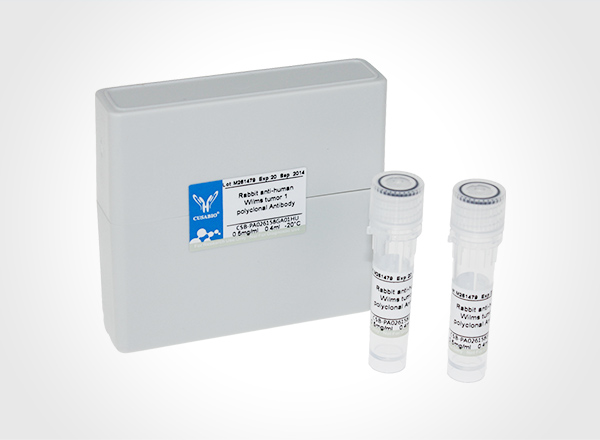
Activation peptide antibody; Anticoagulant protein C antibody; APC antibody; Autoprothrombin IIA antibody; Blood coagulation factor XIV antibody; EC 3.4.21.69 antibody; PC antibody; proC antibody; PROC_HUMAN antibody; PROC1 antibody; Protein C (inactivator of coagulation factors Va and VIIIa) antibody; THPH3 antibody; THPH4 antibody; Vitamin K dependent protein C antibody
Raised in
Rabbit
Species Reactivity
Human
Immunogen
Recombinant Human Vitamin K-dependent protein C protein (288-409AA)
Immunogen Species
Homo sapiens (Human)
Conjugate
Biotin
Clonality
Polyclonal
Isotype
IgG
Purification Method
>95%, Protein G purified
Concentration
It differs from different batches. Please contact us to confirm it.
Liquid
Note: We will preferentially ship the format that we have in stock, however, if you have any special requirement for the format, please remark your requirement when placing the order, we will prepare according to your demand.
Upon receipt, store at -20°C or -80°C. Avoid repeated freeze.
Lead Time
Basically, we can dispatch the products out in 1-3 working days after receiving your orders. Delivery time maybe differs from different purchasing way or location, please kindly consult your local distributors for specific delivery time.
Note: All of our proteins are default shipped with normal blue ice packs, if you request to ship with dry ice, please communicate with us in advance and extra fees will be charged.
Usage
For Research Use Only. Not for use in diagnostic or therapeutic procedures.
Protein C is a vitamin K-dependent serine protease that regulates blood coagulation by inactivating factors Va and VIIIa in the presence of calcium ions and phospholipids. Exerts a protective effect on the endothelial cell barrier function.
Gene References into Functions
The fusion protein recapitulates the functional and structural properties of the thrombin-thrombomodulin complex, prolongs the clotting time by generating pharmacological quantities of activated protein C and effectively diagnoses protein C deficiency in human plasma.PMID:28294177
Polymorphisms of F2, PROC, PROZ, and F13A1 Genes are Associated With Recurrent Spontaneous Abortion in Chinese Han Women.PMID:29363996
Laboratory tests and direct sequencing of PROC and SERPINC1 were conducted for the patient and his family members. Coagulation tests revealed that the patient presented type I antithrombin deficiency combined with decreased protein C activity resulting from a small insertion mutation c.848_849insGATGT in SERPINC1 and a short deletion variant c.572_574delAGA in PROC.PMID:28861852
Patients with rheumatoid arthritis, polymyositis, systemic lupus erythematosus and ankylosing spondylitis showed higher serum levels of than healthy control individuals.PMID:29303701
Using protein C-factor VII chimera demonstrate that APC light chain amino acid residues outside the EPCR-binding site enable cytoprotective PAR1 signaling.PMID:28834159
We recently identified a venous thrombosis patient whose plasma level of protein C antigen is normal, but its anticoagulant activity is only 34 % of the normal level. Genetic analysis revealed that the proband and her younger brother carry a novel heterozygous mutation c.346G>A, p.Gly74Ser (G74S) in PROC.PMID:28405673
Developed functional protein S assays that measure both the activated protein C- and TFPI-cofactor activities of protein S in plasma, which are hardly if at all affected by the FV Leiden mutation.PMID:28211163
Protein C seems inversely associated with mortality in patients with advanced prostate, lung and pancreatic cancer. Further research should validate protein C as a biomarker for mortality, and explore the effects of protein C on progression of cancer.PMID:28376316
Genetically higher protein C was associated with a lower risk of ischaemic heart disease.PMID:27882376
EPCR occupancy recruits G-protein coupled receptor kinase 5, thereby inducing beta-arrestin-2 biased PAR1 signaling by both APC and thrombin. InPMID:27561318
A novel mutation of A309V in PROC was determined in a family of two patients with late onset protein C deficiencyPMID:28111891
loss of the convertase furin or PC5/6 in hepatocytes results in a approximately 30% decrease in APC levels, with no significant contribution from PACE4. We conclude that prior convertase cleavage of protein C in hepatocytes is critical for its thrombin activation.PMID:28468828
Both probands had hereditary protein C deficiencies, for which their parents were all carriers.PMID:28186585
Variants influencing circulating protein C levels in the CELSR2-PSRC1-SORT1 region may indicate a novel genetic link between lipoprotein metabolism and hemostasis.PMID:28082259
These findings suggest that the anti-inflammatory function of APC at therapeutic concentrations may include the inhibition of NETosis in an EPCR-, PAR3-, and Mac-1-dependent manner, providing additional mechanistic insight into the diverse functions of neutrophils and APC in disease states including sepsis.PMID:28408624
Collectively, these data depict a pivotal role for AMPK signaling in inhibiting ER stress responses via the activation of APC during MGO-induced cardiomyocyte apoptosis. Thus, APC may be a potential novel therapeutic target for the management of diabetic cardiovascular complications such as diabetic cardiomyopathy.PMID:27794481
An activation-resistant homozygous protein C R229W mutation was linked to perinatal intracranial bleeding and delayed onset of thrombosis.PMID:27172833
Structural and functional studies of novel heterozygous mutations in the PROC gene confirmed that the mutations were pathogenetic in two Chinese families with types I and II protein C deficiency.PMID:27517348
The odds ratio of developing idiopathic fatal pulmonary embolism as a variant carrier for PROC is 85.6 (95% CI, 13.0-448.9; P = 2.0 x 10- 5.PMID:28174134
Study detected a statistically significant positive correlation between expanded disability status scale scores and thrombomodulin levels (p<0.01) and a 10% positive correlation between expanded disability status scale scores and APC levels in multiple sclerosis patientsPMID:27456888
Low protein C expression is associated with diabetes mellitus.PMID:27345772
Genetic variants in thrombomodulin and endothelial protein C receptor genes are additively associated with mortality in acute respiratory distress syndrome in European ancestryPMID:27215212
Protein C and TAFI are concurrently activated in a thrombomoulin-dependent manner and do not compete for the thrombin-TM complex, raising the possibility that they interact with distinct activation complexes.PMID:26663133
We herewith present the first case of fetal ventriculomegaly and neonatal stroke associated with heterozygous PROC mutation.PMID:26250584
Elevated levels of circulating microparticles can play a role in carriers of mild and severe inherited thrombophilia resulting from protein C deficiency.PMID:26354831
deficiency associated with venous thromboembolism in pregnancyPMID:25586317
ApoER2 contributes cooperatively with endothelial cell protein C receptor and protease activated receptor 1 to APC-initiated endothelial antiapoptotic and barrier protective signaling.PMID:26800564
Results show that free activated protein C binds to membrane EPCR in ovarian cancer cells inducing cell migration via MEK-ERK and Rho-GTPase pathways. The cancer cells become highly aggressive, and secondary nodules develop because of fibrin inhibition.PMID:26082331
Low levels of protein C during pregnancy were not associated with adverse pregnancy outcome.PMID:25879167
Report activation of protein C and down-regulation of EPCR in trophobolasts stimulated with TNF-alpha.PMID:25667200
levels of protein C and soluble thrombomodulin in critically ill patients with acute kidney injuryPMID:25790110
We conclude that the Cohn process significantly influences the anticoagulant activity of PC. Compared to the antigen, PC lost greater than 80% of its anticoagulant activity, but retained its amidolytic activity, during the Cohn process.PMID:25730025
Data show the molecular model of the complex of activated protein C (APC) with alphaVbeta3 integrin obtained by protein-protein docking approach.PMID:24251463
Our findings identify PROC on 2q14 as a novel candidate for childhood asthmaPMID:25643747
Protein C is activated during in vitro thrombolysis.PMID:26552309
Results provide evidence that APC selectively inhibits proliferation and the inflammatory signaling pathways of rheumatoid synovial fibroblasts.PMID:24096826
High avidity anti-protein C antibodies by provide marker for a severe thrombotic phenotype in antiphospholipid syndrome.PMID:25196808
A single measurement of protein C was able to identify severe coagulopathy early in the course of sepsis.PMID:24410881
Suggest that PC deficiency is an independent predictor for the progression of critical limb ischemia.PMID:25115555
Hereditary protein C deficiency in a family with venous thrombosis was associated with two missense mutations in the PROC gene.PMID:25748729
Heterozygous F139V mutations caused mild reduction of protein C function, which might be the reason for survival of compound heterozygous or homozygous protein C deficiency adults carrying these mutations.PMID:24911457
A novel PC mutation in a healthy subject results in type II PC deficiency as diagnosed by commercial kits.PMID:25651845
Dialysis patients who are carriers of the AG/GG genotypes of the PROC rs1799809 had a 1.2-fold increased 5-year all-cause mortality risk.PMID:24816905
The study reports effects of the prothrombin Yukuhashi mutation on thrombomodulin-protein C anticoagulant system.PMID:25149909
observed increased APC resistance in carriers of fibrinogen gamma gene (FGG) haplotype 2, which is associated with reduced levels of the alternatively spliced fibrinogen gamma' chain. We then studied the effects of fibrinogen and its gamma' chain on APC resistance.PMID:24951429
Although platelet fVa shows slightly superior resistance to aPC's effects compared to plasma fVa, neither fVa is sufficiently cleaved in simulations of acute traumatic coagulopathy or pharmacologically-delivered aPC to diminish coagulation parameters.PMID:24921658
The inflammation-induced activation of the protein C pathway provides negative feedback inhibition of coagulation and exerts coagulation-independent anti-inflammatory and cytoprotective effects.PMID:24759138
Dysfunction of protein C in Japanese and Chinese in this review is significantly associated with increased risk for venous thromboembolism.PMID:24233386
The PROC TAA haplotype was associated with a high protein C level and increased risk of venous thrombosis.PMID:24158116
Decreased APC levels in patients with type 2 diabetes may serve as a biomarker to indicate the early development of diabetic nephropathy.PMID:24660539