Cartilage derived retinoic acid sensitive protein antibody; CD RAP antibody; CDRAP antibody; Melanoma derived growth regulatory protein precursor antibody; Melanoma inhibitory activity protein antibody; Melanoma-derived growth regulatory protein antibody; Mia antibody; MIA_HUMAN antibody
Raised in
Rabbit
Species Reactivity
Human
Immunogen
Synthetic peptide from Human protein at AA range: 90-131
Immunogen Species
Homo sapiens (Human)
Conjugate
Non-conjugated
Purification Method
The antibody was affinity-purified from rabbit serum by affinity-chromatography using specific immunogen.
Concentration
It differs from different batches. Please contact us to confirm it.
Buffer
Liquid in PBS containing 50% glycerol, 0.5% BSA and 0.02% sodium azide.
Tested Applications
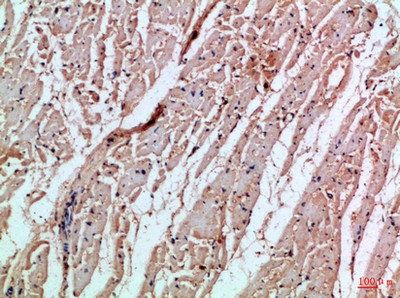
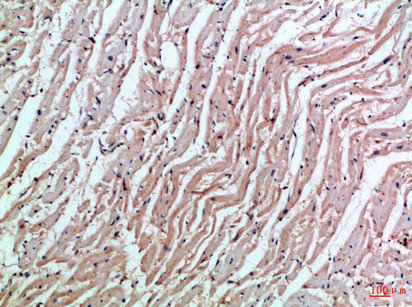
IHC,ELISA
Storage
Upon receipt, store at -20°C or -80°C. Avoid repeated freeze.
Lead Time
Basically, we can dispatch the products out in 1-3 working days after receiving your orders. Delivery time maybe differs from different purchasing way or location, please kindly consult your local distributors for specific delivery time.
Note: All of our proteins are default shipped with normal blue ice packs, if you request to ship with dry ice, please communicate with us in advance and extra fees will be charged.
Usage
For Research Use Only. Not for use in diagnostic or therapeutic procedures.
Elicits growth inhibition on melanoma cells in vitro as well as some other neuroectodermal tumors, including gliomas.
Gene References into Functions
the molecular basis of the interaction of MIA with the Hep II domain of fibronectin based on nuclear magnetic resonance spectroscopic binding assays.PMID:28565914
The frequency of MIA gene family expression was higher among squamous cell carcinomas than among other tumor types subjected to screening. MIA gene family staining was observed frequently in esophageal and lung cancers associated with nodal and/or distant metastasis. In cervical cancers, MIA and TANGO immunostaining also correlated with tumor progression and metastasis.PMID:27145272
Our results suggest that MIA-STOX2 signaling may be a useful diagnostic and therapeutic target in oral squamous cell carcinomaPMID:27050375
MIA had a slightly superior sensitivity to detect progressive disease compared to S100 and seems to be more useful in monitoring of patients with metastatic melanoma receiving immunotherapyPMID:28870930
real-time RT-PCR assays showed that expressions of MIA and MIA-RAB4B located 35 kb upstream of the deletion, were up-regulated in the polyps compared to the matched mucosa of the proband. MIA-RAB4B, the read-through long non-coding RNA (lncRNA), RAB4B, PIM2 and TAOK1 share common binding site of a microRNA, miR-24, in their 3'UTRsPMID:28306719
The effects of MIA/CD-RAP on transcriptional regulation in chondrocytes, through the regulation of p54(nrb) via YBX1 contributes to the understanding of chondrogenesis.PMID:24349210
data provide evidence for a critical role of SOX10 in melanoma cell invasion through the regulation of MIA and highlight its role as a therapeutic target in melanomaPMID:24608986
Focus on the quantitative analysis of the MIA protein as a prognostic tool because it has proven to be a useful serum marker for documenting disease progression of malignant melanoma. Review.PMID:24372647
Functional promoter analysis identified the transcription factor YBX1 as the mediator of MIA activation of p54(nrb) transcription.PMID:23672612
MIA protein is present in non-segmental vitiligo skin and may cause the detachment of melanocytes; its target is integrin alpha5beta1, which determines the breaking and/or weakening of connections among melanocytes and basal membranePMID:23664187
Results show that S-100B, MIA and LDH levels were significantly higher in patients with advanced melanoma than in disease-free patients or healthy controls.PMID:21858537
assessed the utility of melanoma inhibitory activity (MIA) serum marker in the follow up and primary diagnosis of stage III melanoma patientsPMID:21658116
Further diagnostics should be initiated in uveal melanoma patients with serum MIA above 8.3ng/ml.PMID:21540751
Data suggest that plasma markers: CEACAM, ICAM-1, osteopontin, MIA, TIMP-1 and S100B particularly when assessed in combination, can be used to monitor patients for disease recurrenc.PMID:21487066
The cell-specific production rate of MIA was quantitatively proportional to the aggrecan gene expression level in the early and middle phase of cartilage chondrocyte differentiation.PMID:21277254
MIA/CD-RAP stabilizes cartilage differentiation and inhibits differentiation into bone potentially by regulating signaling processes during differentiation.PMID:20164682
pancreatic cancer patients with high intratumoral expression are antibody-negative and have shorter survivalPMID:20514540
A fluorescence polarization biological assay was developed using MIA protein-binding compounds for studies of the binding properties of this protein.PMID:19852767
The assignments, solution structure, & dynamics of human MIA were determined by heteronuclear NMR methods. The structure consists of an SH3-like subdomain with N- and C-terminal extensions of about 20 amino acids each that form a novel fold.PMID:11991352
Melanoma-inhibiting activity (MIA/CD-RAP) is expressed in a variety of malignant tumors of mainly neuroectodermal origin.PMID:12014625
expression pattern of a novel splice product MIA (splice) of malignant melanoma-derived growth-inhibiting activity (MIAY CD-RAP).PMID:12230496
Stable antisense-HMG1 expression in melanoma cells led to the reduction of melanoma inhibitory activity (MIA) promoter activity and protein expression.PMID:12665595
increased MIA production may, in turn, increase the invasive properties of the cells by modulating the attachment of human uveal melanoma cells to the extracellular matrixPMID:15057037
MIA may promote the detachment of radial and vertical growth phase melanomas.PMID:15201995
The MIA protein enhances the migration of melanocytes and promotes melanoma progression.PMID:15208686
MIA may contribute to immunosuppression frequently seen in malignant melanomas by inhibiting cellular antitumor immune reactions.PMID:15386421
MIA in homogenates of surgical specimen directly relate to a more benign clinical prognosis in patients with high-grade gliomaPMID:15547763
There is a correlation between MIA expression and pigmentation and morphology of melanocytic cells.PMID:15760338
Increased levels of MIA is associated with gastric cancerPMID:16331256
When patients progressed, level of MIA increased significantly.PMID:17348447
A candidate autoantigen in rheumatoid arthritis found in synovial fluid cells.PMID:17599744
An antigen in melanoma, elevated in 22 per cent of patients, predicting recurrence.PMID:17661202
MIA serum level is the ideal test for screening the skin melanoma spread to sentinel lymph nodes.PMID:18477894
MIA expression is enhanced by the interaction of intracellular HMGB1 and NFkBp65 and MIA is closely involved in tumor progression and nodal metastasis by the increments of VEGF-C and VEGF-D in oral squamous cell carcinomas.PMID:18616526
MIA protein, binding to integrins and thus promoting detachment of cells from extracellular matrix structures, is internalized into the cell together with these cell adhesion receptors at the cell rear.PMID:19521988
Show
More
Hide
All
Subcellular Location
Secreted.
Protein Families
MIA/OTOR family
Tissue Specificity
All malignant melanoma cell lines tested and infrequently in glioma cell lines.