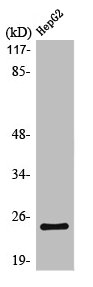
Synthesized peptide derived from the Internal region of Human MaxiKβ.
Immunogen Species
Homo sapiens (Human)
Conjugate
Non-conjugated
Isotype
IgG
Purification Method
The antibody was affinity-purified from rabbit antiserum by affinity-chromatography using epitope-specific immunogen.
Concentration
It differs from different batches. Please contact us to confirm it.
Buffer
Liquid in PBS containing 50% glycerol, 0.5% BSA and 0.02% sodium azide.
Form
Liquid
Note: We will preferentially ship the format that we have in stock, however, if you have any special requirement for the format, please remark your requirement when placing the order, we will prepare according to your demand.
Upon receipt, store at -20°C or -80°C. Avoid repeated freeze.
Lead Time
Basically, we can dispatch the products out in 1-3 working days after receiving your orders. Delivery time maybe differs from different purchasing way or location, please kindly consult your local distributors for specific delivery time.
Note: All of our proteins are default shipped with normal blue ice packs, if you request to ship with dry ice, please communicate with us in advance and extra fees will be charged.
Usage
For Research Use Only. Not for use in diagnostic or therapeutic procedures.
Regulatory subunit of the calcium activated potassium KCNMA1 (maxiK) channel. Modulates the calcium sensitivity and gating kinetics of KCNMA1, thereby contributing to KCNMA1 channel diversity. Decreases the gating kinetics and calcium sensitivity of the KCNMA1 channel, but with fast deactivation kinetics. May decrease KCNMA1 channel openings at low calcium concentrations but increases channel openings at high calcium concentrations. Makes KCNMA1 channel resistant to 100 nM charybdotoxin (CTX) toxin concentrations.
Gene References into Functions
Two recurrent fusion genes associated with the 12q locus, LRP1-SNRNP25 and KCNMB4-CCND3, were by RT-PCR, Sanger sequencing and FISH, and were found to be osteosarcoma specific in a validation cohort of 240 other sarcomas.PMID:25300797
BK channel beta4 subunit influences sensitivity and tolerance to alcohol by altering its response to kinasesPMID:25190810
Study shows that beta4 subunit of the MaxiK channel has no potential endocytic signal and 2 specific amino acids in the functional basic motif retention/retrieval trafficking signal at the C-terminus may play a role in controlling cellular excitabilityPMID:24486049
our data suggest that the rs398702 variant in the KCNMB4 gene is unlikely to influence significantly the risk of developing mesial temporal lobe epilepsy or its severityPMID:23623847
These results suggest that fast-gating, type I BK channels lacking beta4 can increase neuronal excitability in response to reduced phosphatase activity and activation of calcium channels.PMID:21848922
Structural basis for toxin resistance of beta4-associated calcium-activated potassium (BK) channelsPMID:18559348
The beta4 subunit controls ethanol tolerance at the molecular, cellular, and behavioral levels, and could determine individual differences in alcohol abuse and alcoholism, as well as represent a therapeutic target for alcoholism.PMID:18981408
results argue that, for native mouse Slo3 channels, the beta4 subunit must be considered as a potential interaction partner and, furthermore, that KCNMB subunits may have functions unrelated to regulation of the Slo1 alpha subunitPMID:19578543
Show
More
Hide
All
Subcellular Location
Membrane; Multi-pass membrane protein.
Protein Families
KCNMB (TC 8.A.14.1) family, KCNMB4 subfamily
Tissue Specificity
Predominantly expressed in brain. In brain, it is expressed in the cerebellum, cerebral cortex, medulla, spinal cord, occipital pole, frontal lobe, temporal lobe, putamen, amygdala, caudate nucleus, corpus callosum, hippocampus, substantia nigra and thala