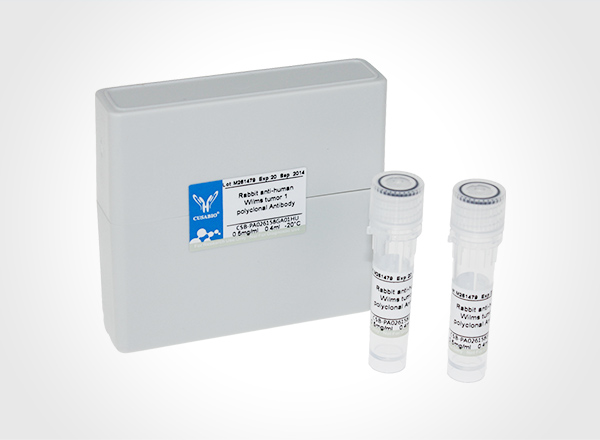
Liquid
Note: We will preferentially ship the format that we have in stock, however, if you have any special requirement for the format, please remark your requirement when placing the order, we will prepare according to your demand.
Upon receipt, store at -20°C or -80°C. Avoid repeated freeze.
Lead Time
Basically, we can dispatch the products out in 1-3 working days after receiving your orders. Delivery time maybe differs from different purchasing way or location, please kindly consult your local distributors for specific delivery time.
Note: All of our proteins are default shipped with normal blue ice packs, if you request to ship with dry ice, please communicate with us in advance and extra fees will be charged.
Usage
For Research Use Only. Not for use in diagnostic or therapeutic procedures.
Glycine receptors are ligand-gated chloride channels. GLRB does not form ligand-gated ion channels by itself, but is part of heteromeric ligand-gated chloride channels. Channel opening is triggered by extracellular glycine. Heteropentameric channels composed of GLRB and GLRA1 are activated by lower glycine levels than homopentameric GLRA1. Plays an important role in the down-regulation of neuronal excitability. Contributes to the generation of inhibitory postsynaptic currents.
Gene References into Functions
GLRB variants are associated with etiopathogenesis of fear and anxiety disorders.PMID:28872638
A genome-wide significant association was found between ACQ and single non-coding nucleotide variants of the GLRB gene (rs78726293, P = 3.3 x 10 - 8; rs191260602, P = 3.9 x 10- 8).GLRB gene expression was found to be modulated by rs7688285 in brain tissue, as well as cell culture.PMID:28167838
Whole-exome sequencing in ASD patients from each family identified a second rare inherited genetic variant, affecting GLRB expressed in inhibitory or in excitatory synapses.PMID:26055424
We report novel GLRB mutations in hyperekplexiaPMID:23182654
Systematic DNA sequencing of GLRB in individuals with hyperekplexia revealed new missense mutations in GLRB, resulting in M177R, L285R and W310C substitutions.PMID:23238346
This study describes the definitive assignment of GLRB as the third major gene for hyperekplexia and impacts on the genetic stratification and biological causation of this neonatal/paediatric disorder.PMID:23184146
Distinct properties of glycine receptor beta+/alpha- interface: unambiguously characterizing heteromeric interface reconstituted in homomeric protein.PMID:22535951
This study presents a large family with Hereditary hyperekplexia (HH) as a result of homozygous mutation in GLRB.PMID:21391991
The authors have identified a protein kinase C (PKC) phosphorylation site within the cytoplasmic domain of the beta-subunit of the GlyR (residue S403) that causes a reduction of the binding affinity between the receptor and gephyrin.PMID:21829170
Stoichiometry of recombinant heteromeric glycine receptors revealed by a pore-lining region point mutationPMID:14698963