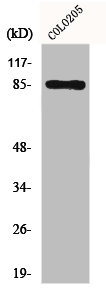
ADAP antibody; Adhesion and degranulation promoting adaptor protein antibody; FYB 120/130 antibody; Fyb antibody; FYB-120/130 antibody; FYB_HUMAN antibody; FYN binding protein antibody; FYN T binding protein antibody; FYN-binding protein antibody; FYN-T-binding protein antibody; p120/p130 antibody; PRO0823 antibody; SLAP 130 antibody; SLAP-130 antibody; SLAP130 antibody; SLP 76 associated phosphoprotein antibody; SLP-76-associated phosphoprotein antibody; SLP76 associated phosphoprotein antibody
Raised in
Rabbit
Species Reactivity
Human,Mouse,Rat
Immunogen
Synthesized peptide derived from the C-terminal region of Human Fyb.
Immunogen Species
Homo sapiens (Human)
Conjugate
Non-conjugated
Isotype
IgG
Purification Method
The antibody was affinity-purified from rabbit antiserum by affinity-chromatography using epitope-specific immunogen.
Concentration
It differs from different batches. Please contact us to confirm it.
Buffer
Liquid in PBS containing 50% glycerol, 0.5% BSA and 0.02% sodium azide.
Tested Applications
WB, ELISA
Storage
Upon receipt, store at -20°C or -80°C. Avoid repeated freeze.
Lead Time
Basically, we can dispatch the products out in 1-3 working days after receiving your orders. Delivery time maybe differs from different purchasing way or location, please kindly consult your local distributors for specific delivery time.
Note: All of our proteins are default shipped with normal blue ice packs, if you request to ship with dry ice, please communicate with us in advance and extra fees will be charged.
Usage
For Research Use Only. Not for use in diagnostic or therapeutic procedures.
Acts as an adapter protein of the FYN and LCP2 signaling cascades in T-cells. May play a role in linking T-cell signaling to remodeling of the actin cytoskeleton. Modulates the expression of IL2. Involved in platelet activation. Prevents the degradation of SKAP1 and SKAP2. May be involved in high affinity immunoglobulin epsilon receptor signaling in mast cells.
Gene References into Functions
results of this study indicate that a novel T cell adaptor protein, activation-dependent, raft-recruited ADAP-like phosphoprotein (ARAP), plays a unique role in T cells as a part of both the proximal activation signaling and inside-out signaling pathways that result in integrin activation and T cell adhesionPMID:27335501
Ubc9 is an essential regulator of ADAP where it is required for TCR-induced membrane recruitment of the small GTPase Rap1 and its effector protein RapL and for activation of the small GTPase Rac1 in T cell adhesion.PMID:29127148
Current knowledge of the functions of the adapter protein ADAP in T cell signaling with a focus on the role of individual phosphotyrosine (pY) motifs for SH2 domain mediated interactions is presented.PMID:27258783
A distinct set of proteins interaction partners required for chemokine-directed T cell migration is attracted by phosphotyrosine 571 of ADAP, including ZAP70.PMID:26246585
FYB nonsense mutations in humans causing small-platelet thrombocytopenia and a significant bleeding tendency.PMID:25876182
Data (including data from studies in knockout/transgenic mice) suggest that ADAP regulates positive feedback loop of TGFbeta1 production and TGFbeta1-induced CD103 expression in CD8+ T-lymphocytes and protects against influenza H5N1 virus infection.PMID:25909459
The aim of this study was to perform an association study between seven Fyn-binding protein gene (FYB)-tag single nucleotide polymorphisms (SNPs) and type I diabetes mellitus (T1DM), as well as with disease age of onset.PMID:25729932
The autosomal recessive bleeding phenotype seen in several members of this highly consanguineous family included petechial rash, mild epistaxis and thrombocytopenia with some decrease in platelet volume. These clinical findings, together with the results of exome sequencing pointed to only one strong candidate gene, the FYB gene.PMID:25516138
ADAP interacts with talin and kindlin-3 to promote platelet Integrin alphaIIbbeta3 activation and stable fibrinogen binding.PMID:24523237
ADAP and Nck adapter proteins cooperatively facilitate T cell adhesion to the LFA-1 ligand ICAM-1.PMID:24769494
These findings indicate that ADAP regulates two steps of HIV-1 infection cooperatively with two distinct receptors, and as such, serves as a new potential target in the blockade of HIV-1 infection.PMID:24047317
our findings indicate an association between polymorphisms located in FYB gene and SLE, suggesting their possible involvement in disease susceptibility and clinical manifestations.PMID:23628395
Multipoint binding of SLP-76 to ADAP facilitates the assembly of SLP-76 microclusters.PMID:23979596
TM4SF10, possibly through ADAP, may regulate Fyn activityPMID:21881001
a functional cooperation between Nck and ADAP in stabilizing the recruitment of WASp to SLP76 regulates actin rearrangement.PMID:21536650
the ADAP CARMA1 binding site is required for IKK gamma ubiquitination; both TAK1 and CARMA1 binding sites are required for IkappaB alpha phosphorylation and degradation and NF-kappaB nuclear translocationPMID:20164171
Mass spectrometric identification of ADAP associated with EVL, an actin-binding protein of the ENA/VASP family, DOCK2 and GEF-H1 suggests a direct link between ADAP and the cytoskeleton.PMID:19798671
ADAP lipid interaction defines the helically extended SH3 scaffold as a novel member of membrane interaction domainsPMID:15843031
show in an ADAP-deficient Jurkat T cell line that the co-dependence of ADAP and SKAP55 extends beyond their functional and physical interactions and show that SKAP55 protein is unstable in the absence of ADAPPMID:15849195
Lipid binding of ADAP at the immunological synapse most likely contributes to the function of ADAP as a regulator of T cell migration and adhesion.PMID:16831444
An eight-membered ring formed upon oxidation of two neighboring cysteines leads to significant changes in the variable arginine-threonine (RT) loop of the hSH3N domain of this protein.PMID:17511475
ADAP-deficient T-cell-receptor transgenic T cells demonstrate that ADAP is a positive regulator of antigen-dependent, LFA-1 integrin-mediated T cell conjugate formation with antigen presenting cells.PMID:17785790
Naive transgenic ADAP-deficient T cells show impaired adhesion to ovalbumin fragment-bearing antigen-presenting cells that is restored following reconstitution with wild-type ADAP.PMID:18802088
Show
More
Hide
All
Subcellular Location
Cytoplasm. Nucleus. Cell junction.
Tissue Specificity
Expressed in hematopoietic tissues such as myeloid and T-cells, spleen and thymus. Not expressed in B-cells, nor in non-lymphoid tissues.