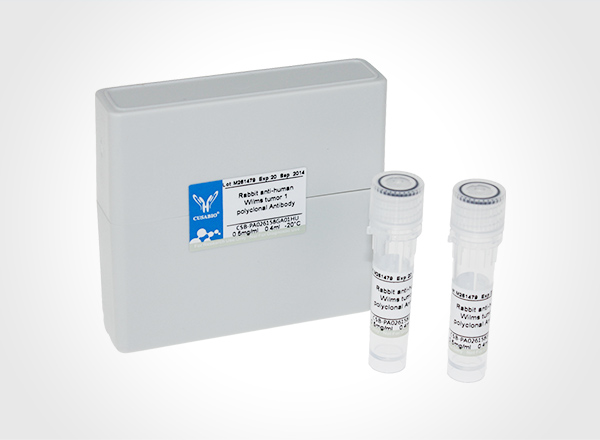
Synthesized peptide derived from the Internal region of Human FR-α.
Immunogen Species
Homo sapiens (Human)
Conjugate
Non-conjugated
Isotype
IgG
Purification Method
The antibody was affinity-purified from rabbit antiserum by affinity-chromatography using epitope-specific immunogen.
Concentration
It differs from different batches. Please contact us to confirm it.
Buffer
Liquid in PBS containing 50% glycerol, 0.5% BSA and 0.02% sodium azide.
Form
Liquid
Note: We will preferentially ship the format that we have in stock, however, if you have any special requirement for the format, please remark your requirement when placing the order, we will prepare according to your demand.
Upon receipt, store at -20°C or -80°C. Avoid repeated freeze.
Lead Time
Basically, we can dispatch the products out in 1-3 working days after receiving your orders. Delivery time maybe differs from different purchasing way or location, please kindly consult your local distributors for specific delivery time.
Note: All of our proteins are default shipped with normal blue ice packs, if you request to ship with dry ice, please communicate with us in advance and extra fees will be charged.
Usage
For Research Use Only. Not for use in diagnostic or therapeutic procedures.
Binds to folate and reduced folic acid derivatives and mediates delivery of 5-methyltetrahydrofolate and folate analogs into the interior of cells. Has high affinity for folate and folic acid analogs at neutral pH. Exposure to slightly acidic pH after receptor endocytosis triggers a conformation change that strongly reduces its affinity for folates and mediates their release. Required for normal embryonic development and normal cell proliferation.
Gene References into Functions
This study demonstrated a new approach using a combination of EpCAM and FRalpha as CTC-capture targets to increase the sensitivity of CTC detection in NSCLC efficiently, specifically, and quickly.PMID:29352248
Several experimental studies in mice and human epidemiological and genetics studies have suggested that FOLR1 abnormalities are involved in a portion of human neural tube defects (NTD), although the solo defect of FOLR1 did not cause NTD. (Review)PMID:28244241
that FOLR1 is highly expressed in ovarian cancer but is reduced following multidrug resistance. FOLR1 may be a useful biomarker for ovarian cancer, and it may be useful as a therapeutic application to improve sensitivity to cisplatin treatmentPMID:29433550
mTORC1 or mTORC2 silencing markedly decreases the plasma membrane expression of FR-alpha and RFC transporter isoforms without affecting global protein expressionPMID:27562465
High Folate Receptor Alpha Expression Is Associated With Increased Risk of Recurrence in Triple-negative Breast Cancer.PMID:28410844
The expression of folate receptor 1 (FOLR1) was significantly higher and occurred with higher frequency in metastatic lymph node samples from patients with advanced lung cancer.PMID:29110850
We identified eight novel variants in SLC19A1 and twelve novel variants in FOLR1, FOLR2, and FOLR3. Pathogenic variants include c.1265delG in SLC19A1 resulting in an early stop codon, four large insertion deletion variants in FOLR3, and a stop_gain variant in FOLR3PMID:28948692
In this study, folate receptor alpha (FRa)-targeted nano-liposomes (FLP) were designed to enhance the anti-tumor effect by targeting delivery of exogenous PEDF gene to cervical cancer cells..These results clearly showed that FLP were desired carriers for PEDF gene and FLP/PEDF might represent a potential novel strategy for gene therapy of cervical cancer.PMID:27576898
Data show that higher folate receptor alpha (FRalpha) expression is predictive of a favorable prognosis in pancreatic ductal adenocarcinoma (PDAC) and FRalpha may represent a promising target for treatments.PMID:28430580
our results demonstrate the substantial therapeutic potential of novel 6-substituted pyrrolo[2,3-d]pyrimidine antifolates with dual targeting of PCFT and FRalpha toward Epithelial ovarian cancer that express a range of FRalpha, along with PCFT, as well as cisplatin resistancePMID:28138029
Low expression level of FOLR1 is associated with neuroendocrine lung tumors.PMID:27064343
FolR1 is a predictive candidate and a therapeutic target for medulloblastoma.PMID:28416738
Folr1 is a favorable target for fluorescence-guided surgery as tumor specific agent EC17 produced a clear fluorescent signal in ovarian and breast cancer tissue.PMID:27014973
The Folate receptor alpha is associated with the progression of cervical cancer and regulates cervical cancer cells growth through phosphorylating ERK1/2, c-Fos, and c-Jun, which are key factors of the ERK signaling pathway.PMID:28782518
Folate receptor alpha protein was expressed in the majority of lung adenocarcinomas and a minority of lung squamous cell carcinomas. Folate receptor alpha protein expression correlated with histologic grade for lung adenocarcinomas, and the greatest difference was observed between grade 1 and grade 3.PMID:26599808
The present study shows the efficacy of silencing HuR in lung cancer cells using folate-conjugated nanoparticle system that is directed towards folate receptor-alpha overexpressing cancer cells.PMID:27328938
This new protocol opens an effective way through synthesis and design of novel fluorescent nano-conjugates for FR expression investigation in tumor cells via targeted imaging, showing great potential in drug delivery mechanism study and cancer therapyPMID:26606305
Suppression of FOLR1 by RNA interference altered gene expression profile of taxol-resistant nasopharyngeal carcinoma cells. Apoptosis-related genes, gene alterations in viral carcinogenesis/MAPK pathways may be important for taxol resistance reversal.PMID:26617855
we confirmed the similarities between epithelial ovarian cancer and fallopian tube, normal and adenocarcinoma using FOLR1, FOLR2, CD68 and CD11b markersPMID:25971554
Suggest RNA CAR T cell therapy for the treatment of common epithelial cancers expressing folate receptor-alpha.PMID:26359629
Folate receptor expression on murine and human adipose tissue macrophagesPMID:26149693
Findings suggest the clinical development of IMGN853 as a novel targeted therapy for patients with folate receptor alpha (FRalpha)-expressing tumors.PMID:25904506
Suggest that FRalpha overexpression may play a role in the endometrioid endometrium carcinoma carcinogenesis and carcinoma progression from endometrial hyperplasia.PMID:26191275
triple negative/basal tumors were significantly associated with increased expression of FOLR1 mRNA, compared to ER+ and HER2+ tumors.PMID:25816016
Molecular dynamic simulation of the binding process of folic acid to folate receptor alphaPMID:25323390
Studies indicate folate receptor (FR) as a prognostic biomarker for ovarian cancer.PMID:25564455
The overexpression of folate receptor alpha mRNA was associated with growth of pituitary adenomas.PMID:26014017
this is the first study to simultaneously evaluate both DNA methylation and protein expression of all three folate transporter genes, FOLR1, PCFT, and RFC1, in colorectal cancer.PMID:25697897
FRalpha down-regulation might be capable of suppressing cervical cancer cell proliferation and promoting apoptosis.PMID:25081683
Survival times are improved in non-small-cell lung cancer patients whose tumors show strong membranous folate receptor alpha expression.PMID:24993594
the conditions associated with circulating FOLR1 protein in healthy individualsPMID:24810481
We concluded that quantitation of CTCs through FRalpha ligand-PCR could be a promising method for noninvasive diagnosis of bladder TCC.PMID:24771263
74% of ER/PR-negative and 80% of triple-negative breast cancers expressed folate receptor alpha (FRA). The expression of FRA was significantly associated with a worse disease-free survival.PMID:24028341
Expression of FOLR1 is higher in pituitary adenomas of patients who are older than 50 years.PMID:23023342
FOLR1 was significantly elevated in the serum of ovarian cancer patients compared to serum of both healthy controls and patients with benign gynecological conditions.PMID:23528302
The FRalpha gene was expressed in all parathyroid cells analyzed, and the FRbeta gene was expressed by most.PMID:24206618
crystal structure of human FRalpha in complex with folic acid at 2.8 A resolutionPMID:23851396
The data presented further support the hypothesis that folate receptor-alpha expression in gynecologic tumors is due to the cell of origin normally expressing this receptorPMID:23518909
EpCAM, FR-alpha, and VEGF-A are the most promising molecules for use in targeted intraoperative fluorescence imaging of endometriotic lesions owing to their favorable expression patterns and biomarker characteristicsPMID:23332132
Studies indicate that folate receptor alpha (FOLR1), a folate transporter, is an attractive target for cancer therapy due to its high affinity for folate, restricted range of expression in normal tissue and differential over-expression in malignant tissue.PMID:23357463
Overexpression of folate receptor alpha was associated with ovarian tumor progression.PMID:23144806
The folate receptor alpha translocates to the nucleus, where it binds to cis-regulatory elements at promoter regions of Fgfr4 and Hes1, and regulates their expression.PMID:23243496
a large percentage of lung cancers, including squamous cell carcinomas in addition to adenocarcinomas, strongly express folate receptor alphaPMID:22984810
PCR analysis had confirmed the existence of FR-alpha, SMVT, and B ((0, +)) in Y-79 and ARPE-19 cells.PMID:22304562
High folate receptor alpha is associated with adenocarcinoma in non-small-cell lung carcinoma and and EGFR [corrected] mutation.PMID:22729036
alpha-FR can be a potential biomarker for the prediction of chemotherapeutic responses and clinical prognosis.PMID:22265591
studies suggest that different clinical severities do not necessarily correlate with residual function of folate receptor alpha mutants.PMID:22586289
FR-alpha was expressed in the majority of serous ovarian tumors, although >50% of cases showed only weak expression.PMID:21647742
FRalpha may play an important role in the development and progression of NFAs.PMID:22089756
An ancient double-mutated haplotype 1816delC-1841A in the FOLR1 gene, is demonstrated.PMID:21938430
Show
More
Hide
All
Subcellular Location
Cell membrane; Lipid-anchor, GPI-anchor. Secreted. Cytoplasmic vesicle. Cytoplasmic vesicle, clathrin-coated vesicle. Endosome. Apical cell membrane. Note=Endocytosed into cytoplasmic vesicles and then recycled to the cell membrane.
Protein Families
Folate receptor family
Tissue Specificity
Primarily expressed in tissues of epithelial origin. Expression is increased in malignant tissues. Expressed in kidney, lung and cerebellum. Detected in placenta and thymus epithelium.