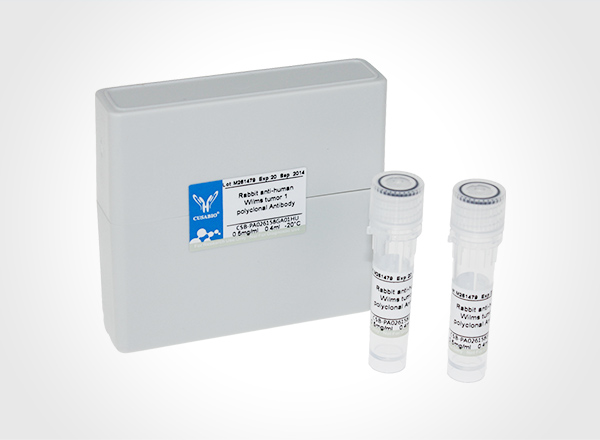
Liquid
Note: We will preferentially ship the format that we have in stock, however, if you have any special requirement for the format, please remark your requirement when placing the order, we will prepare according to your demand.
Storage
Upon receipt, store at -20°C or -80°C. Avoid repeated freeze.
Lead Time
Basically, we can dispatch the products out in 1-3 working days after receiving your orders. Delivery time maybe differs from different purchasing way or location, please kindly consult your local distributors for specific delivery time.
Note: All of our proteins are default shipped with normal blue ice packs, if you request to ship with dry ice, please communicate with us in advance and extra fees will be charged.
Usage
For Research Use Only. Not for use in diagnostic or therapeutic procedures.
Low affinity receptor for N-formyl-methionyl peptides, which are powerful neutrophils chemotactic factors. Binding of FMLP to the receptor causes activation of neutrophils. This response is mediated via a G-protein that activates a phosphatidylinositol-calcium second messenger system. Acts as a receptor for humanin.
Gene References into Functions
The demonstrated proper folding and functionality of the cell-free produced human FPR3 opens a new avenue for the fast and efficient generation of human FPRs (and even other GPCRs) for structural and functional analysis.PMID:23746112
transcriptional variations of FPR3 occur by an alternative promoter during primate evolution.PMID:21717223
F2L peptide, derived from the processing of nanomolar concentrations of heme-binding protein (HEBP)1, is active on FPR3 and able to induce recruitment of FPR3-expressing monocytes, macrophages, and mouse neutrophilsPMID:21709160
Results show that uPAR expression regulates the adhesive and migratory ability of CXCR4-expressing cells through a mechanism involving fMLP receptors and alpha-v integrins.PMID:20972812
Human dendritic cells express functional FPRL2 throughout maturation. FPRL2 & its endogenous ligand may be involved in regulating DC trafficking during Ag uptake & processing s well as the T-cell-stimulating phase of the immune responses.PMID:12223529
Activation of FPRL2 inhibits lipopolysaccharide-induced dendritic cell maturation.PMID:16002663
However, F2L inhibits formyl peptide receptor (FPR) and FPRL1 activities, resulting in the inhibition of intracellular calcium increases, and superoxide generation induced by N-formyl-Met-Leu-Phe, MMK-1, or Trp-Lys-Tyr-Met-Val-d-Met in neutrophils.PMID:17577578
FPRL2 is expressed and functional in macrophages differentiated from monocytes in vitro in different conditionsPMID:19342677
Human monocytes express FPR1, FPR2, and FPR3; human neutrophils express FPR1 and FPR2, but not FPR3.PMID:19843937
Show
More
Hide
All
Subcellular Location
Cell membrane; Multi-pass membrane protein.
Protein Families
G-protein coupled receptor 1 family
Tissue Specificity
Detected in various tissues with highest expression in lung.