EPHB3 Antibody

Code: CSB-PA637350
Size:
50μl
50μl100μl
US$166
Quantity:
Species Reactivity: Human,Mouse
Raised in: Rabbit
Application: ELISA,WB,IHC
For inquiries on large quantities or another requirements
Send an Inquiry
Start an on-line Chat
Online ordering is currently available for U.S. customers only. For orders outside the U.S., please kindly submit an inquiry or start a chat with us.

Product Details

Uniprot NO.
Target Names
EPHB3
Alternative Names
Cek10 antibody; EK2 antibody; Embryonic kinase 2 antibody; EPH Like Tyrosine Kinase 2 antibody; EPH receptor B3 antibody; EPH-like kinase 2 antibody; ephb3 antibody; EPHB3_HUMAN antibody; Ephrin receptor EphB3 antibody; Ephrin type B receptor 3 antibody; Ephrin type-B receptor 3 antibody; ETK2 antibody; hEK2 antibody; Human Embryo Kinase 2 antibody; Mdk5 antibody; Sek4 antibody; TYRO6 antibody; Tyrosine protein kinase receptor HEK2 antibody; Tyrosine protein kinase TYRO6 antibody; Tyrosine-protein kinase TYRO6 antibody
Raised in
Rabbit
Species Reactivity
Human,Mouse
Immunogen
Synthetic peptide of Human EPHB3
Immunogen Species
Homo sapiens (Human)
Conjugate
Non-conjugated
Isotype
IgG
Purification Method
Antigen affinity purification
Concentration
It differs from different batches. Please contact us to confirm it.
Buffer
-20°C, pH7.4 PBS, 0.05% NaN3, 40% Glycerol
Tested Applications
ELISA,WB,IHC
Storage
Upon receipt, store at -20°C or -80°C. Avoid repeated freeze.
Lead Time
Basically, we can dispatch the products out in 1-3 working days after receiving your orders. Delivery time maybe differs from different purchasing way or location, please kindly consult your local distributors for specific delivery time.
Note: All of our proteins are default shipped with normal blue ice packs, if you request to ship with dry ice, please communicate with us in advance and extra fees will be charged.
Usage
For Research Use Only. Not for use in diagnostic or therapeutic procedures.
Datasheet & COA
Images
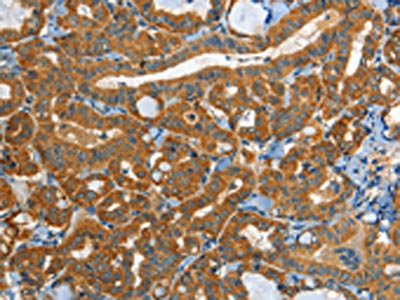
  • The image on the left is immunohistochemistry of paraffin-embedded Human thyroid cancer tissue using CSB-PA637350(EPHB3 Antibody) at dilution 1/40, on the right is treated with synthetic peptide. (Original magnification: ×200)
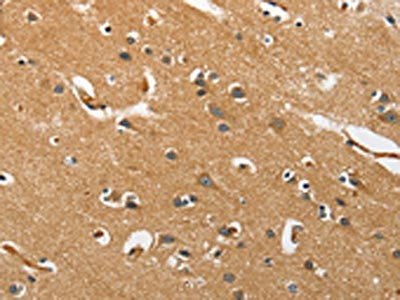
  • The image on the left is immunohistochemistry of paraffin-embedded Human brain tissue using CSB-PA637350(EPHB3 Antibody) at dilution 1/40, on the right is treated with synthetic peptide. (Original magnification: ×200)
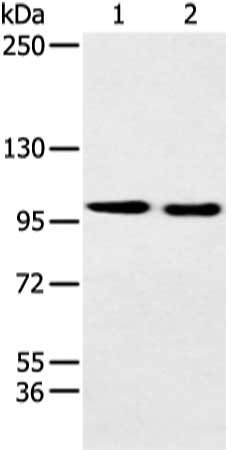
  • Gel: 6%SDS-PAGE, Lysate: 40 μg, Lane 1-2: Hela and 231 cell, Primary antibody: CSB-PA637350(EPHB3 Antibody) at dilution 1/250 dilution, Secondary antibody: Goat anti rabbit IgG at 1/8000 dilution, Exposure time: 20 seconds

Customer Reviews and Q&A

 Customer Reviews

Target Background

Function(From Uniprot)
Receptor tyrosine kinase which binds promiscuously transmembrane ephrin-B family ligands residing on adjacent cells, leading to contact-dependent bidirectional signaling into neighboring cells. The signaling pathway downstream of the receptor is referred to as forward signaling while the signaling pathway downstream of the ephrin ligand is referred to as reverse signaling. Generally has an overlapping and redundant function with EPHB2. Like EPHB2, functions in axon guidance during development regulating for instance the neurons forming the corpus callosum and the anterior commissure, 2 major interhemispheric connections between the temporal lobes of the cerebral cortex. In addition to its role in axon guidance plays also an important redundant role with other ephrin-B receptors in development and maturation of dendritic spines and the formation of excitatory synapses. Controls other aspects of development through regulation of cell migration and positioning. This includes angiogenesis, palate development and thymic epithelium development for instance. Forward and reverse signaling through the EFNB2/EPHB3 complex also regulate migration and adhesion of cells that tubularize the urethra and septate the cloaca. Finally, plays an important role in intestinal epithelium differentiation segregating progenitor from differentiated cells in the crypt.
Gene References into Functions
  1. These results indicated the suppressive effect of Form on colon carcinoma cell proliferation and invasion, possibly via miR149induced EphB3 downregulation and the inhibition of the PI3K/AKT and STAT3 signaling pathways. PMID:29620230
  2. work suggested that EphB3 acted as a tumor promoter in Papillary Thyroid Cancer by increasing the in vitro migration as well as the in vivo metastasis of Papillary Thyroid Cancer cells through regulating the activities of Vav2 and Rho GTPases in a kinase-dependent manner. PMID:27986811
  3. These results show that EphB3 protein is lost in ovarian serous carcinoma and is associated with tumor grade and FIGO stage, which indicate that EphB3 protein may play a role in carcinogenesis of ovarian serous carcinoma and may be used as a molecular marker for prognosis. PMID:28120491
  4. results identify EPHB3 as a novel target of SNAIL1 and suggest that disabling EPHB3 signaling is an important aspect to eliminate a roadblock at the onset of EMT processes. PMID:25277775
  5. These results uncover enhancer decommissioning as a mechanism for transcriptional silencing of the EPHB3 tumor suppressor. PMID:24707046
  6. EphB3 suppresses non-small-cell lung cancer metastasis via a PP2A/RACK1/Akt signalling complex PMID:22314363
  7. Our work shows that EphB3 is consistently expressed by malignant T lymphocytes, most frequently in combination with EphB6, and that stimulation with their common ligands strongly suppresses Fas-induced apoptosis in these cells. PMID:22039307
  8. EphB3 provides critical support to the development and progression of NSCLC by stimulating cell growth, migration, and survival. PMID:21266352
  9. Ephrin B3 receptor regulates the synthesis and release of D-serine in astrocytes, which may have important implications on synaptic transmission and plasticity. PMID:21106840
  10. while catalytic activity of EphB3 is required for inhibition of integrin-mediated cell adhesion, a distinct signaling pathway to Rho GTPases shared by WT- and KD-EphB3 receptor mediates inhibition of directional cell migration PMID:15536074
  11. EphB3-ephrin-B interaction promotes mesenchymal-to-epithelial transition (MET) by re-establishing epithelial cell-cell junctions and such an MET-promoting effect contributes to EphB3-mediated tumor suppression. PMID:19483190
  12. EPHB3, MASP1 and SST map to 3q26.2-q29 and may have roles in squamous cell carcinoma of the lung PMID:19607727

Show More

Hide All

Subcellular Location
Cell membrane; Single-pass type I membrane protein. Cell projection, dendrite.
Protein Families
Protein kinase superfamily, Tyr protein kinase family, Ephrin receptor subfamily
Tissue Specificity
Ubiquitous.
Database Links

HGNC: 3394

UNIGENE: Hs.2913

KEGG: hsa:2049

STRING: 9606.ENSP00000332118

OMIM: 601839

icon of phone
Call us
301-363-4651 (Available 9 a.m. to 5 p.m. CST from Monday to Friday)

icon of address
Address
No. 269, Shendun 5th Road, Donghu Hi-Tech Development Area, Hubei Province, 430206, P.R.China
icon of social media
Join us with

Subscribe newsletter

Leave a message

* To protect against spam, please pass the CAPTCHA test below.
CAPTCHA verification
© 2007-2025 CUSABIO TECHNOLOGY LLC All rights reserved. 鄂ICP备15011166号-1
Select 0 Products