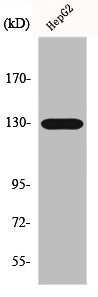
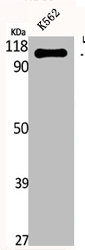
Brain-specific kinase antibody; bsk antibody; CEK 7 antibody; Eck like sequence 1 antibody; EHK 1 antibody; EHK-1 antibody; EK7 antibody; Els 1 antibody; EPH homology kinase 1 antibody; EPH-like kinase 7 antibody; EPHA5 antibody; EPHA5_HUMAN antibody; Ephrin type A receptor 5 antibody; Ephrin type-A receptor 5 antibody; HEK 7 antibody; hEK7 antibody; Receptor protein tyrosine kinase HEK 7 antibody; Rek 7 antibody; TYRO 4 antibody; Tyrosine protein kinase receptor EHK 1 antibody
Raised in
Rabbit
Species Reactivity
Human,Mouse,Rat
Immunogen
Synthesized peptide derived from the Internal region of Human EphA5.
Immunogen Species
Homo sapiens (Human)
Conjugate
Non-conjugated
Isotype
IgG
Purification Method
The antibody was affinity-purified from rabbit antiserum by affinity-chromatography using epitope-specific immunogen.
Concentration
It differs from different batches. Please contact us to confirm it.
Buffer
Liquid in PBS containing 50% glycerol, 0.5% BSA and 0.02% sodium azide.
Tested Applications
WB, ELISA
Storage
Upon receipt, store at -20°C or -80°C. Avoid repeated freeze.
Lead Time
Basically, we can dispatch the products out in 1-3 working days after receiving your orders. Delivery time maybe differs from different purchasing way or location, please kindly consult your local distributors for specific delivery time.
Note: All of our proteins are default shipped with normal blue ice packs, if you request to ship with dry ice, please communicate with us in advance and extra fees will be charged.
Usage
For Research Use Only. Not for use in diagnostic or therapeutic procedures.
Receptor tyrosine kinase which binds promiscuously GPI-anchored ephrin-A family ligands residing on adjacent cells, leading to contact-dependent bidirectional signaling into neighboring cells. The signaling pathway downstream of the receptor is referred to as forward signaling while the signaling pathway downstream of the ephrin ligand is referred to as reverse signaling. Among GPI-anchored ephrin-A ligands, EFNA5 most probably constitutes the cognate/functional ligand for EPHA5. Functions as an axon guidance molecule during development and may be involved in the development of the retinotectal, entorhino-hippocampal and hippocamposeptal pathways. Together with EFNA5 plays also a role in synaptic plasticity in adult brain through regulation of synaptogenesis. In addition to its function in the nervous system, the interaction of EPHA5 with EFNA5 mediates communication between pancreatic islet cells to regulate glucose-stimulated insulin secretion.
Gene References into Functions
Gene-based analysis identified EPHA6 as the gene most significantly associated with paclitaxel-induced neuropathy...This first study sequencing EPHA genes revealed that low-frequency variants in EPHA6, EPHA5, and EPHA8 contribute to the susceptibility to paclitaxel-induced neuropathyPMID:27582484
Our data indicate that EphA5 receptor may be a tumor suppressor in colorectal carcinoma and it may be a new therapeutic target for colorectal carcinoma.PMID:27651378
EphA5 protein was negatively (0) or weakly (1+) expressed in 48 of 78 (61.5%), moderately (2+) expressed in 15 of 78 (19.2%) and strongly (3+) expressed in 15 of 78 (19.2%) tumour samples of clear cell renal cell carcinoma (ccRCC). Decreased expression of EphA5 was detected more often in females than in malesPMID:28421649
the interactions of EphA5/ephrinA5 and/or EphA7/ephrinA5 between HSPCs and BMSCs, independently and cooperatively, play a role in HSPC colony formation through the upregulation of GM-CSFR. Furthermore, the adhesion/migration of HSPCs appears to be mediated in part through the activation of Rac1.PMID:27988259
Our results show that EphA5 may be a potential biomarker for distinguishing high-and low-grade ovarian serous carcinoma and a potential prognostic marker.PMID:27887627
Our study provides evidence that EphA5 is a potential target for epigenetic silencing in primary prostate cancer and is a potentially valuable prognosis predictor and thereapeutic marker for prostate cancer.PMID:25609195
demonstrate that a new monoclonal antibody against human EphA5 sensitized lung cancer cells and human lung cancer xenografts to radiotherapy and significantly prolonged survival, thus suggesting the likelihood of translational applicationsPMID:25623065
unbound EphA5 LBD appears to comprise an ensemble of open conformations that have only small variations over the loops and appear ready to bind ephrin-A ligandsPMID:24086308
These results indicate that EphA5 may be a negative regulator of bone formation.PMID:24029132
Insertional translocation leading to a 4q13 duplication including the EPHA5 gene is associated with attention-deficit. hyperactivity disorderPMID:23824631
these data suggest that miR-34a is a negative modulator of chondrogenesis, particularly in migration of chondroblasts, by targeting EphA5 and resulting inhibition of cellular condensation during chondrogenesis of chick limb mesenchymal cells.PMID:22079638
Eph-A5 and Eph-A7 staining intensity was identified as independent prognostic factors for pancreatic ductal adenocarcinomaPMID:19949912
EphA5 might be a potential target for epigenetic silencing in primary breast cancer and a valuable molecular marker for breast cancer carcinogenesis and progression.PMID:19733895
Show
More
Hide
All
Subcellular Location
Cell membrane; Single-pass type I membrane protein. Cell projection, axon. Cell projection, dendrite.
Protein Families
Protein kinase superfamily, Tyr protein kinase family, Ephrin receptor subfamily
Tissue Specificity
Almost exclusively expressed in the nervous system in cortical neurons, cerebellar Purkinje cells and pyramidal neurons within the cortex and hippocampus. Display an increasing gradient of expression from the forebrain to hindbrain and spinal cord.