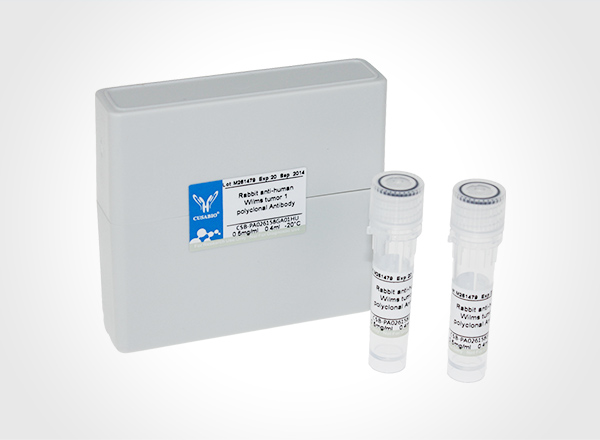
Liquid
Note: We will preferentially ship the format that we have in stock, however, if you have any special requirement for the format, please remark your requirement when placing the order, we will prepare according to your demand.
Upon receipt, store at -20°C or -80°C. Avoid repeated freeze.
Lead Time
Basically, we can dispatch the products out in 1-3 working days after receiving your orders. Delivery time maybe differs from different purchasing way or location, please kindly consult your local distributors for specific delivery time.
Note: All of our proteins are default shipped with normal blue ice packs, if you request to ship with dry ice, please communicate with us in advance and extra fees will be charged.
Usage
For Research Use Only. Not for use in diagnostic or therapeutic procedures.
May be a cytokine that affects the growth, movement, or activation state of cells that participate in immune and inflammatory response.
Gene References into Functions
although the expression of CXCL9 and CXCL11 are increased after spinal nerve ligation, they may not contribute to the maintenance of neuropathic pain.PMID:29712506
Cxcl9 has a role in angiogenesis and osteogenesis in bone.PMID:27966526
Data suggest that the CXCL9-CXCR3 axis plays a pivotal role in the liver-specific distribution of TRAIL+ NK cells in mice.PMID:29088306
IFNalphaR1 signaling promoted CXCL9 and CXCL10 synthesis, suggesting that these chemokines might be involved in the LPS and CD134 costimulation response.PMID:28432083
CXCL10 plays in the pathogenesis of recurrent Herpetic stromal keratitis, and that CXCL9 displays its importance when CXCL10 is absent.PMID:28282568
CXCL9 expression is strongly upregulated in PGRN KO mice and its level is correlated with severity of inflammation in a dermatitis model.PMID:26892362
hepatic expression of the inflammatory CXC chemokine ligands (CXCL)9 and CXCL10 strongly increased whereas homeostatic CXCL12 significantly decreased.PMID:26052942
Here, we report the evidence for the production of MIG, a second CXCR3 ligand, during the primary immune response to HSV-1 corneal infection.PMID:25207638
These findings identify a novel role for the immune cell-derived CXCL9 chemokine in directing a protective antimicrobial response in the intestinal mucosa.PMID:25643352
These results indicate that CXCL9 is crucial for recruiting immune T cells into the brain and inducing an accumulation of the T cells into the areas where tachyzoites proliferate to prevent reactivation of chronic T. gondii infection.PMID:25432064
tumours are characterized by expression of inflammatory chemokines (CCL2, CCL5, CCL7, CCL8, CCL12, CXCL9, CXCL10 and CX3CL1), reflected by an enrichment of activated Foxp3(-) and Foxp3(+) T cellsPMID:25495686
Aged mice had similar levels of IL-1beta, TNF, IFN-gamma, IL-17, and granulocyte colony-stimulating factor following S. pneumoniae infection, compared with young mice, but increased levels of the chemokines CXCL9, CXCL12, CCL3, CCL4, CCL5, CCL11, and CCL17.PMID:25595646
Data indicate that a feed-forward CXCL9-dependent circuit provided additional chemotactic cues that further increase local memory cell density.PMID:23352234
IFN-gamma-mediated loss of Mig expression in cutaneous tumors as a potent mechanism of immunoediting that results in increased tumor resistance to T cell-mediated immunity.PMID:23241877
CXCL9/10 have antifibrotic roles on liver non-parenchymal cellsPMID:22905138
findings show that effector T cells cannot accumulate within the decidua, the specialized stromal tissue encapsulating the fetus and placenta; impaired accumulation was in part attributable to the epigenetic silencing of key T cell-attracting inflammatory chemokine genes in decidual stromal cellsPMID:22679098
Mig contributes to the acute lethal toxicity arising from 5-FU administration.PMID:22474250
Cxcr3, Cxcl9 and Cxcl10 are increased in alopecia areata.PMID:22358057
The results identify direct angiostatic and antifibrotic effects of the Cxcr3 ligand Cxcl9 in a model of experimental liver fibrosis.PMID:22237831
MIG/CXCL9 is expressed in the lungs upon pneumococcal infection in a MyD88-dependent mannerPMID:20381636
Expression of the chemokine Mig (CXCL9) was increased 2.8-fold in tumors from Egr-1 knockout mice.PMID:19200397
CXCL9 promotes the development of IFN-gamma-producing CD8 T cells, and CXCL10 antagonizes this skewing during allograft rejection.PMID:20194716
CCL2, CXCL9 and CXCL2 mRNA are up-regulated after oral Salmonella infection in Peyer's patches and lymph nodes coincident with the first arrival of monocytes and neutrophilsPMID:19839009
MIG (CXCL9) chemokine gene therapy combines with antibody-cytokine fusion protein to suppress growth and dissemination of murine colon carcinoma.PMID:11731434
in study of relevance of chemokine expression to selective migration of t-cells and the disease localization in murine graft-versus-host disease, Mig was found to be predominantly expressed in spleen, liver, and not skin, and not heart.PMID:12098066
NF-kappaB has a critical role in mediating IFN-gamma-induced MIG (monokine induced by IFN-gamma) expression independent of hyaluronanPMID:12226082
involved in T cell cardiac allograft vasculopathyPMID:12368204
Data show that the transcriptional coactivator CREB-binding protein (CBP) mediated the STAT1/NF-kappaB synergy for transcription of the gene for CXC ligand 9 an interferon-gamma (IFN-gamma)-inducible chemokine.PMID:12403783
full potency of SLC/CCL21-mediated anti-tumor responses require in part the induction of IFNgamma, MIG/CXCL9 and IP-10/CXCL10PMID:12740040
Peak of expression of CXCL9 and CXCL10 occurred 4 days before CD8+ T cells infiltrated infected tissues. CXCL9 and CXCL10 may play role early during immune response against rickettsial infections.PMID:14507644
Mig functions as a negative regulator of murine eosinophilsPMID:14769916
exogenous CXCL9 stimulated CD4 lymphocyte proliferation in a MHC class II-mismatched MLR and increased the number of IFN-gamma-producing CD4 lymphocytesPMID:15187119
Interactions involving CXCR3 and its primary ligands Mig and IP-10 significantly contribute to donor T cell recruitment to the lung after allogeneic stem cell transplantation.PMID:15265940
RANKL stimulates the serine phosphorylation of STAT1, causing MIG gene transcription and secretion, which may have a role in recruiting CXCR3-positive osteoclast precursors and osteoclasts to bone remodeling or inflammatory sites.PMID:15585657
IFN-gamma knockout mice, which manifested depressed ear-swelling following delayed hypersensitsivity challenge, made no Mig.PMID:15629884
Results suggest that in the sensitized host, CXCR3, IP-10, and Mig are required for optimal delayed hypersensitivity responsiveness but are not essential for containing HSV-1 replication.PMID:15708587
results suggest that MUM1 plays roles in the progression of B-cell lymphoma/leukemia by regulating the expression of various genes including MIG.PMID:15959530
CXCL9 has a role in graft rejection in the absence of CCL19 and CCL21PMID:16095489
MIG mRNA expression in the lungs of Klebsiella-infected mice requires the endogenous production of IFN-gamma.PMID:16299319
CXCL9 signaling enhances immune responses following Trypanosoma cruzi infection; transcripts for CXCL9 remain elevated during chronic infectionPMID:16368965
CXCL9 is up-regulated in unique patterns following tracheal transplantation in mice. Deletion of CXCL9 does not affect airway obliteration.PMID:16709871
These results suggest that the more aggressive rejection of xenografts compared with allografts is due to the earlier expression of CXC-chemokines, IP-10 and MIG, and subsequent adjuvant effects of proinflammatory cytokines.PMID:16768726
Collectively, the results suggest a non-redundant role for CXCL9 and CXCL10 in response to ocular HSV-1 infection in terms of controlling virus replication and recruitment of CD4(+) T cells into the cornea.PMID:17296171
Acute ethanol intoxication impairs lung expression of Cxcl9, interfering with pulmonary response to bacterial challenge.PMID:17889309
IFN-gamma is mediator of Cxcl10 and Cxcl9 gene expression in experimental autoimmune encephalomyelitis(EAE). It differentially regulates expression of these genes by astrocytes and microglia. Differential glial localization of these chemokines in EAE.PMID:17902170
The absence of CXCL9 or CXCL10 expression significantly alters the ability of the host to control genital HSV-2 infection through the mobilization of effector cells to sites of infection.PMID:18178850
These data demonstrate that CXCR3 on CD8(+) T cells is required for T cell recruitment into the brain and the development of murine cerebral malaria.PMID:18347328
Liver sinusoidal endothelial cells present chemokines (CXCL12 and CXCL9) to circulating lymphocytes.PMID:18697212
CXCR3 ligands, IP10 and MIG, contribute to Th1-induced inflammation but not to homing of Th1 cells into the lung.PMID:18716926
CXCL9 promotes protection from coronavirus-induced neurological and liver disease.PMID:18973912