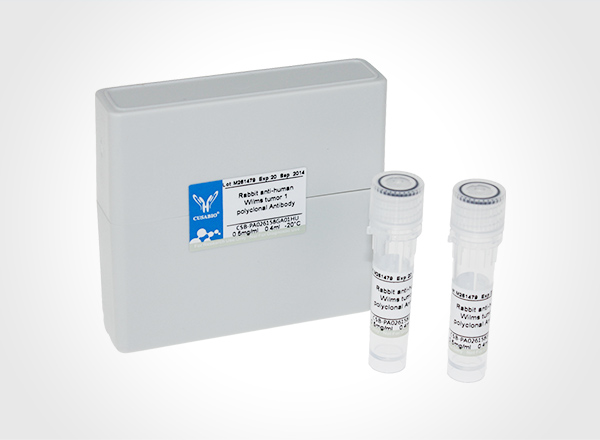
Upon receipt, store at -20°C or -80°C. Avoid repeated freeze.
Lead Time
Basically, we can dispatch the products out in 1-3 working days after receiving your orders. Delivery time maybe differs from different purchasing way or location, please kindly consult your local distributors for specific delivery time.
Note: All of our proteins are default shipped with normal blue ice packs, if you request to ship with dry ice, please communicate with us in advance and extra fees will be charged.
Usage
For Research Use Only. Not for use in diagnostic or therapeutic procedures.
Essential serine/threonine-protein kinase that regulates diverse cellular growth and survival processes including Wnt signaling, DNA repair and circadian rhythms. It can phosphorylate a large number of proteins. Casein kinases are operationally defined by their preferential utilization of acidic proteins such as caseins as substrates. Phosphorylates connexin-43/GJA1, MAP1A, SNAPIN, MAPT/TAU, TOP2A, DCK, HIF1A, EIF6, p53/TP53, DVL2, DVL3, ESR1, AIB1/NCOA3, DNMT1, PKD2, YAP1, PER1 and PER2. Central component of the circadian clock. In balance with PP1, determines the circadian period length through the regulation of the speed and rhythmicity of PER1 and PER2 phosphorylation. Controls PER1 and PER2 nuclear transport and degradation. YAP1 phosphorylation promotes its SCF(beta-TRCP) E3 ubiquitin ligase-mediated ubiquitination and subsequent degradation. DNMT1 phosphorylation reduces its DNA-binding activity. Phosphorylation of ESR1 and AIB1/NCOA3 stimulates their activity and coactivation. Phosphorylation of DVL2 and DVL3 regulates WNT3A signaling pathway that controls neurite outgrowth. EIF6 phosphorylation promotes its nuclear export. Triggers down-regulation of dopamine receptors in the forebrain. Activates DCK in vitro by phosphorylation. TOP2A phosphorylation favors DNA cleavable complex formation. May regulate the formation of the mitotic spindle apparatus in extravillous trophoblast. Modulates connexin-43/GJA1 gap junction assembly by phosphorylation. Probably involved in lymphocyte physiology. Regulates fast synaptic transmission mediated by glutamate.
Gene References into Functions
Our results reveal a new mechanism of ZNF322A oncoprotein destruction regulated by the CK1delta/GSK3beta/FBXW7a axis. Deregulation of this signaling axis results in ZNF322A overexpression and promotes cancer progressionPMID:28581525
Report temperature-compensated CKIdelta-dependent multi-site phosphorylation in mammals underlies temperature compensated phosphorylation in circadian clocks.PMID:28886336
Study describes a specific mechanism for the regulation of CK1delta activity by proline-directed kinases, and demonstrate the relevance of this regulation in the control of a key CK1delta substrate, the PER2 protein.PMID:28545154
Protein kinase C alpha (PKCalpha) is able to phosphorylate CK1delta at its C-terminally located residues S328, T329, and S370.PMID:26803658
the results suggest that CK1delta activity can be modulated by the interplay between CK1delta and CDK2/E or CDK5/p35.PMID:26464264
CK1delta inhibition represents a promising strategy for targeted treatment in human breast cancer with Wnt/beta-catenin involvement.PMID:26676609
Expression of truncated hyperactive form of CKIdelta causes mislocalization and aggregation of TDP-43 in cultured cells.PMID:26769969
Inhibition of CK1delta increases lipid droplet formation and proliferation of both cancer and normal cells specifically under hypoxia and in an HIF-1alpha- and lipin-1-dependent manner.PMID:25744540
site-specific phosphorylation of adiponectin, especially at sites targeted by CK1delta in vitro, provides an additional regulatory mechanism for modulating adiponectin complex formation and function.PMID:25724478
Results indicate that changes in the expression levels of casein kinase 1 isoforms CK1delta and DK1epsilon in colorectal tumors correlate with patients' survival.PMID:25404202
CK1delta and CK1epsilon play a decisive role in triggering late steps of pre-40S maturation that are required for acquisition of functionality of 40S ribosomal subunits in protein translation.PMID:24424021
role for CK1delta in controlling the cell cyclePMID:24817118
molecular docking studies to examine the effect of the S97 mutation on its ATP-binding affinity; results explained the underlying molecular mechanism behind the observed cancer associated phenotype caused by S97C mutation in CK1delta proteinPMID:23527964
decreases in CKIdelta activity can contribute to the pathogenesis of migraine.PMID:23636092
These results do not support that genetic variation in CSNK1D and CSNK1E is a susceptibility factor for major psychiatric disorders in the Japanese population.PMID:22981886
Casein kinase 1 proteomics reveal prohibitin 2 function in molecular clockPMID:22384121
casein kinase 1-delta phosphorylation of PGC-1alpha within its arginine/serine-rich domain enhances its degradation through the proteasome systemPMID:22052997
CKIdelta-EB1 complexes contribute to the increase in microtubule growth speeds observed in polarized T cells, a mechanism that might serve to generate long-stable microtubules necessary for centrosome translocation.PMID:22123863
These results provide strong evidence that the centrosomal localization of CK1delta is required for Wnt-3a-dependent neuritogenesis.PMID:21422228
Site-directed mutagenesis demonstrated that only Ser-74 phosphorylation was involved in deoxycytidine kinase (dCK) activation by CKI delta, strengthening the key role of this residue in the control of dCK activity.PMID:20637175
findings support a model in which sub-cellular localization at the centrosome is mediated, at least in part, through the action of CG-NAP/AKAP450PMID:12270714
Ckidelta phosphorylates tau at sites that modulate tau/microtubule binding, and that the expression pattern of Ckidelta in Alzheimer's disease is consistent with it playing an important role in tau aggregationPMID:14761950
identification of a missense mutation (T44A) in the human CKIdelta gene, which results in familial advanced sleep phase syndrome; CKIdelta is a central component in the mammalian clockPMID:15800623
Inhibition of HCKID alters mitotic spindle formation and induces apoptosis in trophoblast cells.PMID:16027726
Novel human CKIdelta mutation R324H may alter the physiological role and enhance the transforming ability of CKIdelta through a Wnt/beta-catenin independent mechanism and thereby influence colonic adenoma development.PMID:17131344
phosphorylation sites in tau from Alzheimer brain show that casein kinase 1delta may have a role, together with glycogen synthase kinase-3beta, in the pathogenesis of Alzheimer diseaPMID:17562708
Signal transduction pathway is defined downstream of CCK2 receptor showing that CK1 delta and epsilon phosphorylate PKD2 at 3 sites, resulting in nuclear accumulation of PKD2 and phosphorylation of nuclear PKD2 substrates in human gastric cancer cells.PMID:17962809
The degradation rate of PER2, which is regulated by CKIepsilon/delta-dependent phosphorylation, was temperature-insensitive in living clock cells.PMID:19805222
identified CK1delta/epsilon as new regulators of YAP and uncovered an intricate mechanism of YAP regulationPMID:20048001
Meta-analysis and HuGE review of genotype prevalence, gene-disease association, gene-gene interaction, and gene-environment interaction. (HuGE Navigator)PMID:11218372
Show
More
Hide
All
Subcellular Location
Cytoplasm. Nucleus. Cytoplasm, cytoskeleton, microtubule organizing center, centrosome. Cytoplasm, perinuclear region. Cell membrane. Cytoplasm, cytoskeleton, spindle. Golgi apparatus. Note=Localized at mitotic spindle microtubules, and at the centrosomes and interphase in interphase cells. Recruited to the spindle apparatus and the centrosomes in response to DNA-damage. Correct subcellular localization requires kinase activity.
Protein Families
Protein kinase superfamily, CK1 Ser/Thr protein kinase family, Casein kinase I subfamily
Tissue Specificity
Expressed in all tissues examined, including brain, heart, lung, liver, pancreas, kidney, placenta and skeletal muscle. However, kinase activity is not uniform, with highest kinase activity in splenocytes. In blood, highly expressed in hemopoietic cells a