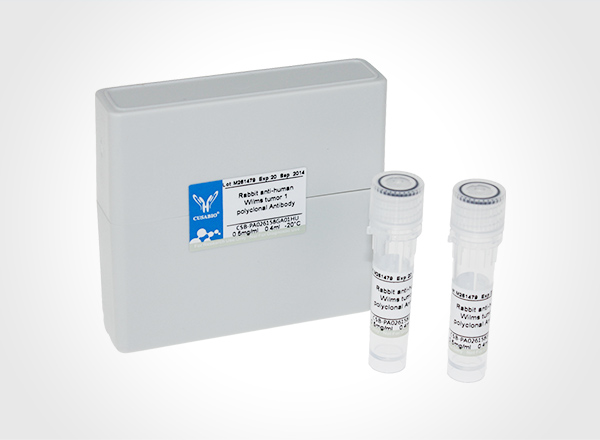
Upon receipt, store at -20°C or -80°C. Avoid repeated freeze.
Lead Time
Basically, we can dispatch the products out in 1-3 working days after receiving your orders. Delivery time maybe differs from different purchasing way or location, please kindly consult your local distributors for specific delivery time.
Note: All of our proteins are default shipped with normal blue ice packs, if you request to ship with dry ice, please communicate with us in advance and extra fees will be charged.
Usage
For Research Use Only. Not for use in diagnostic or therapeutic procedures.
Ser/Thr-kinase component of cyclin D-CDK4 (DC) complexes that phosphorylate and inhibit members of the retinoblastoma (RB) protein family including RB1 and regulate the cell-cycle during G(1)/S transition. Phosphorylation of RB1 allows dissociation of the transcription factor E2F from the RB/E2F complexes and the subsequent transcription of E2F target genes which are responsible for the progression through the G(1) phase. Hypophosphorylates RB1 in early G(1) phase. Cyclin D-CDK4 complexes are major integrators of various mitogenenic and antimitogenic signals. Also phosphorylates SMAD3 in a cell-cycle-dependent manner and represses its transcriptional activity. Component of the ternary complex, cyclin D/CDK4/CDKN1B, required for nuclear translocation and activity of the cyclin D-CDK4 complex.
Gene References into Functions
Data indicate that PAQR4 has a tumorigenic effect on human breast cancers, and such effect is associated with a modulatory activity of PAQR4 on protein degradation of CDK4PMID:29228296
MiR-340 overexpression inhibited tumor growth by regulating CDK4 expression. miR-340 functions as a tumor suppressor in non small cell lung cancer (NSCLC) cells and may provide a potential target of NSCLC treatment.PMID:29935356
CDK4 and XPO1 are not altered in a rare undifferentiated sarcoma, making them therapeutic targetsPMID:27329820
while mTOR inhibitors restore endocrine sensitivity, CDK4/6 inhibitors may favor the emergence of estrogen receptor 1 (ESR1) mutations resulting in ligand-independent activity of the receptorPMID:28685610
Inhibition of CDK4/6 is potentially a highly effective strategy for the treatment of SHH and MYC-amplified group 3 medulloblastoma.PMID:28637687
SOX12 can increase the expression of CDK4 and IGF2BP1, which confer malignant phenotypes to Hepatocellular Carcinoma.PMID:28975985
Study showed that CDK4 and BCAS2 may be target genes of miR-486 and levels of CDK4 and BCAS2 were both significantly higher in the esophageal cancer tissues and cell lines than levels in the normal tissues and cells.PMID:29115564
blocking CDK4 activity efficiently eliminated both normal and chemotherapy-resistant cancer cells in triple negative breast cancers, highlighting CDK4 as a promising novel therapeutic target for these aggressive breast tumors.PMID:27759034
Amplification of gene CDK4 is associated with lung adenocarcinoma.PMID:28381877
Ongoing trials of doublet and triplet targeted therapies containing ribociclib seek to identify optimal CDK4/6-based targeted combination regimens for various tumor types and advance the field of precision therapeutics in oncologyPMID:28351928
Palbociclib induces activation of AMPK and inhibits hepatocellular carcinoma in a CDK4/6-independent mannerPMID:28453226
The combination of ribociclib, a dual inhibitor of cyclin-dependent kinase (CDK) 4 and 6, and the ALK inhibitor ceritinib demonstrated higher cytotoxicity and synergy scores (P = 0.006) in cell lines with ALK mutations as compared with cell lines lacking mutations or alterations in ALK .PMID:27986745
Results showed that CDK4 expression was up-regulated in colorectal carcinoma and suggested that cdc37 increased the stability of CDK4 to activate RB1 which ultimately promotes G1-S transition.PMID:29288563
Data show that sulfatase 1 (hSulf-1) overexpression in melanoma cells can inhibit cell proliferation and induce cell cycle arrest and apoptosis by decreasing the protein kinase B (AKT) phosphorylation and limiting cyclin dependent kinase 4 (CDK4) nuclear import.PMID:27806323
we here show that subgroups of SDCs display genomic amplifications of MDM2 and/or CDK4, partly in association with TP53 mutations and rearrangement/amplification of HMGA2.PMID:27662657
CDK4/6 inhibition suppressed cell cycle progression of ER+/HER2- brreast cancer models.PMID:27564114
Proliferating tumor stem cells with high telomerase expression are suitable targets for CDK4/6 inhibitor, palbociclib.PMID:28039467
PRMT5 inhibited the interaction between CDK4 and CDKN2A and then activated the CDK4-RB-E2F pathway in hepatocellular carcinoma cells under glucose induction.PMID:27708221
This is the first clinical study exploring the use of a CDK4/6 inhibitor in a pediatric population. In this phase I study, we established the maximum tolerated dose (MTD) and recommended phase II dose (RP2D) of single-agent ribociclib in pediatric patients with neuroblastoma, MRTs, or other cancers with documented cyclin D-CDK4/6-INK4-retinoblastoma pathway aberrationsPMID:28432176
network-based rigidity analysis and emulation of thermal unfolding of the Cdk4-cyclin D complex and Hsp90-Cdc37-Cdk4 complex revealed weak spots of kinase instability that are present in the native Cdk4 structure and are targeted by the chaperone during client recruitmentPMID:29267381
The study of 140 cases confirms that the incidence of MDM2/CDK4 amplification is low (5%) in large and/or deep-seated (subfascial) lipomatous neoplasms with histological features of a lipoma (or lipoma variant).PMID:27020493
miR-486-5p inhibits non-small cell lung cancer progression by down-regulating the expression of CDK4.PMID:27049724
Combined PI3Kalpha and CDK4/6 inhibition significantly improved disease control in human xenograft models compared with either monotherapy.PMID:28947417
High amplification levels of CDK4 is associated with dedifferentiated liposarcoma.PMID:29153098
Our results show that combined exogenous expression of hTERT and mutant CDK4 is an effective method to generate single-cell-derived Cancer-associated fibroblasts (CAFs) clones. This provides an innovative and suitable approach to investigate the heterogeneous function and phenotype of CAFsPMID:28364361
these findings support that PIKE amplification or overexpression coordinately acts with CDK4 to drive glioblastoma tumorigenesis.PMID:28368413
Specific E2Fs also have prognostic value in breast cancer, independent of clinical parameters. We discuss here recent advances in understanding of the RB-E2F pathway in breast cancer. We also discuss the application of genome-wide genetic screening efforts to gain insight into synthetic lethal interactions of CDK4/6 inhibitors in breast cancer for the development of more effective combination therapies.PMID:26923330
p16 in combination with MDM2 and CDK4 immunohistochemistry may help in the differential diagnosis of atypical lipomatous tumor/well-differentiated liposarcoma and dedifferentiated liposarcoma.PMID:27597521
conclude that p16 is highly sensitive for retroperitoneal DDL. However, the lack of specificity limits the diagnostic utility compared with the more established markers MDM2 and CDK4PMID:26509911
CDK4 overexpression is associated with cancer.PMID:27206849
High CDK4 expression is associated with Melanoma.PMID:26988987
Staining for MDM2 and CDK4 was noted in 25/56 and 23/56 atypical lipomatous tumor/well-differentiated liposarcoma (ALT/WDL), respectively, giving a sensitivity of 45% and 41% and a specificity of 98% and 92%. Staining was noted exclusively in the nuclei of atypical cells and not in the nuclei of adipocytes. Staining for MDM2 and CDK4 occurred in 2/125 and 10/117 benign lipomatous lesions, respectively.PMID:27508976
Cdk4 inhibition leads to directing human mesenchymal stem cells to a multipotent neurogenic fate by inactivating Smads-STAT3 signaling.PMID:27192561
Reduced SIRT2 expression during tumorigenesis failed to repress cyclindependent kinase 4 expression, which eventually led to accelerated cell proliferation.PMID:28259910
older patients with head and neck squamous cell carcinoma and lung cancer have raised serums CDK4 levels, which has the potential to emerge as a biomarker in clinical practicePMID:27815686
we illustrate that the miR-124/CDK4 axis plays an important role in radiation sensitivity of human esophageal cancer cells by targeting CDK4.PMID:27323123
MiR-16 upregulation could reduce CDK4 expression.PMID:26383521
both miR-613 mimics and inhibitors could decrease and increase CDK4 protein levels in non-small cell lung cancer-derived cells, respectively.PMID:26744345
Upregulation of CDK4 expression is associated with gastric cancer.PMID:26735582
Our studies demonstrate that CDK4 and miR-15a comprise an abnormal automodulatory feedback loop stimulating the pathogenesis and inducing chemotherapy resistance in nasopharyngeal carcinoma .PMID:26993269
miR-539 plays an important role in the initiation and progression of nasopharyngeal carcinoma by targeting CDK4.PMID:26559153
The concept that cotargeting MEK and CDK4/6 would prove efficacious in KRAS-mutant (KRAS(mt)) colorectal cancers.PMID:26369631
This review highlights our current understanding of CDK signaling in both normal and malignant breast tissues, with special attention placed on recent clinical advances in inhibition of CDK4/6 in ER+ diseasePMID:26857361
concurrent inhibition of ESR1 and the cyclin-dependent kinases 4 and 6 (CDK4/6) significantly increased progression-free survival in advanced patientsPMID:25991817
amplification of HMGA2 was associated with the atypical lipomatous tumor/well-differentiated liposarcoma histological type and a good prognosis, whereas CDK4 and JUN amplifications were associated with dedifferentiated liposarcoma histologyPMID:26336885
CDK4 Amplification Reduces Sensitivity to CDK4/6 Inhibition in Fusion-Positive RhabdomyosarcomaPMID:25810375
Observations disclose the presence of CDK4 protein in human erythrocytes and its involvement in suicidal erythrocyte death.PMID:26418250
Data show that the p16/CDKN2A-cyclin-dependent kinase 4 (CDK4)-RB1 protein pathway is frequently disrupted in fibrosarcomatous dermatofibrosarcoma protuberans (FS-DFSP).PMID:25852058
Show
More
Hide
All
Subcellular Location
Cytoplasm. Nucleus. Nucleus membrane.
Protein Families
Protein kinase superfamily, CMGC Ser/Thr protein kinase family, CDC2/CDKX subfamily