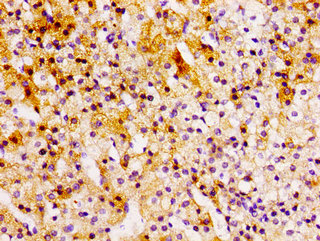
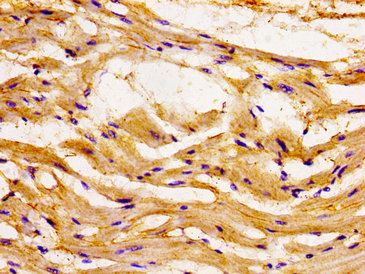
Upon receipt, store at -20°C or -80°C. Avoid repeated freeze.
Lead Time
Basically, we can dispatch the products out in 1-3 working days after receiving your orders. Delivery time maybe differs from different purchasing way or location, please kindly consult your local distributors for specific delivery time.
Note: All of our proteins are default shipped with normal blue ice packs, if you request to ship with dry ice, please communicate with us in advance and extra fees will be charged.
Usage
For Research Use Only. Not for use in diagnostic or therapeutic procedures.
Chemotactic factor that attracts T-cells and monocytes, but not neutrophils, eosinophils, or B-cells. Acts mainly via CC chemokine receptor CCR1. Also binds to CCR3. CCL15(22-92), CCL15(25-92) and CCL15(29-92) are more potent chemoattractants than the small-inducible cytokine A15.
Gene References into Functions
CCL15 secreted from SMAD4-deficient xenografted human colorectal cancer cells recruited CCR1(+) cells, promoting their metastatic activities to the lung. Lung metastases from colorectal cancer patients revealed that CCL15 expression correlated with loss of SMAD4. CCL15-positive metastases recruited approximately 1.9 times more numbers of CCR1(+) cells than CCL15-negative metastases.PMID:27492974
CCL15 activation of CCR1 plays critical roles in hepatocellular carcinoma metastasis.PMID:26501423
Orthotopic animal models of HCC were established to investigate the role of CCL15 in hMSCs migration toward HCC in vivo. Both histological and flow cytometric analysis showed that significantly fewer hMSCs localized within 97H-CCL15-shRNA xenografts compared with 97H-green fluorescent protein xenografts after intravenous deliveryPMID:26763650
Loss of SMAD4 was significantly associated with CCL15 expression.PMID:26341919
follicular thyroid carcinoma (FTC) might induce tumor associated macrophages (TAMs) infiltration by producing CCL15. Measurement of TAMs and CCL15 in follicular thyroid lesions may be applied clinically to differentiate FTC from follicular adenomaPMID:26875556
two inflammatory cytokines, MIP-1delta and MIP-3alpha, are able to increase mesenchymal stromal cells migration in vitroPMID:25579056
we investigated a role of CCL15 in upregulating ICAM-1 in endothelial cellsPMID:23690481
CCL15 is elevated in human asthma and correlates with disease severity .PMID:22092970
Data show that Only three of these proteins EGF, PDGF-BB and MIP-1delta (CCL15) differed significantly in plasma between controls and Alzheimer's disease (AD).PMID:22279551
increased secretion by macrophages during Mycobacterium tuberculosis infectionPMID:20016943
truncation of NH2-terminal amino acid residues increases agonistic potency on CC chemokine receptors 1 and 3PMID:11832479
Lkn-1 activates the ERK pathway by transducing the signal through G(i)/G(o) protein, PLC, PKC delta and Ras, and it may play a role for cell proliferation, differentiation, and regulation of gene expression for other cellular processesPMID:12759139
These observations demonstrate that the two NF-kappaB binding sites are essential for phorbol myristate acetate-induced leukotactin-1 (Lkn-1)/CCL15 expression in human monocytes.PMID:15179048
CCL15(25-92) has in vitro and in vivo angiogenic activityPMID:15251437
alanine-aspartic acid residues preceding the first cysteine at the NH(2)-terminus are essential for the binding and biological activity of leukotactin-1PMID:15894113
Compared with full-length CCL15, proteolytically processed CCL15 isoforms with N-terminal deletions display increased potency to induce calcium fluxes and chemotactic activity on monocytes and to induce adhesiveness of mononuclear cells to fibronectin.PMID:16034099
Transcription of the CCL15 gene is regulated by AP-1 and NF-kappaB through MEK and JNK MAPK pathways in monocytoid cells.PMID:16364464
Results point to an involvement of the CCL15-CCR1 axis in the pathophysiology of chronic renal failure.PMID:16737685
factor NF-kappaB plays an important role in regulation of LZIP expression, and LZIP expression regulates the monocyte cell migration induced by Lkn-1PMID:17296613
Show
More
Hide
All
Subcellular Location
Secreted.
Protein Families
Intercrine beta (chemokine CC) family
Tissue Specificity
Most abundant in heart, skeletal muscle and adrenal gland. Lower levels in placenta, liver, pancreas and bone marrow. CCL15(22-92), CCL15(25-92) and CCL15(29-92) are found in high levels in synovial fluids from rheumatoid patients.