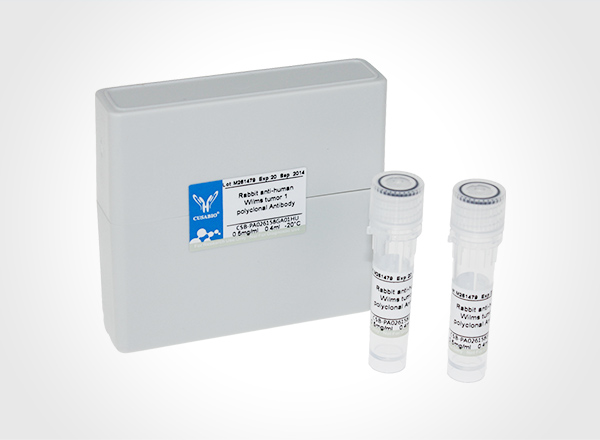
Upon receipt, store at -20°C or -80°C. Avoid repeated freeze.
Lead Time
Basically, we can dispatch the products out in 1-3 working days after receiving your orders. Delivery time maybe differs from different purchasing way or location, please kindly consult your local distributors for specific delivery time.
Note: All of our proteins are default shipped with normal blue ice packs, if you request to ship with dry ice, please communicate with us in advance and extra fees will be charged.
Usage
For Research Use Only. Not for use in diagnostic or therapeutic procedures.
Mediates the endocytosis of plasma glycoproteins to which the terminal sialic acid residue on their complex carbohydrate moieties has been removed. The receptor recognizes terminal galactose and N-acetylgalactosamine units. After ligand binding to the receptor, the resulting complex is internalized and transported to a sorting organelle, where receptor and ligand are disassociated. The receptor then returns to the cell membrane surface.
Gene References into Functions
Authors report the generation of a human embryonic stem cell line WAe001-A-6 harbouring homozygous ASGR1 mutations using CRISPR/Cas9. The mutation involves a 37bp deletion, resulting in a frame shift.PMID:28952928
PEGylated lipoplexes were well tolerated by both HEK293 (ASGP-R-negative) and HepG2 (ASGP-R-positive) cell lines and delivered DNA to the hepatoma cell line HepG2 by ASGP-R mediation at levels three-fold greater than nonPEGylated lipoplexes.PMID:28063265
findings show that the hepatitis E virus (HEV) ORF2 protein interacts directly with the ectodomain of both ASGR1 and ASGR2; ASGPR is involved in and facilitates HEV infection by binding to ORF2PMID:27155063
ASGR1 can inhibit the activity of V-ATPase by interacting with LASS2, thereby suppressing the metastatic potential of hepatoma cells.PMID:27241665
This review will focus on the mechanisms of platelet senescence with specific emphasis on the role of post-translational modifications in platelet life-span and thrombopoietin production downstream of the hepatic Ashwell-Morrell receptor, originally termed asialoglycoprotein receptor (ASGPR).PMID:27207430
ASGR1 haploinsufficiency was associated with reduced levels of non-HDL cholesterol and a reduced risk of coronary artery disease.PMID:27192541
Flow cytometric assessment of ASGPR expression may be a useful predictor of liver dysfunction following major hepatectomy for HCC in Chinese patients.PMID:25404440
Anti-ASGPR antibody could be used for specific and efficient HCC CTC enrichment, and anti-P-CK combined with anti-CPS1 antibodies is superior to identification with one antibody alone in the sensitivity for HCC CTC detection.PMID:24763545
Endocytic AMR controls TPO expression through Janus kinase 2 (JAK2) and the acute phase response signal transducer and activator of transcription 3 (STAT3) in vivo and in vitroPMID:25485912
Anti-ASGPR levels correlate with biochemical parameters and with the severity and manifestation autoimmune processes in patients with autoimmune hepatitis.PMID:24933948
The examined ASGPR1 expression levels by immunohistochemistry in HCC with different grades. Guidance for a targeting delivery strategy for anti-cancer drugs to HCC is suggested in this report.PMID:23979840
the distribution of ASGR in human testis, was investigated.PMID:23604802
the cooperative binding mode of Ca(2+) makes it possible for ASGP-R to be more sensitive to Ca(2+) concentrations in early endosomes, and plays an important role in the efficient release of ligand from ASGP-RPMID:22613667
Constant sH2a levels suggest constitutive secretion from hepatocytes in healthy individuals; therefore, a decrease with cirrhosis suggests a diagnostic potential.PMID:22219600
found that the asialoglycoprotein receptor (ASGPR) is involved in hepatocyte recognition of cells predestined for killing, including activated autologous T lymphocytesPMID:21656538
Asialoglycoprotein receptor (ASGPR) interacted specifically and directly with the preS1 domain of HBV in vivo and in vitro.PMID:21207081
Two naturally occurring ASGPR1 splice variants are produced in human hepatocytes.PMID:20886072
our findings suggest that both fibronectin and ASGPR mediate HBsAg binding to the cell surface, which provides further evidence for the potential roles of these two proteins in mediating HBV binding to liver cells.PMID:20364278
The minor subunit splice variants, H2b and H2c, of the human asialoglycoprotein receptor are present with the major subunit H1 in different hetero-oligomeric receptor complexesPMID:11943787
primary renal proximal tubular epithelial cells have a functional ASGPR, consisting of the H1 and H2 subunits, that is capable of specific ligand binding and uptakePMID:12119473
Phosphorylation-dependent interaction with molecular chaperonesPMID:12167617
the effects of palmitoylation on ASGP-R activity and functionPMID:12359251
the spacing of a Cys residue relative to the TMD in the primary protein sequence of H1 is the major determinant for successful palmitoylationPMID:12370180
Exposure of beta-galactose results in the rapid clearance of platelets from the circulation by asialoglycoprotein receptor-expressing liver macrophages and hepatocytes.PMID:19520807
Show
More
Hide
All
Subcellular Location
[Isoform H1a]: Membrane; Single-pass type II membrane protein.; [Isoform H1b]: Secreted.
Tissue Specificity
Expressed exclusively in hepatic parenchymal cells.