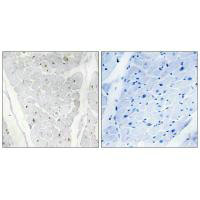
Synthesized peptide derived from internal of Human ALPK2.
Immunogen Species
Homo sapiens (Human)
Clonality
Polyclonal
Purification Method
The antibody was affinity-purified from rabbit antiserum by affinity-chromatography using epitope-specific immunogen.
Concentration
It differs from different batches. Please contact us to confirm it.
Form
Rabbit IgG in phosphate buffered saline (without Mg2+ and Ca2+), pH 7.4, 150mM NaCl, 0.02% sodium azide and 50% glycerol.
Note: We will preferentially ship the format that we have in stock, however, if you have any special requirement for the format, please remark your requirement when placing the order, we will prepare according to your demand.
Upon receipt, store at -20°C or -80°C. Avoid repeated freeze.
Lead Time
Basically, we can dispatch the products out in 1-3 working days after receiving your orders. Delivery time maybe differs from different purchasing way or location, please kindly consult your local distributors for specific delivery time.
Note: All of our proteins are default shipped with normal blue ice packs, if you request to ship with dry ice, please communicate with us in advance and extra fees will be charged.
Usage
For Research Use Only. Not for use in diagnostic or therapeutic procedures.
Protein kinase that recognizes phosphorylation sites in which the surrounding peptides have an alpha-helical conformation. Regulates cardiac development and cardiomyocyte differentiation by negatively regulating Wnt/beta-catenin signaling.
Gene References into Functions
Results showed that p.Q1853E variant of ALPK2, which had been accumulating in the Japanese population, induced a metastatic phenotype of colorectal tumors by disrupting ALPK2 function.PMID:28668886
ALPK2 is crucial for luminal apoptosis and expression of DNA repair-related genes, possibly in the transition of normal colonic crypt to adenoma.PMID:22641666
Show
More
Hide
All
Subcellular Location
Basolateral cell membrane.
Protein Families
Protein kinase superfamily, Alpha-type protein kinase family, ALPK subfamily
Tissue Specificity
Expressed in developing cardiac tissue and cardiomyocytes (at protein level).