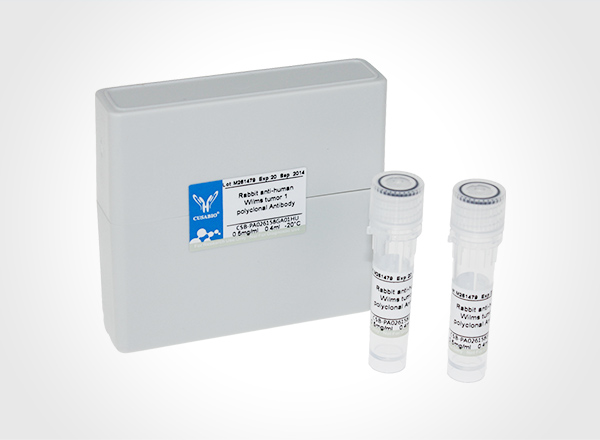
Liquid
Note: We will preferentially ship the format that we have in stock, however, if you have any special requirement for the format, please remark your requirement when placing the order, we will prepare according to your demand.
Upon receipt, store at -20°C or -80°C. Avoid repeated freeze.
Lead Time
Basically, we can dispatch the products out in 1-3 working days after receiving your orders. Delivery time maybe differs from different purchasing way or location, please kindly consult your local distributors for specific delivery time.
Note: All of our proteins are default shipped with normal blue ice packs, if you request to ship with dry ice, please communicate with us in advance and extra fees will be charged.
Usage
For Research Use Only. Not for use in diagnostic or therapeutic procedures.
Mediates interactions of advanced glycosylation end products (AGE). These are nonenzymatically glycosylated proteins which accumulate in vascular tissue in aging and at an accelerated rate in diabetes. Acts as a mediator of both acute and chronic vascular inflammation in conditions such as atherosclerosis and in particular as a complication of diabetes. AGE/RAGE signaling plays an important role in regulating the production/expression of TNF-alpha, oxidative stress, and endothelial dysfunction in type 2 diabetes. Interaction with S100A12 on endothelium, mononuclear phagocytes, and lymphocytes triggers cellular activation, with generation of key proinflammatory mediators. Interaction with S100B after myocardial infarction may play a role in myocyte apoptosis by activating ERK1/2 and p53/TP53 signaling. Receptor for amyloid beta peptide. Contributes to the translocation of amyloid-beta peptide (ABPP) across the cell membrane from the extracellular to the intracellular space in cortical neurons. ABPP-initiated RAGE signaling, especially stimulation of p38 mitogen-activated protein kinase (MAPK), has the capacity to drive a transport system delivering ABPP as a complex with RAGE to the intraneuronal space. Can also bind oligonucleotides.
Gene References into Functions
In a candidate association study identified 2 polymorphisms (T-429C and G1704T) in RAGE, which were not only associated with increased MI risk but also interacted with metabolic risk factors to increase that risk.PMID:28956473
High RAGE expression is associated with Breast Carcinoma.PMID:30139236
AGEs increase IL-6 and ICAM-1 expression via the RAGE, MAPK and NF-kappaB pathways in HGFs and may exacerbate the progression of the pathogenesis of periodontal diseases.PMID:29193068
Low serum sRAGE level is associated with Sarcopenia.PMID:29271076
Results show that RAGE is activated by HMGB1 to induce EMT in prostate cancer cells.PMID:29845254
Endogenous secretory receptor for advanced glycation end products protects endothelial cells from advanced glycosylation end-product associated apoptosis.PMID:29850572
high mobility group box 1-receptor for advanced glycation end-products (HMGB1-RAGE) signaling pathway may be involved in the pathogenesis of preterm premature rupture of the membranes (pPROM).PMID:29673663
Results show that RAGE is upregulated in breast cancer tissues, and confirmed that RAGE was a direct target of miR-328.PMID:29620238
The results suggest that S100A12 does not participate in the induction of inflammation in dental pulp. However, RAGE can participate in the inflammation in the pulp of males.PMID:28834384
The results show for the first time that RAGE is present in neuronally-derived plasma exosomes, and suggest that exosomal RAGE may be a novel biomarker that reflects pathophysiological processes in the brain.PMID:29702093
Decreased soluble RAGE in neutrophilic asthma is correlated with disease severity and RAGE G82S variants.PMID:29257350
Our study provides novel evidence for a potential role of AGER in bridging human papillomavirus (HPV)-induced inflammation and cervical cancer.PMID:29298878
Plasmatic RAGE level is significantly lower in patients with prosthetic-joint-associated infections.PMID:29386700
Inhibition of GLO1 in Glioblastoma Multiforme Increases DNA-AGEs, Stimulates RAGE Expression, and Inhibits Brain Tumor Growth in Orthotopic Mouse ModelsPMID:29385725
a significant association between RAGE gene rs1800624 and rs1800625 polymorphisms and Age-related macular degeneration risk, is reported.PMID:29317590
HMGB1 mediates fibroblast activity via RAGE-MAPK and NF-kappaB signaling in keloid scar formation.PMID:29283384
Data revealed that hESC accumulates CML and RAGE under oxidative stress conditions in different ways than somatic cells, being the accumulation of CML statistically significant only in somatic cells and, conversely, the RAGE increase exclusively appreciated in hESC.PMID:29104727
In women with Polycystic ovary syndrome(PCOS), the low ovarian levels of the anti-inflammatory sRAGE suggest that sRAGE could represent a biomarker and a potential therapeutic target for ovarian dysfunction in PCOS. Whether there is a direct causal relationship between sRAGE and vit D in the ovaries remains to be determinedPMID:28825156
current research highlighted the Glo-I/AGE/RAGE system as an interesting therapeutic target in chronic liver diseases. These findings need further elucidation in preclinical and clinical studies.PMID:29156655
Low esRAGE expression is associated with bone Fractures.PMID:29040721
Elevated sRAGE serum level is associated with further adverse events in patients with cardiovascular disease.PMID:28864204
Our findings suggested that polymorphisms in the RAGE gene are involved in genetic susceptibility to Alzheimer disease but did not modify the risk of lewy body disease.PMID:27699858
Findings suggest soluble Receptor for Advanced Glycation End products (sRAGE) protein from sRAGE-mesenchymal stem cells (MSC) has better protection against neuronal cell death than sRAGE protein or single MSC treatment by inhibiting the RAGE cell death cascade and RAGE-induce inflammation.PMID:28760504
Protection against diabetic nephropathy in RAGE knockout mice is likely to be due in part to the decreased responsiveness to TGF beta stimulation and an antiapoptotic phenotype in mesangial cells.PMID:29449307
the A allele of RAGE -374T/A polymorphism probably increase diabetic retinopathy risk (Meta-Analysis)PMID:29451661
Advanced glycation end products decrease collagen I levels in fibroblasts from the vaginal wall of patients with pelvic organ prolapse via the RAGE, MAPK and NF-kappaB pathways.PMID:28849117
we identified two risk-associated polymorphisms (rs1045411 and rs2070600), and more importantly a joint impact of seven polymorphisms from the HMGB1/RAGE axis in susceptibility to hepatocellular carcinomaPMID:28187002
type 2 diabetes showed a higher cellular sensitivity for activation of receptor of advanced glycation end products.PMID:27873077
the G82S variant of the RAGE gene was significantly associated with an increased risk of all-cause mortality and acute myocardial infarction in the Chinese Han population.PMID:28660308
both RAGE and mitochondrial damage primed NLRP3 and pro-IL-1beta activation as upstream signals of NF-kappaB activity, whereas mitochondrial damage was critical for the assembly of inflammasome components. These results revealed that accumulation of AGEs in NP tissue may initiate inflammation-related degeneration of the intervertebral disc via activation of the NLRP3 inflammasome.PMID:28224704
The main mechanism of Integrin alphaXbeta2 I-domain binding to RAGE is a charge interaction, in which the acidic moieties of Integrin alphaXbeta2 I-domains, including E244, and D249, recognize the basic residues on the RAGE V-domain encompassing K39, K43, K44, R104, and K107.PMID:28535664
An overexpression of the receptor for RAGE was found in lesioned samples of patients with acquired reactive perforating collagenosis.PMID:28474638
Single-nucleotide polymorphism in RAGE gene and high circulating soluble RAGE level is associated with diabetic kidney disease.PMID:27448675
Significant association of the RAGE system with Hashimoto's thyroiditis was found only with regard to the prevalence of the -429T>C, but not with -374T>A polymorphism.PMID:28226412
study revealed an early and constant increase of sRAGE level in the CSF of aneurysmal subarachnoid haemorrhage patients.PMID:28630869
These data indicate that sRAGE may be involved in the initiation of beta-cell autoimmunity but not in the progression from beta-cell autoimmunity to clinical disease.PMID:27883367
IL-23, alone and in combination with IL-18 and sRAGE, identified bacterial meningitis with excellent accuracy. Following validation, these markers could aid clinicians in diagnosis of bacterial meningitis and decision-making regarding prolongation of antibiotic therapyPMID:29394248
meta-analysis aimed at investigating whether the RAGE rs2070600 polymorphism is associated with cancer riskPMID:29421442
found that S100B plays a crucial role in blocking the interaction site between RAGE V domain and S100A1. A cell proliferation assay WST-1 also supported our results. This report could potentially be useful for new protein development for cancer treatmentPMID:29444082
Lower plasma sRAGE levels may be a biological measure of disease severity in idiopathic pulmonary fibrosis (IPF). Variation at the rs2070600 single-nucleotide polymorphism was not associated with IPF risk.PMID:28248552
Results suggest a possible association between a functional polymorphism in AGER and IPF disease susceptibility, and indicate a potential prognostic value of circulatory sRAGE.PMID:28198072
Thus, hypoxia not only increases RAGE expression in THP-1cells by promoting nuclear translocation of NF-kappa B and HIF1alpha, but also regulates chemotaxis and pro-inflammatory cytokines release, which may be partially mediated through upregulation of RAGE expression.PMID:29258824
This study demonstrated that RAGE mRNA levels were significantly decreased in the new cases of untreated MS patients in comparison to healthy controls. IFN-beta 1a therapy results in upregulation of RAGE in MS patients.PMID:28433998
High RAGE expression is associated with lung cancer.PMID:26930711
findings collectively demonstrate that fasting blood sRAGE and esRAGE may be causally implicated in IGM in primary hypertensive patientsPMID:28974473
Our data suggest that the inhibition of sRAGE on I/R-induced apoptosis is associated with activation and expression of proteasome, including improved proteasome activity and elevated beta1i and beta5i expression mediated by STAT3 activation. We predict that sRAGE is a novel intervention to target UPS activation for preventing and treating myocardial apoptosis.PMID:26878774
Receptor for AGE expression and reactive oxygen species production were upregulated in db/db mouse livers, together with impaired proteolytic, antioxidant and mitochondrial respiratory activities. In parallel, acute exposure of HepG2 cells to glycated albumin also elicited intracellular free radical formationPMID:27890722
Our data suggest that H2S reduces RAGE dimer formation and impairs its membrane stability. The lowered plasma membrane abundance of RAGE therefore helps to protect cells against various RAGE mediated pathological effects.PMID:28108276
Methylglyoxal-derived hydroimidazolone 1 evokes inflammatory reactions in human umbilical vein endothelial cells via receptor for advanced glycation end products.PMID:28631505
Reduced values of sRAGE isoforms observed with both obesity and impaired glucose tolerance are independently associated with greater proportional odds of developing type 2 diabetesPMID:28811295
Show
More
Hide
All
Subcellular Location
[Isoform 1]: Cell membrane; Single-pass type I membrane protein.; [Isoform 2]: Secreted.; [Isoform 10]: Cell membrane; Single-pass type I membrane protein.