Recombinant Human Alkaline phosphatase, placental type (ALPP) (Active)

In Stock
Code: CSB-MP001632HU
Size:
20ug
20ug100ug1mg
US$136
Quantity:
Express system: Mammalian cell
Species: Homo sapiens (Human)
Tag Info: C-terminal 10xHis-tagged
For inquiries on large quantities or another requirements
Send an Inquiry
Start an on-line Chat
Online ordering is currently available for U.S. customers only. For orders outside the U.S., please kindly submit an inquiry or start a chat with us.

Product Details

Abbreviation
Recombinant Human ALPP protein (Active)
Purity
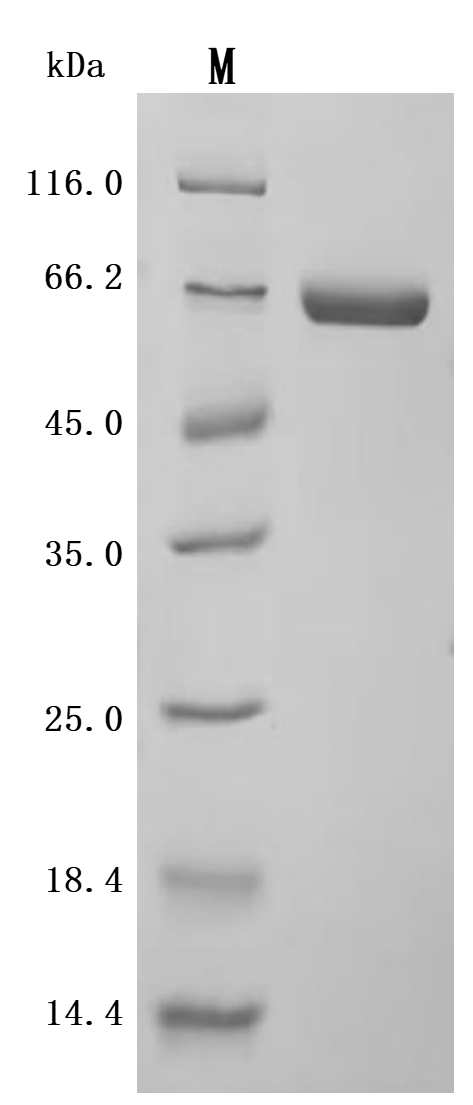
Greater than 95% as determined by SDS-PAGE.
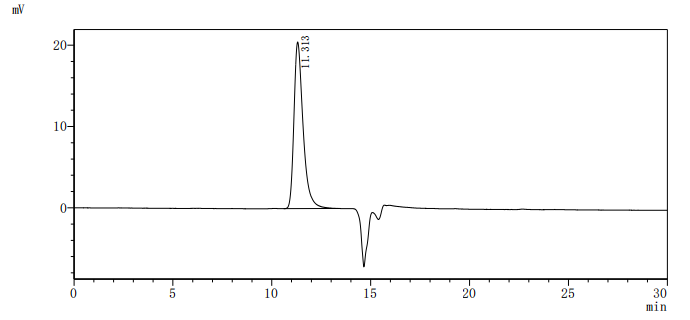
Greater than 95% as determined by SEC-HPLC.
Activity
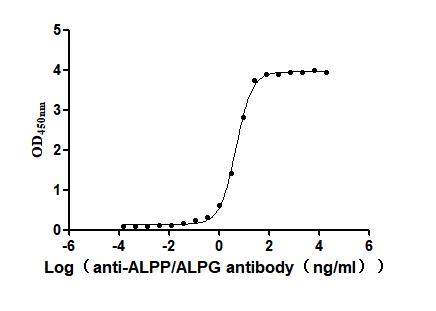
Measured by its binding ability in a functional ELISA. Immobilized Human ALPP at 2 μg/mL can bind Anti-ALPP/ALPG recombinant antibody (CSB-RA001633MA1HU). The EC50 is 4.478-5.236 ng/mL.
Target Names
ALPP
Uniprot NO.
Alternative Names
Alkaline phosphatase Regan isozyme; Placental alkaline phosphatase 1
Species
Homo sapiens (Human)
Source
Mammalian cell
Expression Region
23-506aa
Target Protein Sequence
IIPVEEENPDFWNREAAEALGAAKKLQPAQTAAKNLIIFLGDGMGVSTVTAARILKGQKKDKLGPEIPLAMDRFPYVALSKTYNVDKHVPDSGATATAYLCGVKGNFQTIGLSAAARFNQCNTTRGNEVISVMNRAKKAGKSVGVVTTTRVQHASPAGTYAHTVNRNWYSDADVPASARQEGCQDIATQLISNMDIDVILGGGRKYMFRMGTPDPEYPDDYSQGGTRLDGKNLVQEWLAKRQGARYVWNRTELMQASLDPSVTHLMGLFEPGDMKYEIHRDSTLDPSLMEMTEAALRLLSRNPRGFFLFVEGGRIDHGHHESRAYRALTETIMFDDAIERAGQLTSEEDTLSLVTADHSHVFSFGGYPLRGSSIFGLAPGKARDRKAYTVLLYGNGPGYVLKDGARPDVTESESGSPEYRQQSAVPLDEETHAGEDVAVFARGPQAHLVHGVQEQTFIAHVMAFAACLEPYTACDLAPPAGTTD
Note: The complete sequence may include tag sequence, target protein sequence, linker sequence and extra sequence that is translated with the protein sequence for the purpose(s) of secretion, stability, solubility, etc.
If the exact amino acid sequence of this recombinant protein is critical to your application, please explicitly request the full and complete sequence of this protein before ordering.
Mol. Weight
54.1 kDa
Protein Length
Full Length of Mature Protein
Tag Info
C-terminal 10xHis-tagged
The tag type will be determined during production process. If you have specified tag type, please tell us and we will develop the specified tag preferentially.
Buffer
Lyophilized from a 0.2 μm filtered PBS, 6% Trehalose, pH 7.4
Storage
Store at -20°C/-80°C upon receipt, aliquoting is necessary for mutiple use. Avoid repeated freeze-thaw cycles.
Lead Time
3-7 business days
Note: All of our proteins are default shipped with normal blue ice packs, if you request to ship with dry ice, please communicate with us in advance and extra fees will be charged.
Notes
Repeated freezing and thawing is not recommended. Store working aliquots at 4℃ for up to one week.
Shelf Life
The shelf life is related to many factors, storage state, storage temperature and the stability of the product itself. Generally, the shelf life of lyophilized form is 6 months at -20°C/-80°C from the date of receipt.
Troubleshooting and FAQs
Datasheet & COA
Please contact us to get it.
Images
  • (Tris-Glycine gel) Discontinuous SDS-PAGE (reduced) with 5% enrichment gel and 15% separation gel.
  • Activity
    Measured by its binding ability in a functional ELISA. Immobilized Human ALPP at 2 μg/ml can bind Anti-ALPP/ALPG recombinant antibody (CSB-RA001633MA1HU). The EC50 is 4.478-5.236 ng/mL.
  • The purity of ALPP was greater than 95% as determined by SEC-HPLC
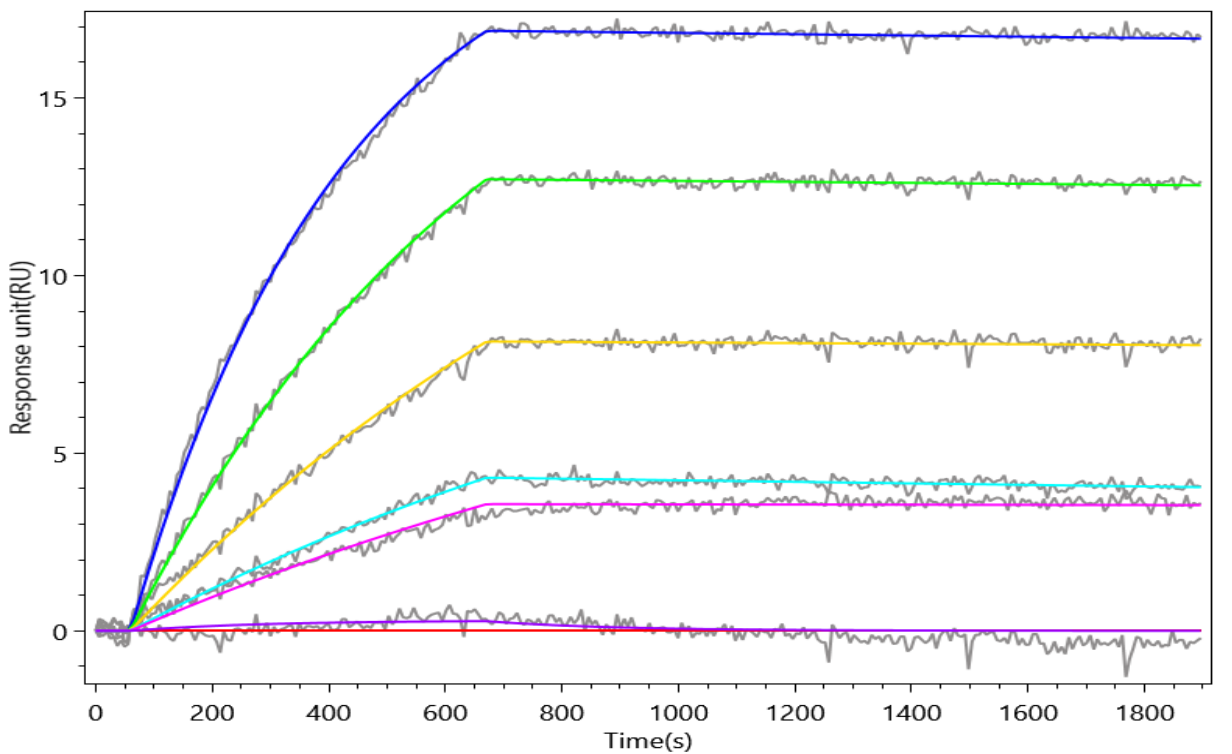
  • ALPG Recombinant Monoclonal Antibody (CSB-RA001633MA1HU) captured on Protein A Chip can bind Recombinant Human ALPP protein with an affinity constant of 0.796 nM as detected by MetaSPR Assay (WeSPRTM 200).
Description

Placental alkaline phosphatase serves as a tumor marker in several malignancies and exhibits distinct biochemical properties compared to tissue-nonspecific isoforms, making it a valuable target for cancer research and diagnostic development. This full-length mature protein (aa 23–506) with C-terminal 10xHis tag demonstrates functional integrity in binding assays, achieving an EC50 of 4.478–5.236 ng/mL when immobilized at 2 μg/mL and tested against anti-ALPP recombinant antibody, confirming proper folding and epitope accessibility. The greater than 95% purity determined by SDS-PAGE, combined with endotoxin levels below 1.0 EU/μg, meets the quality thresholds commonly required for kinetic parameter analysis (Km, Vmax, kcat) and inhibitor screening assays where contaminants would confound IC50 determinations. Researchers can apply this preparation as a positive control in enzyme-linked assays, for substrate specificity profiling, or in drug candidate evaluation studies targeting alkaline phosphatase activity in oncology contexts.


Customer Reviews and Q&A

 Customer Reviews

Target Background

Function(From Uniprot)
Alkaline phosphatase that can hydrolyze various phosphate compounds.
Gene References into Functions
  1. This meta-analysis suggests that high serum ALP level is obviously associated with lower OS rate in patients with osteosarcoma, and it is an effective biomarker of prognosis. PMID:29970708
  2. Concentrations of PLAP were elevated in gingival crevicular fluid of patients with pre-eclampsia. PMID:26988336
  3. SALL4 also outperformed PLAP on a small sample of cytology blocks. Although SALL4 is not entirely specific, it is a highly sensitive marker with strong diffuse nuclear reactivity in the majority of MGCTs in the posttreatment setting, at significantly higher levels than PLAP PMID:25906119
  4. Quantum-mechanical computational methods were employed to study the catalytic mechanism of human placental AP (PLAP). An active-site model was used, constructed on the basis of the X-ray crystal structure of the enzyme. PMID:25409280
  5. term placental explants, but not their conditioned medium, can de-phosphorylate IGFBP-1 through the action of placental alkaline phosphatase PMID:24856042
  6. Anti-PLAP antibodies may serve as a modular building blocks for the development of targeted therapeutic products, armed with cytotoxic drugs, radionuclides or cytokines as payloads. PMID:24247025
  7. A candidate gene, ALPP, encoding the placental alkaline phosphatase, was identified as being potentially involved in recurrent spontaneous abortion. PMID:24296104
  8. The objective of the following study was to record the specificity and sensitivity of alpha5(IV) loss, smoothelin expression and PLAP expression as markers of gastrointestinal smooth muscle neoplasms PMID:24043717
  9. Data indicate that p180 is required for the efficient targeting of placental alkaline phosphatase (ALPP) mRNA to the endoplasmic reticulum (ER). PMID:24019514
  10. Calculation of the electrostatic potentials within the active site of human placental alkaline phosphatase also suggests that the local positive electrostatic environment may account for its capability to distinguish various substrates PMID:21910833
  11. High serum alkaline phosphatase cooperating with MMP-9 is associated with metastasis in patients with primary osteosarcoma. PMID:22333159
  12. PLAP exerts a positive effect on DNA replication and acts as a proliferative factor in trophoblastic cells. PMID:21868091
  13. The proximity of undifferentiated gonadal tissue with the tumors as well as the immunostaining patterns (PLAP+, OCT3/4+, and CD117/KIT+) suggests that germ cells found in them are a risk factor for gonadal tumors. PMID:21692598
  14. the catalytic mechanism of human placental alkaline phosphatase PMID:21939286
  15. Data show that serum alkaline phosphatase, Gleason score, and intensity of bone metastasis are important and statistically significant prognostic factors, and affects time to progression and life time. PMID:19450995
  16. at a certain time point during adrenocortical development, some fetal zone cells survive owing to defective apoptosis and develop into childhood ACT, maintaining some characteristics of the embryonal period, such as PLAP expression PMID:21516013
  17. Serum total calcium (r -0.1362, p<0.001), serum inorganic phosphate (r -0.45, p<0.001) and serum alkaline phosphatase (r -0.5587, p<0.001) have shown inverse relationship with age. PMID:20655896
  18. High serum alkaline phosphatase is associated with chronic kidney disease. PMID:20299338
  19. differential expression of Pl(1) and Pl(2) probably results from linkage disequilibrium with the sequence variation rs2014683G>A in the ALPP gene promoter that was shown to have allele-specific binding patterns to placental nuclear proteins. PMID:20663553
  20. structure of placental alkaline phosphatase with pNPP contained only p-nitrophenol in three distinct sites, while the structure with 5'-AMP contained the p-nitrophenyl group in two of the sites instead of 5'-AMP PMID:20693656
  21. Low magnitudes of tensile strain enhance expression of alkaline phosphatase in human osteoblasts. PMID:19595020
  22. The PLAP D allele contains two amino acid substitutions: P209R (692C>G) and E429G (1352 A>G). PMID:11857742
  23. Proximity of the protein moiety of a GPI-anchored protein to the membrane surface: a FRET study. PMID:12081485
  24. the beta-N-acetylglucosaminyl phosphate diester residue is attached to the glycosylphosphatidylinositol anchor of human placental alkaline phosphatase and is a target of the channel-forming toxin aerolysin PMID:12851398
  25. receptor for Aeromonas sobria hemolysin. PMID:15715171
  26. analysis of human placental alkaline phosphatase in complex with functional ligands PMID:15946677
  27. The effect of parity on placental weight and birth weight is examined through a series of birth records from an Indian population in Calcutta. PMID:16431676
  28. crystal structure of strontium-substituted human placental alkaline phosphatase shows that strontium substitutes the calcium ion with concomitant modification of the metal coordination PMID:16815919
  29. activity of GPI-anchored enzymes may be modulated by membrane microenvironment features PMID:18416535
  30. Serum bilirubin, alkaline phosphatase, and aspartate aminotransferase are an efficient set of biochemistries to identify UDCA-treated patients with primary biliary cirrhosis at risk of death or liver transplantation (LT). PMID:18752324
  31. Elevations of alkaline phosphatase is associated with therapy related pediatric cancer. PMID:18802949

Show More

Hide All

Subcellular Location
Cell membrane; Lipid-anchor, GPI-anchor.
Protein Families
Alkaline phosphatase family
Tissue Specificity
Detected in placenta (at protein level).
Database Links

HGNC: 439

UNIGENE: Hs.284255

KEGG: hsa:250

STRING: 9606.ENSP00000375881

OMIM: 171800

icon of phone
Call us
301-363-4651 (Available 9 a.m. to 5 p.m. CST from Monday to Friday)
icon of address
Address
No. 269, Shendun 5th Road, Donghu Hi-Tech Development Area, Hubei Province, 430206, P.R.China
icon of social media
Join us with

Subscribe newsletter

Leave a message

* To protect against spam, please pass the CAPTCHA test below.
CAPTCHA verification
© 2007-2025 CUSABIO TECHNOLOGY LLC All rights reserved. 鄂ICP备15011166号-1
Select 0 Products