
Call us
301-363-4651 (Available 9 a.m. to 5 p.m. CST from Monday to Friday)

| Application | Recommended Dilution |
|---|---|
| WB | 1:500-1:5000 |
| IHC | 1:50-1:500 |
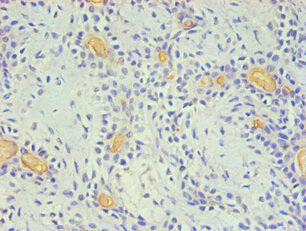
Immunohistochemical of paraffin-embedded Human breast cancer using CSB-MA0049471A0m (2E11-2B5) at dilution of 1:200.
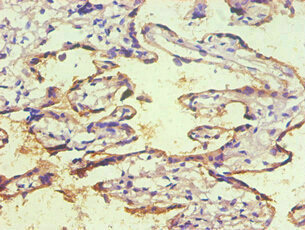
Immunohistochemical of paraffin-embedded human placenta tissue using CSB-MA0049471A0m (2E11-2B5) at dilution of 1:200.
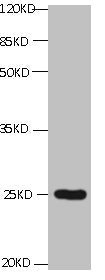
All lanes: Mouse Anti-CD59 monoclonal antibody at 1μg/ml
Lane 1:K562
Predicted band size : 15kd
Observed band size : 22kd
The CD59 monoclonal antibody is a highly specific tool for the detection of CD59 protein. Its preparation mainly includes five steps: immunization a mouse with the recombinant CD59 protein to isolate the spleen cells, fusion mouse spleen cells with myeloma cells to form hybridomas, selecting CD59 antibody-producing hybridomas, cultuing the selected hybridomas and collecting the desired antibodies. This CD59 monoclonal antibody is purified using protein G affinity chromatography to achieve high purity and specificity. Its specificity has been tested in ELISA, WB, and IHC applications.
CD59 protein, also known as protectin, is a cell surface glycoprotein that plays a crucial role in protecting host cells from the membrane attack complex (MAC) of the complement system. This protects the cell from MAC-mediated damage and maintains the integrity of the cell membrane. It is an important regulator of complement-mediated cell lysis.


Email: support@cusabio.com
Distributors Worldwide



