Rat Kidney injury molecule 1,Kim-1 ELISA Kit

Promotion
Code: CSB-E08808r
Size:
96T,5×96T,10×96T
Pls inquire
Quantity:
Sample Types: serum, plasma, urine
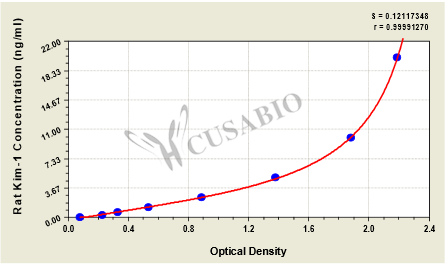
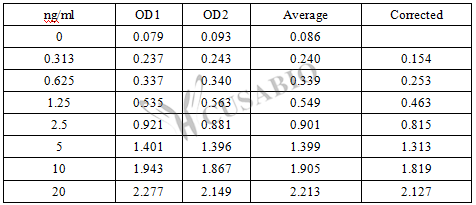
Detect Range: 0.313 ng/mL-20 ng/mL
Sensitivity: 0.228 ng/mL
Trial Size:
24T ELISA Kit Trial Size (Only USD$150/ kit)
* Sample kit cost can be deducted as a $30 credit for each 96-assay kit of the same analyte and brand you subsequently purchase within six months until depleted. More details >>
Interested in a trial size? Please leave a message below.

For inquiries on large quantities or another requirements
Send an Inquiry
Start an on-line Chat
Online ordering is currently available for U.S. customers only. For orders outside the U.S., please kindly submit an inquiry or start a chat with us.
Promotion

Product Details

Target Name
hepatitis A virus cellular receptor 1
Alternative Names
Havcr1; Kim1; Hepatitis A virus cellular receptor 1 homolog; HAVcr-1; Kidney injury molecule 1; KIM-1; T cell immunoglobulin and mucin domain-containing protein 1; TIMD-1; CD antigen CD365
Abbreviation
Kim-1
Uniprot NO.
Species
Rattus norvegicus (Rat)
Sample Type
serum, plasma, urine
Detection Range
0.313 ng/mL-20 ng/mL
Sensitivity
0.228 ng/mL
Assay Time
1-5h
Sample Loading Volume
50-100ul
Detection Wavelength
450 nm
Research Area
Immunology
Assay Principle
quantitative
The tag type will be determined during production process. If you have specified tag type, please tell us and we will develop the specified tag preferentially.
Measurement
Sandwich
Storage
Store at 2-8°C. Please refer to protocol.
Shelf Life
6 months
Lead Time
3-5 working days after you place the order, and it takes another 3-5 days for delivery via DHL or FedEx.
Note: All of our proteins are default shipped with normal blue ice packs, if you request to ship with dry ice, please communicate with us in advance and extra fees will be charged.
Precision

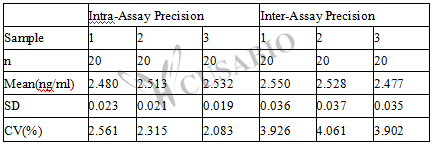
Intra-assay Precision (Precision within an assay): CV%<8%
Three samples of known concentration were tested twenty times on one plate to assess.
Inter-assay Precision (Precision between assays): CV%<10%
Three samples of known concentration were tested in twenty assays to assess.
Linearity

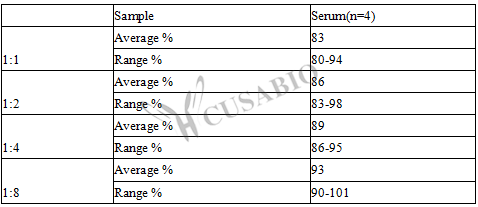
To assess the linearity of the assay, samples were spiked with high concentrations of Rat Kim-1 in various matrices and diluted with the Sample Diluent to produce samples with values within the dynamic range of the assay.
Typical Data

These standard curves are provided for demonstration only. A standard curve should be generated for each set of samples assayed.

Troubleshooting and FAQs
Description

CUSABIO's rat KIM-1 ELISA kit is an in vitro enzyme-linked immunosorbent assay for the quantitative determination of KIM-1 concentrations in serum, plasma, and urine. This assay exclusively recognizes rat KIM-1. The quantitative sandwich ELISA technique of this kit is based on KIM-1 antibody-KIM-1 antigen interactions and an HRP colorimetric detection system to detect the levels of KIM-1 in samples. The intensity of the color is positively proportional to the amount of bound KIM-1 in the initial step.

KIM-1 is a phosphatidylserine receptor that mediates the phagocytosis of apoptotic bodies and oxidized lipids. It is involved in HAV infections, autoimmunity, immune tolerance, and atopic diseases. In normal conditions, KIM-1 is expressed at low levels in the kidney and other organs, but its expression is remarkably increased following renal injury, especially after ischemia-reperfusion injury, enabling them to engulf apoptotic and necrotic cells during acute kidney injury (AKI). The urinary KIM-1 level is tightly linked to its tissue level and correspondingly related to kidney tissue damage. KIM-1 is a possible long-term renal outcome predictor in addition to being an early biomarker of AKI.


Customer Reviews and Q&A

 Customer Reviews

Citations

Target Background

Function(From Uniprot)
May play a role in T-helper cell development and the regulation of asthma and allergic diseases. Receptor for TIMD4. May play a role in kidney injury and repair.
Gene References into Functions
  1. High KIM1 expression is associated with decreased proximal tubular epithelial cell function. PMID:29045706
  2. urinary KIM1 may be a valuable biomarker for the early diagnosis of obstructive AKI, and the use of a colloidal gold immunochromatographic strip may be a promising method for the rapid detection of urinary KIM1. PMID:28075469
  3. Results show that in contrast to other known molecules indicating renal injury and/or repair mechanisms, the chronic renal expression of Kim-1 is strictly confined to proximal cysts. PMID:27231899
  4. blood biomarker that specifically reflects acute and chronic kidney injury PMID:24904085
  5. Ischemic postconditioning can attenuate the renal ischemia reperfusion injury and downregulate the expression of Kim-1. PMID:22898836
  6. These studies are the first direct demonstration of regulation of KIM-1 in response to oxalate exposure in renal epithelial cells in vitro and in vivo. PMID:22984472
  7. The most sensitive, noninvasive biomarkers of HCBD-induced renal toxicity in Hanover Wistar rats were urinary alpha-GST and KIM-1. PMID:21905055
  8. The Kim1 gene is regulated in an epigenetic fashion under conditions of nephrotoxicity. PMID:20660082
  9. Results show Kim-1 outperforms SCr, BUN and urinary NAG in multiple rat models of kidney injury. PMID:20458318
  10. KIM-1 as a sensitive molecular marker of different levels of tubular injury PMID:20305092
  11. Urinary Kim-1 serve as a noninvasive, rapid, sensitive, reproducible method to detect early kidney injury in pathophysiological studies and in preclinical drug development studies for risk-benefit profiling of pharmaceutical agents. PMID:16174863
  12. These results implicate involvement of kidney injury molecule 1 (Kim-1) in the pathogenesis of proteinuria-induced renal damage/repair. Urinary Kim-1 levels may serve as a marker of proteinuria-induced renal damage. PMID:16467126
  13. Kim-1 is associated with development of renin-angiotensin system-mediated renal damage PMID:16896183
  14. Urinary Kim-1 and kidney Kim-1/Havcr1 expression appear to be sensitive and tissue-specific biomarkers that will improve detection of early acute kidney injury PMID:17934191
  15. Data demonstrate that injured kidney epithelial cells assumed attributes of endogenous phagocytes, and that KIM-1 was directly responsible for phagocytosis in cultured primary rat tubule epithelial cells and also porcine and canine epithelial cell lines. PMID:18414680
  16. on longitudinal follow-up during antiproteinuric treatment increased renal Kim-1 expression is reversible in proportion to proteinuria reduction, likely reflecting reversibility of early tubular injury PMID:19225054
  17. Cadmium-induced increase in Kim-1 expression occurs before the onset of necrosis and at a point where there is only a modest level of apoptosis in the proximal tubule. PMID:19371613
  18. Kim-1 is a sensitive biomarker of the early stages of Cadmium-induced proximal tubule injury. PMID:19371616
  19. Dipsticks can provide a sensitive and accurate detection of Havcr1. PMID:19387469
  20. Kim-1 is a promising novel marker for the early, organ specific and noninvasive detection of brain death-induced donor kidney damage. PMID:19522876

Show More

Hide All

Subcellular Location
Membrane; Single-pass type I membrane protein.
Protein Families
Immunoglobulin superfamily, TIM family
Tissue Specificity
Expressed at a low level in normal kidney but are increased dramatically in postischemic kidney. Expressed in proliferating bromodeoxyuridine-positive and dedifferentiated vimentin-positive epithelial cells in regenerating proximal tubules.
Database Links
icon of phone
Call us
301-363-4651 (Available 9 a.m. to 5 p.m. CST from Monday to Friday)
icon of address
Address
No. 269, Shendun 5th Road, Donghu Hi-Tech Development Area, Hubei Province, 430206, P.R.China
icon of social media
Join us with

Subscribe newsletter

Leave a message

* To protect against spam, please pass the CAPTCHA test below.
CAPTCHA verification
© 2007-2025 CUSABIO TECHNOLOGY LLC All rights reserved. 鄂ICP备15011166号-1
Select 0 Products