* Sample kit cost can be deducted as a $30 credit for each 96-assay kit of the same analyte and brand you subsequently purchase within six months until depleted. More details >>
Interested in a trial size? Please leave a message below.

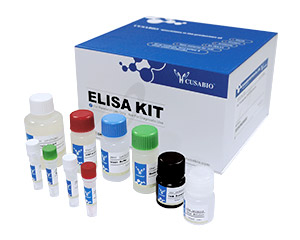
This kit quantitatively measures interleukin-13 (IL-13) in mouse serum, plasma, cell culture supernates, and tissue homogenates, supporting immunological research into type 2 immune responses. Because IL-13 is often produced at low picomolar levels by Th2 cells, ILC2s, and mast cells — and its detection is critical for distinguishing Th2-skewed inflammation from other immune pathways — this kit is designed to capture the narrow concentration window typical of murine IL-13 biology.
Detection Range: The 7.8–500 pg/mL range spans the concentrations expected in mouse BAL fluid, stimulated splenocyte supernates, and serum from allergen-challenged or helminth-infected animals. Most in vivo samples fall within this window without dilution, though strongly stimulated in vitro cultures may require pre-dilution.
Sensitivity: At 3.9 pg/mL, the kit detects IL-13 in unstimulated or early-phase samples where this cytokine is present at baseline levels, including naïve lung homogenates and resting ILC2 cultures.
Sample Compatibility: Validation across serum, plasma, supernates, and tissue homogenates allows researchers to correlate systemic IL-13 levels with local tissue production and cellular output within a single experimental model.
Assay Efficiency: A standout advantage over conventional ELISA kits is its ultra-low sample loading requirement: the kit only needs 50 µL of sample, which can be diluted 2-fold to use just 25 µL, making it exceptionally valuable for studies where sample volume is severely limited, such as with small animal models or precious clinical specimens. The 50 µL sample volume and 3.5-hour protocol accommodate limited-volume specimens such as mouse BAL fluid and neonatal samples, enabling same-day results from primary cell assays.
This kit directly supports studies in allergic asthma, pulmonary fibrosis, and anti-helminth immunity.





