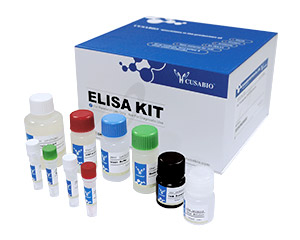
Mouse C-Reactive Protein,CRP ELISA Kit

CSB-E07923m(1)
Size:
96T,5×96T,10×96T
96T,5×96T,10×96T
Pls inquire
Quantity:
Sample Types: serum, plasma, tissue homogenates
Detect Range: 5 ng/mL-4000 ng/mL
Sensitivity: 5 ng/mL
For inquiries on large quantities or another requirements
Send an Inquiry
Start an on-line Chat
Orders can only be placed from within the U.S.

Product Details

Alternative Names
Crp ELISA Kit; Ptx1C-reactive protein ELISA Kit
Abbreviation
CRP
Uniprot NO.
Species
Mus musculus (Mouse)
Sample Type
serum, plasma, tissue homogenates
Detection Range
5 ng/mL-4000 ng/mL
Sensitivity
5 ng/mL
Assay Time
1-5h
Sample Volume
50-100ul
Detection Wavelength
450 nm
Research Area
Immunology
Assay Principle
quantitative
Measurement
Sandwich
Shelf Life
6 months
Lead Time
3-5 working days after you place the order, and it takes another 3-5 days for delivery via DHL or FedEx.
Troubleshooting and FAQs
Datasheet & COA
Please contact us to get it.
Description

This Mouse CRP ELISA Kit was designed for the quantitative measurement of Mouse CRP protein in serum, plasma, tissue homogenates. It is a Sandwich ELISA kit, its detection range is 5 ng/mL-4000 ng/mL and the sensitivity is 5 ng/mL.


Customer Reviews and Q&A

 Customer Reviews

Target Background

Function
Displays several functions associated with host defense: it promotes agglutination, bacterial capsular swelling, phagocytosis and complement fixation through its calcium-dependent binding to phosphorylcholine. Can interact with DNA and histones and may scavenge nuclear material released from damaged circulating cells.
Gene References into Functions
  1. CRP is pathogenic in type-2 diabetes (T2DN). CRP may promote CD32b- NF-kappaB signaling to mediate renal inflammation; whereas, CRP may enhance renal fibrosis in T2DN via CD32b-Smad3-mTOR signaling. PMID:27221338
  2. FcgammaRIIb and FcgammaRIII are involved in the CRP-induced expression of MMPs and TIMP-1 and the CRP-induced phosphorylation of p38, whereas the FcgammaR-independent pathway may regulate the CRP-induced MMP-11 expression and the CRP-induced ERK1/2 phosphorylation. PMID:28539825
  3. C-reactive protein may promote acute kidney injury by impairing tubular epithelial cell regeneration via the CD32-Smad3-p27-driven inhibition of the CDK2/cyclin E complex. PMID:27470679
  4. These results suggested that CRP/oxidized low density lipoprotein/beta 2-Glycoprotein I complexes may induce lipid accumulation and inflammation in macrophages via the p38/MAPK and NFkappaB signaling pathways. PMID:27512978
  5. these data unexpectedly identify CBS as the major recognition site of mCRP and suggest that this motif may be exploited to tune the proinflammatory actions of mCRP. PMID:26907682
  6. CRP decreased adiponectin expression and multimerization, while CRP-induced decline in adiponectin might be mediated through the PI3K/Akt pathway. PMID:26812237
  7. mCRP may be responsible for promoting dementia after ischaemia and mCRP clearance could inform therapeutic avenues to reduce the risk of future dementia. PMID:26335098
  8. Effects of C-Reactive Protein on the Cardiac Differentiation of Mouse Embryonic Stem Cells PMID:26328491
  9. These data indicated that CRP may have a direct role on osteoclast and osteoblast differentiation via toll-like receptor signaling pathways. PMID:26687448
  10. Data suggest that serum amyloid P (SAP) activates CD209 DC-SIGN to regulate the innate immune system differently from C-reactive protein (CRP), and that DC-SIGN is a target for antifibrotics. PMID:26106150
  11. the acute phase protein C-reactive protein (CRP), a ligand for Fc receptors on phagocytes, enhances antibody-mediated platelet destruction by phagocytes in vivo PMID:25548320
  12. CRP has therapeutic potential against cancer through decreasing the accumulation of M2 macrophages and angiogenesis within tumors. PMID:25088786
  13. Orphan nuclear receptor Errgamma induces C-reactive protein gene expression through induction of ER-bound Bzip transmembrane transcription factor CREBH. PMID:24466039
  14. The interactions of CRP and the BBB are a two-phase process, with increased paracellular permeability at a high dose that enables its entry into the CNS and serves to induce reactive gliosis and impair CNS function. PMID:23018453
  15. In mice with photochemically induced thrombosis, acrolein produced at the locus of infarction increased the level of IL-6 and then CRP in plasma. PMID:23763486
  16. CRP directly inhibits tumoral lymphangiogenesis and lymph node metastasis in mice. PMID:23859309
  17. Which processes in glucose homeostasis are altered by CRP? Data suggest that CRP attenuates insulin-induced skeletal muscle blood flow; CRP contributes to insulin resistance via IgG receptor IIB-mediated inhibition of glucose delivery to muscle. PMID:23069625
  18. CRP is not only a biomarker, but also a mediator in DKD. PMID:21744073
  19. C-reactive protein promotes acute renal inflammation and fibrosis in unilateral ureteral obstructive nephropathy in mice. PMID:21383672
  20. These findings reveal a novel nutrient-dependent interaction between Sirt1 and HNF-1alpha which results in regulation of Crp expression. PMID:21176092
  21. Studies show that CRP itself may have a pathogenic role in the development of pressure overload-induced cardiac remodeling, possibly through enhanced inflammation and oxidative stress. PMID:21220701
  22. No reduction of atherosclerosis in C-reactive protein (CRP)-deficient mice. PMID:21149301
  23. Modified and natural C-reactive protein have opposite effects on atherosclerosis in apolipoprotein E-deficient mice. PMID:16087790
  24. the contribution of CRP's ability of activating the classical pathway of complement in the protection of mice from lethal infection with virulent Streptococcus pneumoniae type 3 PMID:16547275
  25. nCRP can facilitate cardiovascular disease through impairment of endothelium-dependent vasoreactivity, in a manner that involves increased iNOS activity and a potential for increased peroxynitrite formation. PMID:17669410
  26. the response to vascular injury provoked by human C-Reactive Protein in ovariectomized C-reactive protein transgenic mice depends on Fc gamma RI and probably requires its expression by F4/80+ cells PMID:18063701
  27. In vivo analyses revealed significant increases in TF expression and decreases in TFPI expression in carotid arteries of CRP-Tg mice versus WT mice. PMID:18276908
  28. CRP plays a crucial role in the induction, amplification, and prolongation of inflammatory processes, including atherosclerotic lesions PMID:18402807
  29. C-reactive protein has a role in impaired endothelial function PMID:18433756

Show More

Hide All

Subcellular Location
Secreted.
Protein Families
Pentraxin family
Tissue Specificity
Found in plasma.
Database Links
icon of phone
Call us
301-363-4651 (Available 9 a.m. to 5 p.m. CST from Monday to Friday)
icon of address
Address
7505 Fannin St., Ste 610, Room 7 (CUBIO Innovation Center), Houston, TX 77054, USA
icon of social media
Join us with

Subscribe newsletter

Leave a message

* To protect against spam, please pass the CAPTCHA test below.
CAPTCHA verification
© 2007-2025 CUSABIO TECHNOLOGY LLC All rights reserved. 鄂ICP备15011166号-1
Select 0 Products