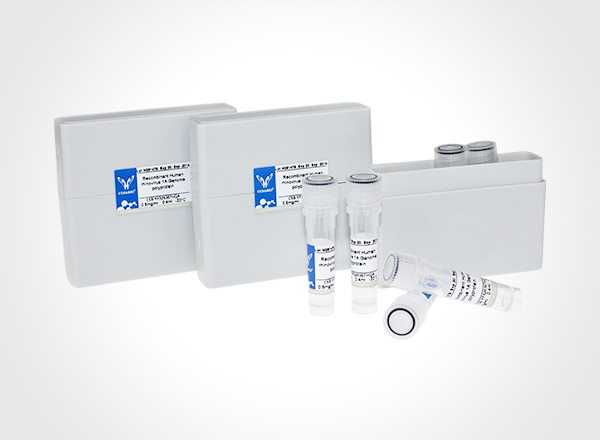
Cd86; T-lymphocyte activation antigen CD86; Activation B7-2 antigen; Early T-cell costimulatory molecule 1; ETC-1; CD antigen CD86
Species
Mus musculus (Mouse)
Source
in vitro E.coli expression system
Expression Region
24-309
Target Protein Sequence
VSVETQAYFNGTAYLPCPFTKAQNISLSELVVFWQDQQKLVLYEHYLGTEKLDSVNAKYLGRTSFDRNNWTLRLHNVQIKDMGSYDCFIQKKPPTGSIILQQTLTELSVIANFSEPEIKLAQNVTGNSGINLTCTSKQGHPKPKKMYFLITNSTNEYGDNMQISQDNVTELFSISNSLSLSFPDGVWHMTVVCVLETESMKISSKPLNFTQEFPSPQTYWKEITASVTVALLLVMLLIIVCHKKPNQPSRPSNTASKLERDSNADRETINLKELEPQIASAKPNAE
Note: The complete
sequence may include tag sequence, target protein sequence, linker sequence and extra sequence that is
translated with the protein sequence for the purpose(s) of secretion, stability, solubility, etc.
If the exact amino acid sequence of this recombinant protein is critical to your application,
please explicitly request the full and complete sequence of this protein before ordering.
Protein Length
Full Length of Mature Protein
Tag Info
N-terminal 10xHis-tagged
The tag type will be determined during production process. If you have specified tag type, please tell us and we will develop the specified tag preferentially.
Storage Condition
Store at -20°C, for extended storage, conserve at -20°C or -80°C.
Shelf Life
The shelf life is related to many factors, storage state, buffer ingredients, storage temperature and the stability of the protein itself.
Generally, the shelf life of liquid form is 6 months at -20°C/-80°C. The shelf life of lyophilized form is 12 months at -20°C/-80°C.
Notes
Repeated freezing and thawing is not recommended. Store working aliquots at 4°C for up to one week.
Receptor involved in the costimulatory signal essential for T-lymphocyte proliferation and interleukin-2 production, by binding CD28 or CTLA-4. May play a critical role in the early events of T-cell activation and costimulation of naive T-cells, such as deciding between immunity and anergy that is made by T-cells within 24 hours after activation. Also involved in the regulation of B cells function, plays a role in regulating the level of IgG(1) produced. Upon CD40 engagement, activates NF-kappa-B signaling pathway via phospholipase C and protein kinase C activation.
Gene References into Functions
Our results reveal a role for B7-2 as obligatory receptor for superantigens. B7-2 homodimer interface mimotopes prevent superantigen lethality by blocking the superantigen-host costimulatory receptor interaction.PMID:27708164
results suggest that the TLR2-p38-CD86 signaling pathway plays a vital role in inflammation associated with burn injuryPMID:28460187
role with CD40 in primary germinal center generation of distinct antigen-presenting cellsPMID:28768709
B7.2 expressed on skin CD8(+) T cells supports the survival of Tregs, likely through interaction with its receptor CTLA-4, which is highly expressed on skin Tregs.PMID:27183612
Low CD86 expression is associated with B16 melanoma.PMID:26485753
Local administration of CD86 siRNA during the effector phase ameliorates asthma phenotypes.PMID:25344652
Meningococcal capsular polysaccharide-loaded vaccine nanoparticles induce expression of CD86.PMID:24981893
novel function of CTLA4Ig in tumor immunity and suggest that CD86 on NK cells is an activating receptor and closely involved in the CTLA4Ig-mediated anti-tumor response.PMID:24349559
CD4(+) NKG2D(+) T cells induce NKG2D down-regulation in natural killer cells in CD86-RAE-1epsilon transgenic mice.PMID:24708417
CD86 expression has functional consequences for the magnitude of CD4 T cell responses both in vitro and in vivo. These data pinpoint CD86 upregulation as an additional mechanism by which IL-21 can elicit immunomodulatory effects.PMID:24470500
the results presented here demonstrate that recruitment and expression of MHC-II, CD80, CD86, PDL1, and PD-L2 in M of peritoneal cavity in T. crassiceps early at infection is associated to the sex of the host.PMID:23533995
Combinatorial signaling through TLR-2 and CD86 augments B-cell receptor-free activation and differentiation of resting B cells.PMID:23365665
Phb1/2 and the CD86 cytoplasmic domain cooperate to mediate CD86 signaling in a B cell through differential phosphorylation of distal signaling intermediates required to increase IgG1.PMID:23241883
In response to Pseudomonas infection, mobilized neutrophils upregulate and provide B7 trans-costimulatory signals to T cells, preventing established lung allograft tolerance.PMID:23018463
Data indicate that most toll-like receptor (TLR) ligands induced comparable upregulation of co-stimulatory molecules CD40, CD86 and B7H1 on young and aged conventional dendritic cells (cDC).PMID:22231652
Interaction between CD28 and B7 molecules is required for regulation of splenic and bone marrow plasma cells.PMID:22908331
B7 and CD28 interactions promote the proliferation and survival of murine gammadelta T cells following Plasmodium infection.PMID:22732586
Yeast-derived beta-glucan lacks cytotoxic effects towards B-lymphoma cells but up-regulation of CD86 suggests maturation of the cells via dectin-1 by the carbohydratePMID:22199280
Ubiquitin-mediated regulation of CD86 protein expression by the ubiquitin ligase membrane-associated RING-CH-1 (MARCH1).PMID:21896490
Parasite-induced B7-2 is dependent on Jun N-terminal protein kinase (JNK) but not extracellular signal-regulated kinase or p38 signaling; its expression on human peripheral blood monocytes is dependent on JNK signaling.PMID:21911468
These studies suggest that ubiquitination serves as an important mechanism by which dendritic cells control CD86 expressionPMID:21849678
T-cell costimulation via B7 ligands (CD80 and CD86) is essential for development of experimental hypertension; inhibition of this process could have therapeutic benefit in the treatment of this disease.PMID:21126972
CD86 is critical for naive CD4+ T cell activation in vivo and differentiation into either a Th1 or Th2 phenotype.PMID:11937530
B7-2 in deleting pathogenic autoreactive T cells in the thymus.PMID:11956287
B cell-associated B7-2 expression is regulated by stimulation of the B cell receptor and/or the beta 2-adrenergic receptor in vivo and in vitro.PMID:12055247
Activation-induced up-regulation of B7-2 on antigen presenting cells leads to increased CD28 signaling and a commitment to cross-priming of CD4-dependent cytotoxic T lymphocytes.PMID:12370335
Role of CD86 in enhancing cell-cycle progression and survival of CD4(+) T lymphocytes after activation.PMID:12429713
fate of LACK-specific CD4+ T cells in Leishmania-infected BALB/c mice which have been treated or not with anti-CD86 mAbPMID:12516542
Although CD86 plays a critical role in T-dependent IgG and IgE responses of B cells to in vivo antigenic challenge, direct CD86 signaling of a B cell is not essential for its efficient activation.PMID:12517941
Stimulation by CD86, either alone or together with beta 2-AR on a CD40ligand/IL-4 activated B cell, increases both the level and the rate of mature IgG1 transcription without affecting transcript stability or class switching to IgG1.PMID:12734361
B7-2 and B7-1 have overlapping functions in the endogenous superantigen-mediated deletion of TCR V beta 11- or V beta 12-bearing thymocytes.PMID:12759417
B7-2 overexpressed on transgenic donor T cells mediates reduced alloresponsiveness and mortality in graft-vs-host disease compared with wild-type T cells.PMID:14688306
stimulation of matured bone marrow dendritic cells with anti-CD80 monoclonal antibody up-regulated CD86 levels on the cell surface Coculture of these cells with naive, allogeneic T cells downregulated Th1 responses and upregulated suppressor responsesPMID:14966193
T cells activated in the presence of parenchymal cells from the eye express B7-2 in a manner that equips them to suppress bystander T cells. Thus, B7-2 expression on T cells participates in their eventual ability to function as regulators in vitro.PMID:15034031
increased surface expression on Mycobacterium tuberculosis secretory antigen (MTSA)activated dendritic cells after stimulation with M. tuberculosis cell extract downregulates the Th1 cells response to Mycobacterial antigensPMID:15116295
B7-2 plays a critical role in priming pancreatic islet-reactive CD4 T cells: B7-2 deficiency causes a profound diminishment in the generation of spontaneously activated CD4 T cells and islet-specific CD4 T cell expansion.PMID:15356107
Increased B7-2 expression on islet-infiltrated nonobese diabetic (NOD) mouse B cells is associated with increased T cell costimulation and the development of inflammatory insulitis in NOD mice.PMID:15634886
CD86 plays a critical role in induction of anterior chamber-associated immune deviation.PMID:15778288
Could not be expressed on keratinocyte stem cells.PMID:15808622
upregulated in SV5 infection of dendritic cells in both BALB/c and C57BL/6 mice strainsPMID:15919909
Tolerance may be induced by B7-driven negative regulatory signaling, but tolerance is maintained by a lack of signal 2 (B7.2), because expression of B7 is eventually lost in vivo.PMID:16002674
CD86 is protective in glomerulonephritis by enhancing Th2 and attenuating Th1 responsesPMID:16014035
CD86 is not required for oral tolerization.PMID:16439314
CD86 induces a previously unknown signal transduction pathway that regulates the level of B cell gene expression and activity proximal to NF-kappa B activation.PMID:16709832
B7-1 and B7-2 differently contribute to the development of T cell-mediated experimental allergic conjunctivitis during the induction and effector phasesPMID:17109973
Data indicate that anti-B7-2 monoclonal antibody B7 molecules can trigger innate-effector responses in macrophages by activating NF-kappaB, and are not only essential for induction of adaptive immune responses but also play roles in innate immunity.PMID:17314080
B7-2 promotes the generation of a mature antigen-presenting cell (APC) repertoire and promotes APC function and survival.PMID:17475851
Either CD80- or CD86-costimulation is indispensable for induction of oral sensitization and IgE-mediated hypersensitivity to peanut, with CD86 being the most important ligand in inducing peanut extract-specific IgE responses.PMID:17513738
CD86 plays a key role in regulating the level of B-cell IgG1 produced in vitro and in vivo.PMID:17641017
while CD86 does not stimulate an initial response as strongly as CD80, there is greater sustained activity that is seen even in the absence of continued costimulationPMID:17947667
Show
More
Hide
All
Subcellular Location
Cell membrane; Single-pass type I membrane protein.