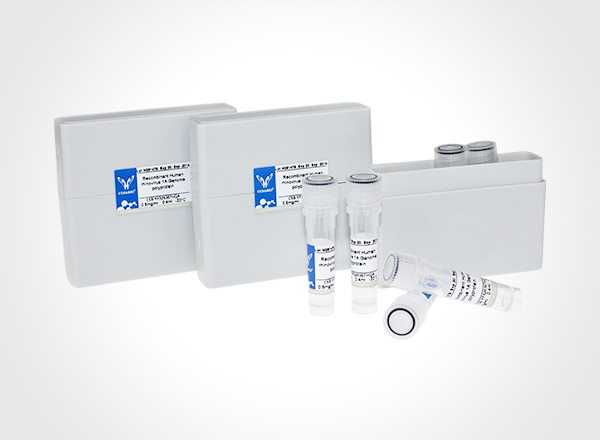
Recombinant Mouse Duffy antigen/chemokine receptor (Darc)

Code: CSB-CF889540MO
Size:
20μg
20μg100μg
US$4994
Quantity:
Express system: in vitro E.coli expression system
Species: Mus musculus (Mouse)
Tag Info: N-terminal 10xHis-tagged
For inquiries on large quantities or another requirements
Send an Inquiry
Start an on-line Chat
Online ordering is currently available for U.S. customers only. For orders outside the U.S., please kindly submit an inquiry or start a chat with us.

Product Details

Target Names
Ackr1
Uniprot NO.
Species
Mus musculus (Mouse)
Source
in vitro E.coli expression system
Expression Region
1-334
Target Protein Sequence
MGNCLYPVETLSLDKNGTQFTFDSWNYSFEDNYSYELSSDYSLTPAAPCYSCNLLDRSSL PFFMLTSVLGMLASGSILFAILRPFFHWQICPSWPILAELAVGSALFSIAVPILAPGLHS AHSTALCNLGYWVWYTSAFAQALLIGCYACLNPRLNIGQLRGFTLGLSVGLWGAAALSGL PVALASDVYNGFCTFPSSRDMEALKYTHYAICFTIFTVLPLTLLAAKGLKIALSKGPGPW VSVLWIWFIFWWPHGMVLIFDALVRSKTVLLYTCQSQKILDAMLNVTEALSMLHCVATPL LLALFCHQTTRRSLSSLSLPTRQASQMDALAGKS
Note: The complete sequence may include tag sequence, target protein sequence, linker sequence and extra sequence that is translated with the protein sequence for the purpose(s) of secretion, stability, solubility, etc.
If the exact amino acid sequence of this recombinant protein is critical to your application, please explicitly request the full and complete sequence of this protein before ordering.
Protein Length
full length protein
Tag Info
N-terminal 10xHis-tagged
The tag type will be determined during production process. If you have specified tag type, please tell us and we will develop the specified tag preferentially.
Troubleshooting and FAQs
Datasheet & COA
Please contact us to get it.

Customer Reviews and Q&A

 Customer Reviews
 Q&A
Q:

1. Could we tag the recombinant protein with Biotin? 2. Ackr1 is a transmembrane protein, did Cusabio have any test to verify the structure of the protein post translation?

A:

We can try the following 2 proteins:

Recombinant Mouse Duffy antigen/chemokine receptor (Darc), Biotin conjugated
CSB-CF889540MO-A >> in vitro E.coli expression system
Expression Region: 1-334 aa (Full Length)
Tag information: Tag type will be determined during the manufacturing process.
Target Protein Sequence:
MGNCLYPVETLSLDKNGTQFTFDSWNYSFEDNYSYELSSDYSLTPAAPCYSCNLLDRSSLPFFMLTSVLGMLASGSILFAILRPFFHWQICPSWPILAELAVGSALFSIAVPILAPGLHSAHSTALCNLGYWVWYTSAFAQALLIGCYACLNPRLNIGQLRGFTLGLSVGLWGAAALSGLPVALASDVYNGFCTFPSSRDMEALKYTHYAICFTIFTVLPLTLLAAKGLKIALSKGPGPWVSVLWIWFIFWWPHGMVLIFDALVRSKTVLLYTCQSQKILDAMLNVTEALSMLHCVATPLLLALFCHQTTRRSLSSLSLPTRQASQMDALAGKS
Uniprot Link: https://www.uniprot.org/uniprotkb/Q9QUI6

MP-VLPS can be used as N-terminal Avi-tag as an vitro biomotinization:
Recombinant Mouse Duffy antigen/chemokine receptor (Darc)-VLPs, Biotinylated
CSB-MP889540MO-B >> Mammalian cell
Expression Region: 1-334 aa (Full Length)
Tag information:Tag type will be determined during the manufacturing process.
Target Protein Sequence:
MGNCLYPVETLSLDKNGTQFTFDSWNYSFEDNYSYELSSDYSLTPAAPCYSCNLLDRSSLPFFMLTSVLGMLASGSILFAILRPFFHWQICPSWPILAELAVGSALFSIAVPILAPGLHSAHSTALCNLGYWVWYTSAFAQALLIGCYACLNPRLNIGQLRGFTLGLSVGLWGAAALSGLPVALASDVYNGFCTFPSSRDMEALKYTHYAICFTIFTVLPLTLLAAKGLKIALSKGPGPWVSVLWIWFIFWWPHGMVLIFDALVRSKTVLLYTCQSQKILDAMLNVTEALSMLHCVATPLLLALFCHQTTRRSLSSLSLPTRQASQMDALAGKS
Uniprot Link: https://www.uniprot.org/uniprotkb/Q9QUI6

Please note: As for VLP proteins:
According to our current experience, VLP proteins are not suitable for ligand interaction because there are other unrelated host membrane proteins on the VLP envelope, which would cause strong background interference when interacting with ligands.
If it is used for SPR/BLI and other applications, there are certain requirements for the chip and experimental protocol.
① The VLP protein has an envelope and requires a chip that can bind vesicles (for example: Vesicle Capture (VesCap) chip), conventional CM5, NTA , SA chip is not suitable,
② or use a double-antibody cross-concentration strategy, which requires antibodies that recognize two different epitopes of the VLP antigen.
One of the antibodies is first coated on the chip (such as CM5 chip), and then combined with the VLP antigen and then tested with the other antibody. Affinity.
Of course, affinity determination solutions that do not require a chip can also be used, such as: MST

Transmembrane protein, this is futures protein. We did not verify transmembrane conditions. The expression of VLPS protein is the self -assembled nanoprocinone of the virus shell protein. The method of germination is released. During the release process, it will be integrated with the cell membrane (target protein on the cell membrane), and the release of nano particles (that is, VLPS particles) will display transmembrane proteins. Natural conformity.

Target Background

Function(From Uniprot)
Atypical chemokine receptor that controls chemokine levels and localization via high-affinity chemokine binding that is uncoupled from classic ligand-driven signal transduction cascades, resulting instead in chemokine sequestration, degradation, or transcytosis. Also known as interceptor (internalizing receptor) or chemokine-scavenging receptor or chemokine decoy receptor. Has a promiscuous chemokine-binding profile, interacting with inflammatory chemokines of both the CXC and the CC subfamilies but not with homeostatic chemokines. Acts as a receptor for chemokines including CCL2, CCL5, CCL7, CCL11, CCL13, CCL14, CCL17, CXCL5, CXCL6, IL8/CXCL8, CXCL11, GRO, RANTES, MCP-1 and TARC. May regulate chemokine bioavailability and, consequently, leukocyte recruitment through two distinct mechanisms: when expressed in endothelial cells, it sustains the abluminal to luminal transcytosis of tissue-derived chemokines and their subsequent presentation to circulating leukocytes; when expressed in erythrocytes, serves as blood reservoir of cognate chemokines but also as a chemokine sink, buffering potential surges in plasma chemokine levels.
Gene References into Functions
  1. Our findings in mice suggest that DARC alters the severity and resolution of AHR. These findings are complimented by our human analyses in which select DARC SNPs are associated with worse asthma control and symptoms. PMID:28471517
  2. DARC was exquisitely restricted to post-capillary and small collecting venules and completely absent from arteries, arterioles, capillaries, veins, and most lymphatics in every tissue analyzed. Intravital microscopy showed that adhesive leukocyte-endothelial interactions were restricted to DARC(+) venules. DARC was detectable over the entire circumference of V-ECs, but was more concentrated at cell-cell junctions. PMID:28526034
  3. DARC regulates recruitment of osteoclast precursors at the inflammation site PMID:27376530
  4. Nucleated erythroid cells had high expression of ACKR1, which facilitated their direct contact with hematopoietic stem cells. The absence of erythroid ACKR1 altered mouse hematopoiesis including stem and progenitor cells, which ultimately gave rise to phenotypically distinct neutrophils that readily left the circulation, causing neutropenia. PMID:28553950
  5. The DARC/CD234 is expressed on macrophages and stabilizes CD82 on long-term repopulating hematopoietic stem cells, promoting their quiescence. PMID:26996598
  6. Ackr1 deficiency appears to be protective in the ApoE knockout model of atherogenesis, but it is associated with only modest changes in cytokine and chemokine expression as well as T-cell subset frequency and inflammatory macrophage content. PMID:25858253
  7. the results suggest that normal motor function and behavior may partly depend on negative regulation of Purkinje cell activity by Ackr1. PMID:24997773
  8. Darc plays a role in modulating the regulation of inflammatory response to bone injury and that lack of Darc expression promotes cartilage formation in fracture calluses but does not affect bony union or fracture healing at 21 days post-fracture. PMID:24146983
  9. The data showed a role for erythrocyte DARC as a chemokine reservoir and that endothelial DARC contributes to the pathogenesis of experimental autoimmune encephalomyelitis by shuttling chemokines across the blood-brain barrier. PMID:24625696
  10. DARC is crucial for chemokine-mediated leukocyte recruitment in vivo. PMID:20061440
  11. Plasmodium yoelii uses the murine Duffy antigen receptor for chemokines as a receptor for normocyte invasion and an alternative receptor for reticulocyte invasion. PMID:11929753
  12. Vascular endothelial cells may induce Duffy protein to regulate leukocytes and/or chemokine trafficking PMID:12697152
  13. role of the Duffy antigen and glycophorin A as receptors for rodent malaria parasite invasion of erythrocytes PMID:15278442
  14. we have defined the binding domain on the mDuffy protein for Plasmodium yoelii binding to erythrocytes PMID:16386320
  15. DARC functions to clear angiogenic CXC chemokines from the prostate tumor microcirculation PMID:16394268
  16. Darc regulates bone mineral density (BMD)negatively by increasing osteoclast formation. Darc is proposed as a candidate gene for chromosome 1 BMD QTL2. PMID:17416748
  17. Results indicate that endothelial cell overexpression of mDARC increased leukocyte trafficking to the tumor, reduced the growth of blood vessels into the tumor, and reduced the growth rate of melanoma. PMID:17942909
  18. Loss of red cell chemokine scavenging promotes transfusion-related lung inflammation PMID:19064726
  19. renal inflammation developed more rapidly in DARC-deficient mice, without affecting the extent of renal injury at later time points PMID:19498001
  20. DARC regulates lung inflammation by controlling the distribution and presentation of chemokines that bind CXCR2. PMID:19499525

Show More

Hide All

Subcellular Location
Early endosome. Recycling endosome. Membrane; Multi-pass membrane protein.
Protein Families
G-protein coupled receptor 1 family, Atypical chemokine receptor subfamily
Tissue Specificity
Expressed in liver and brain.
Database Links

UNIGENE: Mm.6393

KEGG: mmu:13349

STRING: 10090.ENSMUSP00000045134

icon of phone
Call us
301-363-4651 (Available 9 a.m. to 5 p.m. CST from Monday to Friday)

icon of address
Address
No. 269, Shendun 5th Road, Donghu Hi-Tech Development Area, Hubei Province, 430206, P.R.China
icon of social media
Join us with

Subscribe newsletter

Leave a message

* To protect against spam, please pass the CAPTCHA test below.
CAPTCHA verification
© 2007-2025 CUSABIO TECHNOLOGY LLC All rights reserved. 鄂ICP备15011166号-1
Select 0 Products


