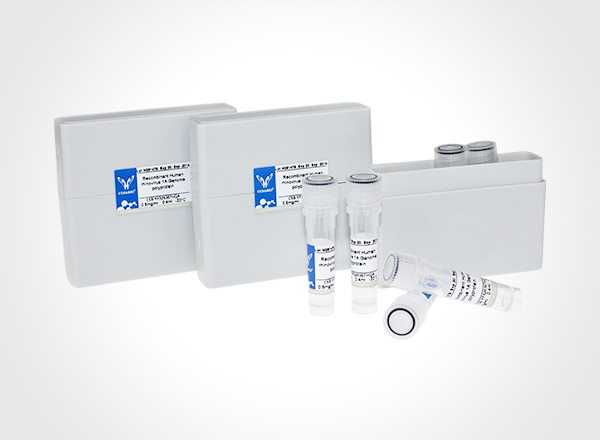
Slc3a2; Mdu1; 4F2 cell-surface antigen heavy chain; 4F2hc; Solute carrier family 3 member 2; CD antigen CD98
Species
Mus musculus (Mouse)
Source
in vitro E.coli expression system
Expression Region
1-526
Target Protein Sequence
MSQDTEVDMKDVELNELEPEKQPMNAADGAAAGEKNGLVKIKVAEDETEAGVKFTGLSKEELLKVAGSPGWVRTRWALLLLFWLGWLGMLAGAVVIIVRAPRCRELPVQRWWHKGALYRIGDLQAFVGRDAGGIAGLKSHLEYLSTLKVKGLVLGPIHKNQKDEINETDLKQINPTLGSQEDFKDLLQSAKKKSIHIILDLTPNYQGQNAWFLPAQADIVATKMKEALSSWLQDGVDGFQFRDVGKLMNAPLYLAEWQNITKNLSEDRLLIAGTESSDLQQIVNILESTSDLLLTSSYLSNSTFTGERTESLVTRFLNATGSQWCSWSVSQAGLLADFIPDHLLRLYQLLLFTLPGTPVFSYGDELGLQGALPGQPAKAPLMPWNESSIFHIPRPVSLNMTVKGQNEDPGSLLTQFRRLSDLRGKERSLLHGDFHALSSSPDLFSYIRHWDQNERYLVVLNFRDSGRSARLGASNLPAGISLPASAKLLLSTDSARQSREEDTSLKLENLSLNPYEGLLLQFPFVA
Note: The complete
sequence may include tag sequence, target protein sequence, linker sequence and extra sequence that is
translated with the protein sequence for the purpose(s) of secretion, stability, solubility, etc.
If the exact amino acid sequence of this recombinant protein is critical to your application,
please explicitly request the full and complete sequence of this protein before ordering.
Protein Length
full length protein
Tag Info
N-terminal 10xHis-tagged
The tag type will be determined during production process. If you have specified tag type, please tell us and we will develop the specified tag preferentially.
Buffer
Lyophilized from Tris/PBS-based buffer, 6% Trehalose, pH 8
Storage Condition
The shelf life is related to many factors, storage state, buffer ingredients, storage temperature and the stability of the protein itself. Generally, the shelf life of liquid form is 6 months at -20°C/-80°C. The shelf life of lyophilized form is 12 months at -20°C/-80°C.
Shelf Life
The shelf life is related to many factors, storage state, buffer ingredients, storage temperature and the stability of the protein itself.
Generally, the shelf life of liquid form is 6 months at -20°C/-80°C. The shelf life of lyophilized form is 12 months at -20°C/-80°C.
Notes
Repeated freezing and thawing is not recommended. Store working aliquots at 4°C for up to one week.
Component of several heterodimeric complexes involved in amino acid transport. The precise substrate specificity depends on the other subunit in the heterodimer. The complexes function as amino acid exchangers. The homodimer functions as sodium-independent, high-affinity transporter that mediates uptake of large neutral amino acids such as phenylalanine, tyrosine, L-DOPA, leucine, histidine, methionine and tryptophan. The heterodimer formed by SLC3A2 and SLC7A6 or SLC3A2 and SLC7A7 mediates the uptake of dibasic amino acids. The heterodimer with SLC7A5/LAT1 mediates the transport of thyroid hormones triiodothyronine (T3) and thyroxine (T4) across the cell membrane. The heterodimer with SLC7A5/LAT1 is involved in the uptake of toxic methylmercury (MeHg) when administered as the L-cysteine or D,L-homocysteine complexes. The heterodimer with SLC7A5/LAT1 is involved in the uptake of leucine. When associated with LAPTM4B, the heterodimer with SLC7A5/LAT1 is recruited to lysosomes to promote leucine uptake into these organelles, and thereby mediates mTORC1 activation. The heterodimer with SLC7A5/LAT1 may play a role in the transport of L-DOPA across the blood-brain barrier. The heterodimer formed by SLC3A2 and SLC7A5/LAT1 or SLC3A2 and SLC7A8/LAT2 is involved in the cellular activity of small molecular weight nitrosothiols, via the stereoselective transport of L-nitrosocysteine (L-CNSO) across the transmembrane. Together with ICAM1, regulates the transport activity of SLC7A8/LAT2 in polarized intestinal cells by generating and delivering intracellular signals. Required for targeting of SLC7A5/LAT1 and SLC7A8/LAT2 to the plasma membrane and for channel activity. Plays a role in nitric oxide synthesis in human umbilical vein endothelial cells (HUVECs) via transport of L-arginine. May mediate blood-to-retina L-leucine transport across the inner blood-retinal barrier.
Gene References into Functions
Cell metabolism regulates integrin mechanosensing via an SLC3A2-dependent sphingolipid biosynthesis pathway.PMID:30451822
Slc3a2 is required for branched-chain amino-acid-dependent maintenance of Treg cells.PMID:29141216
CD98hc expression in vascular smooth muscle cells contributes to the formation of plaques that are morphologically more stable, and thereby protects against atherothrombosis.PMID:28012647
These results demonstrate a novel fundamental role of LAT1 to support the protein expression of 4F2hc via a chaperone-like function in chorionic trophoblasts.PMID:28320871
CD98 is required for endothelial cell growth. CD98-specific reagents could have a dual anticancer effect: directly by inhibiting tumor cell proliferation and indirectly by preventing tumor angiogenesisPMID:27687603
Taken together, our data indicate that T cell-specific deletion of CD98hc can contribute to the prevention of GvHD development due to the attenuation of lymphocyte migration and by increasing the generation of Treg cells.PMID:26836475
data establish CD98hc as a master protective gene at the cross-road of redox control and AA availability, making it a relevant therapeutic target in cancer.PMID:26945935
ubiquitylation and the resulting downregulation of CD98 can limit cell proliferation and clonal expansion.PMID:26493331
CD98hc mediated this stiffness sensing by increasing Rho kinase (ROCK) activity.PMID:25267066
Mice lacking CD98hc in B cells are protected from experimental autoimmune encephalomyelitis.PMID:25002078
CD98 heavy chain is crucial for T cell-mediated autoimmune colitis. CD98 heavy chain deficiency in T cells is involved in increasing induced regulatory T cells.PMID:24491544
The role of SLC3A2 in keratinocytes is not in cell adhesion but, instead, in cell proliferation and migration through modulating integrin signaling by the Src-RhoA pathway.PMID:23296466
CD98-dependent amino acid transport increased renal tubular epithelial cell proliferation is mediated by Erk and p38 MAPK signaling.PMID:22768207
Investigated the contribution of CD98 to intestinal tumorigenesis in Apc(Min/+) mice and the underlying mechanism of action.PMID:22641098
when the CD98hc deficient macrophages were stimulated with either IFN-gamma/LPS or IL-4, the production of NO(2) or arginase-I decreased in comparison to that observed in the control macrophagesPMID:22624878
T cell-specific deficiency in CD98hc can contribute to cardiac allograft permanent acceptance correlating with the attenuation of lymphocyte migration and by increasing the generation of regulatory T cells.PMID:22588539
Taken together, these observations show that the combination of an inflammatory context and intestinal epithelial cell expression of CD98 affects the regulation of miRNA expression in colonic epithelial and immune cells.PMID:22499850
CD98 expression modulates intestinal homeostasis, inflammation, and colitis-associated cancer in micePMID:21490400
Exogenous putrescine is transported into gastrointestinal tract by caveolin-1- and NOS2-dependent mechanisms. Solute carrier transporter SLC3A2 can function bidirectionally to import putrescine under conditions of low tissue polyamines.PMID:20522643
CD98 molecules are essential for mouse embryogenesisPMID:12927796
CD98 stimulation by anti-CD98 antibodies induced CEA-CAM-1-mediated cell adhesionPMID:14527684
Results demonstrate that xCT is a new member of the proteins whose transcriptional control by the amino acid deprivation is mediated by the amino acid response element.PMID:15522208
CD98 is a scaffolding protein that interacts with basolaterally expressed amino acid transporters and beta1 integrins and can alter amino acid transport and cell adhesion, migration and branching morphogenesisPMID:15713750
Results suggest that the CD98 system is independent of the interleukin-2/IL-2R system in murine T lymphocyte activation.PMID:16707844
the aromatic amino acid diffusion pathway TAT1 can control neutral amino acid efflux via neighboring exchanger LAT2-4F2hc, by recycling its aromatic influx substratesPMID:17273864
identified critical integrin residues required for CD98hc interaction that CD98c interaction with the integrin beta tail is required for its ability to mediate integrin signaling.PMID:17597067
CD98hc expression can vary widely; the data show that these variations in CD98hc expression can control the capacity of cells to assemble a fibronectin matrix, a process important in development, wound healing, and tumorigenesis.PMID:17682053
Reconstitution of CD98hc-deficient B cells with CD98hc mutants showed that the integrin-binding domain of CD98hc was required for B cell proliferation but that the amino acid-transport function of CD98hc was dispensable for this.PMID:19270713
These studies establish the importance of CD98hc in VSMC proliferation and survival.PMID:19841087
Show
More
Hide
All
Subcellular Location
Apical cell membrane. Cell membrane; Single-pass type II membrane protein. Cell junction. Lysosome membrane. Melanosome.
Protein Families
SLC3A transporter family
Tissue Specificity
Detected on the surface of embryonic epithelial cells in the epidermis, thymus, kidney, intestine, brain choroid plexus, and in retina. Detected in adult and embryonic brain, spleen, kidney, intestine and liver, and in adult testis (at protein level). Obs