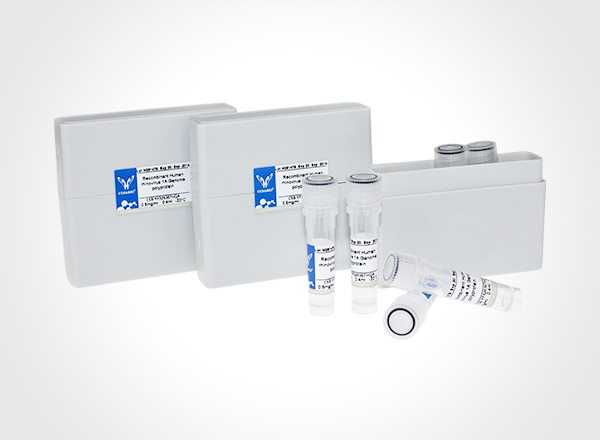
Human SARS coronavirus (SARS-CoV) (Severe acute respiratory syndrome coronavirus)
Source
in vitro E.coli expression system
Expression Region
16-122
Target Protein Sequence
ELYHYQECVRGTTVLLKEPCPSGTYEGNSPFHPLADNKFALTCTSTHFAFACADGTRHTY QLRARSVSPKLFIRQEEVQQELYSPLFLIVAALVFLILCFTIKRKTE
Note: The complete
sequence may include tag sequence, target protein sequence, linker sequence and extra sequence that is
translated with the protein sequence for the purpose(s) of secretion, stability, solubility, etc.
If the exact amino acid sequence of this recombinant protein is critical to your application,
please explicitly request the full and complete sequence of this protein before ordering.
Protein Length
Full Length of Mature Protein
Tag Info
N-terminal 10xHis-tagged
The tag type will be determined during production process. If you have specified tag type, please tell us and we will develop the specified tag preferentially.
Plays a role as antagonist of host tetherin (BST2), disrupting its antiviral effect. Acts by binding to BST2 thereby interfering with its glycosylation. May suppress small interfering RNA (siRNA). May bind to host ITGAL, thereby playing a role in attachment or modulation of leukocytes.
Gene References into Functions
7a accessory protein suppressed both transgene and virus-induced gene silencing by reducing the levels of small interfering RNAPMID:20631126
In this study the authors present data demonstrating that the SARS-CoV 7a protein interacts with human Ap4A-hydrolase (asymmetrical diadenosine tetraphosphate hydrolase, EC 3.6.1.17).PMID:20144233
overexpression of 7a induces apoptosis via a caspase-dependent pathway in cell lines derived from different organs, including lung, kidney, and liver.PMID:15564512
Protein 7a expression was associated with blockage of cell cycle progression at G0/G1 phase in HEK 293 cells, COS-7, and Vero cells via cyclin D3 and rb protein pathways.PMID:16303160
analysis of SARS-CoV accessory proteins 7a and 7bPMID:17037516
severe acute respiratory syndrome coronavirus 7a protein induction of apoptosis is dependent on its interaction with the Bcl-XL proteinPMID:17428862